Spec test article, 8 November 2026. Length held at about 3,200 words because the surviving record is thin: the first Brockville report, the Ottawa Journal and New York Herald articles and the signed statement were not read in the original; the account relies on reprints, compilations and secondary reconstructions, which the text attributes. Before publication, obtain the primary press reports and recheck dates, names and the farewell chronology.
On 15 November 1889, the Brockville painter Percy Woodcock arrived at a farm seven miles from Shawville, Quebec. An eleven-year-old girl told him the voice had just been talking to her in the woodshed. Woodcock went over to listen, and something with a deep, gruff voice answered him.35
A five-dollar bill on the kitchen floor
The farm belonged to George Dagg and his wife, Susan, who lived in Clarendon Township, Pontiac County, on the Quebec side of the Ottawa River. They had two young children, Mary and Johnny, and a third child who was not their own. Dinah Burden McLean had been born in Glasgow in December 1876 and brought to Canada as one of the thousands of Scottish children shipped across the Atlantic to work on farms and in households.15
The trouble began with money. On 15 September 1889, George gave his wife a five-dollar bill and a two-dollar bill, which she put away in a bedroom drawer. The next day, a hired boy called Dean, himself an orphan, handed George a five-dollar bill that he said he had found on the kitchen floor. It matched the one in the drawer, and when George looked, both bills were gone. He found the two dollars hidden in Dean’s bedding.5
What followed was far stranger than petty theft. Milk was emptied from the buckets and butter disappeared from its jars, and filth from the outhouse was smeared across the kitchen floor. George blamed Dean, who was taken before the magistrate in Shawville and locked up, but the mess carried on while the boy was in custody, so George asked for his release. Dean never went back to the farm.15
By then the house had acquired a reputation. In late September, while George was away threshing, his parents, John and Mary Dagg, came to stay. Stones began breaking the windows, and old John Dagg hid behind a stump and then watched through a gap in the barn wall, hoping to catch whoever was throwing them, while his daughter-in-law called out that the glass was still going.5
Nobody was caught. The sources that describe the hunt for a culprit agree on one point, which is that each obvious suspect failed to explain the next incident. That pattern would shape everything that followed, because once the family stopped looking for a human hand, they began looking for something else.15
Fires in daylight
The best summary of what the family said they endured is a document written at the end of it. On 17 November, Woodcock drew up a statement and had it signed by seventeen men, among them George Dagg, several other members of the Dagg family and neighbours from Shawville and Portage-du-Fort. It is the closest thing the case has to a charge sheet, and its first allegation concerns fire.2
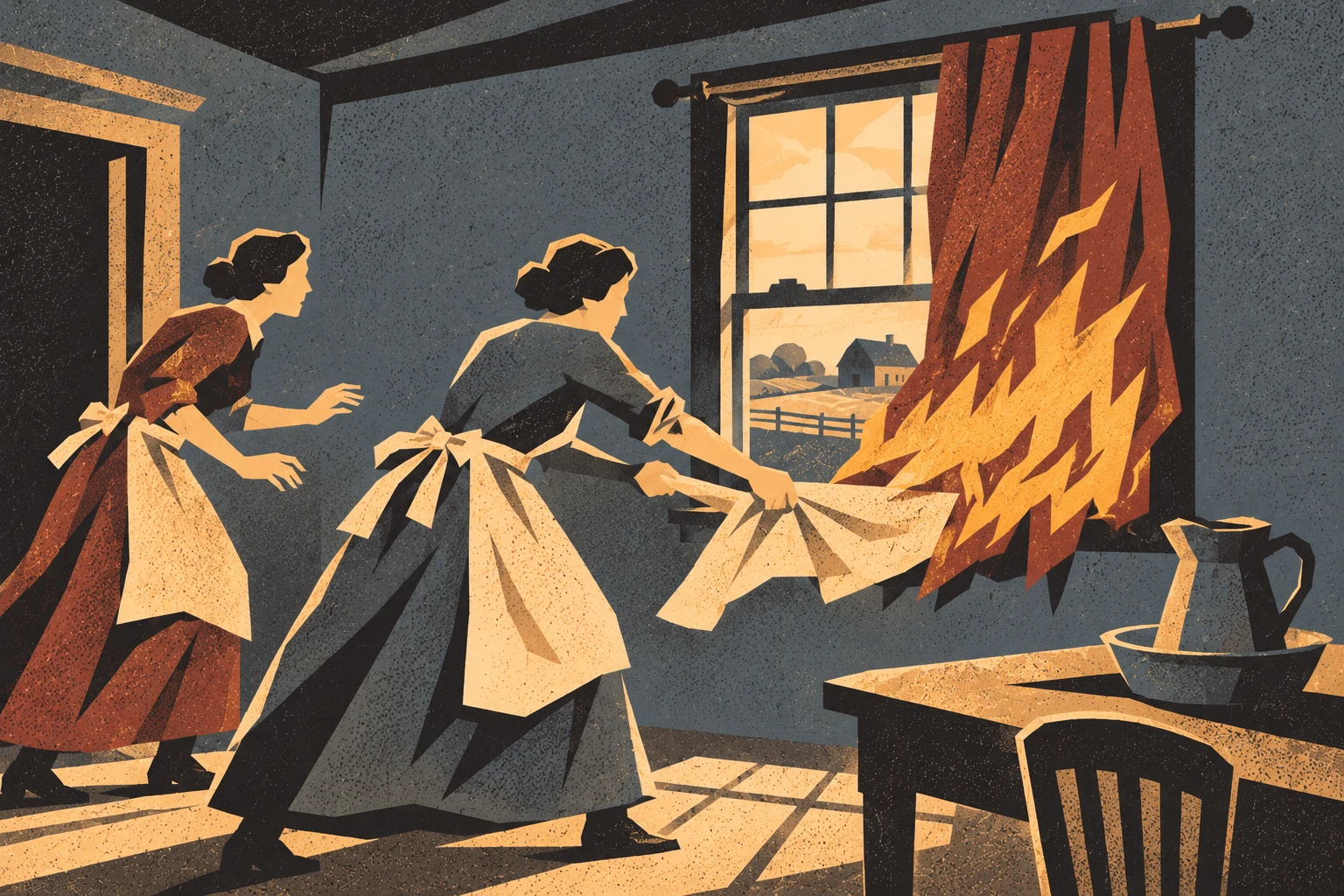
The signatories declared that fires had broken out all over the house, as many as eight in a single day, six indoors and two outside. Curtains had caught light while still hanging at the windows, they said, in broad daylight and with the family and neighbours in the house. The statement presents those details as proof that nobody could have set the fires unseen, though it never says who was standing where.2
The same document lists a house in revolt. Stones came through the windows, breaking as many as eight panes, and a water jug, a milk pitcher, a wash basin, a cream jug and a butter tub were thrown about. A jar of water was thrown in the face of Mrs John Dagg and then in Susan Dagg’s, the second time while she was alone in the house. A large shelf was said to have moved across a room, a rocking chair to have rocked on its own and a washboard to have been thrown down the stairs.2
Other accounts add details the statement leaves out. In the version Charles Fort later took from a spiritualist weekly, a large stone struck one of the children without hurting her at all, and one afternoon Dinah felt her long braid tugged and found it almost cut through, hanging by a few hairs. The same day, her small brother complained that something had pulled his hair, and his mother found it cut off in chunks across his head.4
Those claims arrived second-hand, filtered through newspapers and a London spiritualist paper, and they cannot be checked against the original Canadian report. They also show how quickly the story was told and retold. By 25 October, a newspaper in Menomonie, Wisconsin, was running the story, and on 7 November the Montreal Gazette carried a report under the headline “Haunted by Spooks”.23
A black thing on the bed
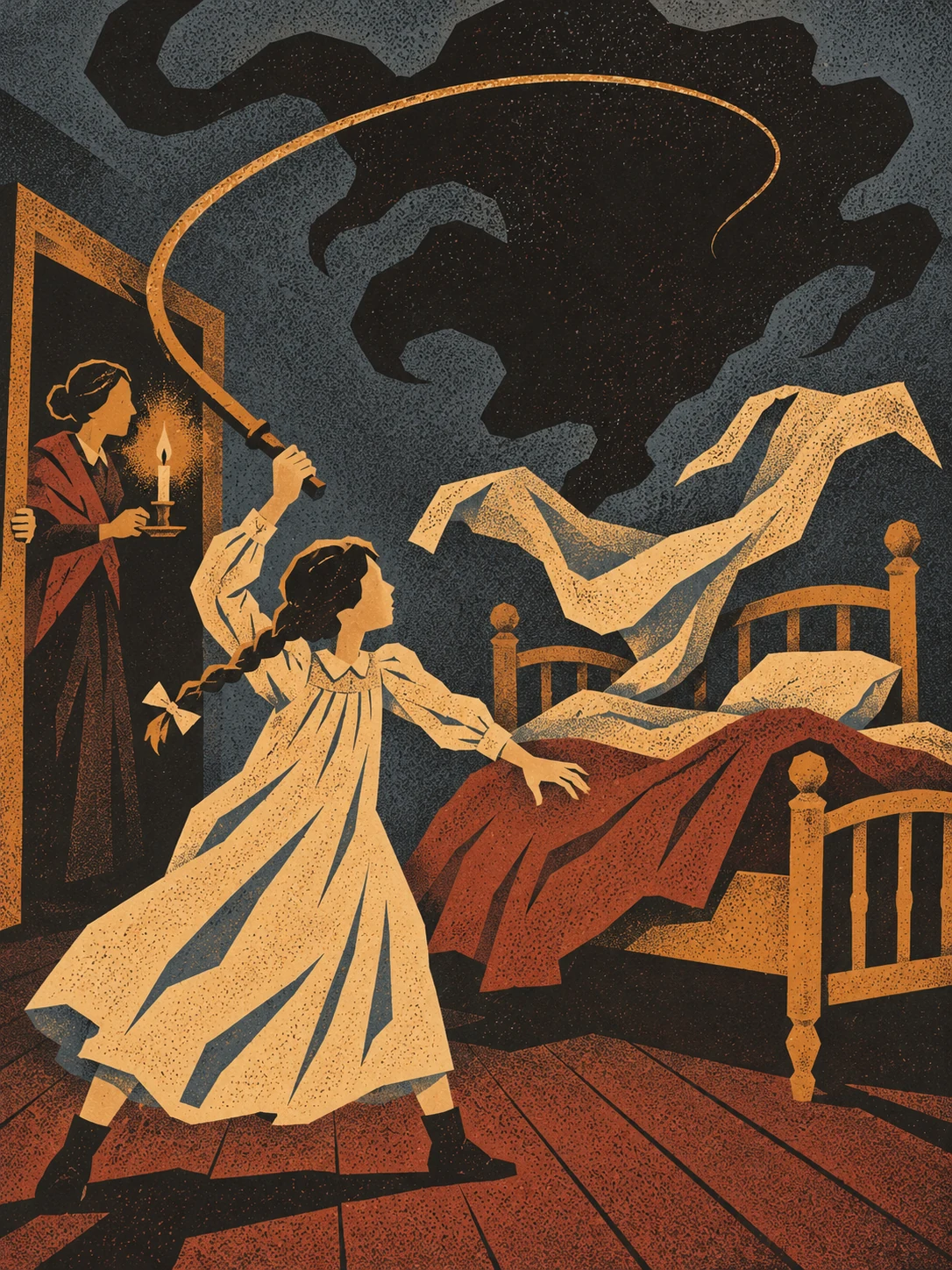
As the incidents piled up, the family turned to the remedies available to a rural household in 1889. One evening, according to a chronology based on later American newspaper reports, Dinah said she could see a “big black thing” pulling the bedclothes off her bed. Her grandmother handed her a bullwhip, and with the neighbour Arthur Smart urging her on, she struck at it. Those in the room said they heard a squeal like a pig’s before the thing vanished.5
The family also tried the church. When the Reverend Horner came to the house and read from his prayer book, the book disappeared from his hands and was later found in the oven, according to the same chronology. He went on praying for about half an hour, but the disturbances carried on.5
Then George Dagg tried a different authority altogether. He travelled more than a hundred miles into Ontario to consult a fortune teller near Plum Hollow, a woman known across the region as Mother Barnes, the Witch of Plum Hollow, who charged a quarter to read tea leaves. She told him the trouble came from a neighbouring widow, Mrs Wallace, and her children, and that they meant Dinah harm.512
That accusation mattered more than any single broken window, because it gave the haunting a human author and turned a family’s ordeal into a quarrel between neighbours. Mrs Wallace denied it and visited the farm to show that she bore the Daggs no grudge, but the voice would soon repeat the charge.45
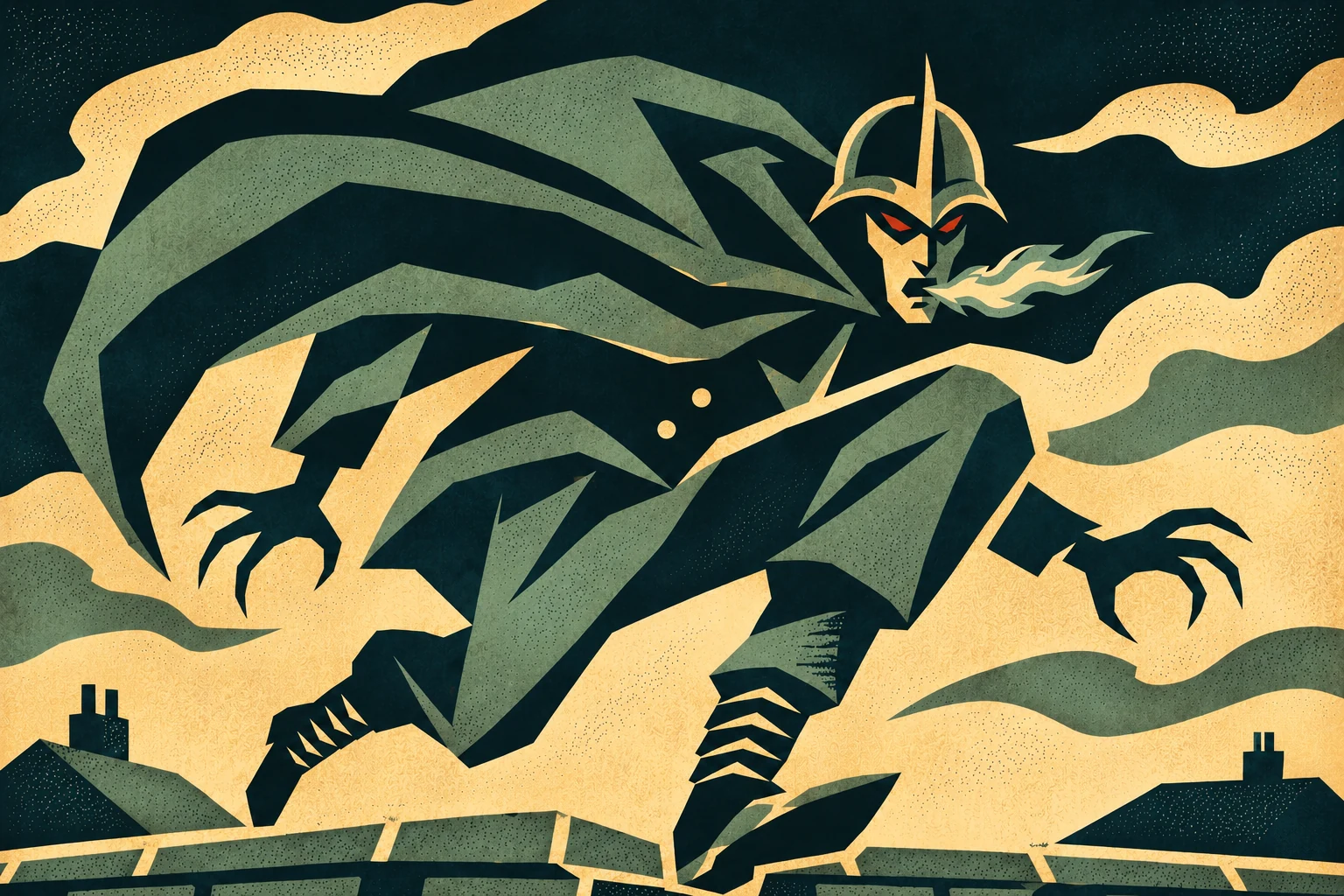
By early October, the children were describing visitors. Mary said she had seen a figure with a bull’s head and hooves standing in the doorway, and later saw it pouring sugar into the oven. Dinah reported the same figure, and a huge black dog. The statement signed in November records that the children saw the presence as a tall, thin man with a cow’s head, horns and a cloven foot, as a big black dog and finally as a man with a beautiful face and long white hair, dressed in white and wearing a crown of stars.25
The adults never saw any of it. What they described was a voice, and a voice is much harder to dismiss than a child’s description of a figure in a doorway.2
The voice that would only speak near Dinah
The statement is precise about one condition. When Dinah was present, it says, a deep, gruff voice like an old man’s had been heard both indoors and outdoors, answering questions so that everyone could hear. The voice seemed to know everything that had happened in the Dagg household, and in other families in the neighbourhood as well.2
Its account of itself kept changing. It told the signatories it was a discarnate being who had died twenty years earlier at the age of eighty, and that it had given its name to George Dagg and his brother Willie on condition that they never repeated it. At other times, according to later retellings, it announced that it was the Devil, and before the end it would claim to be an angel.25
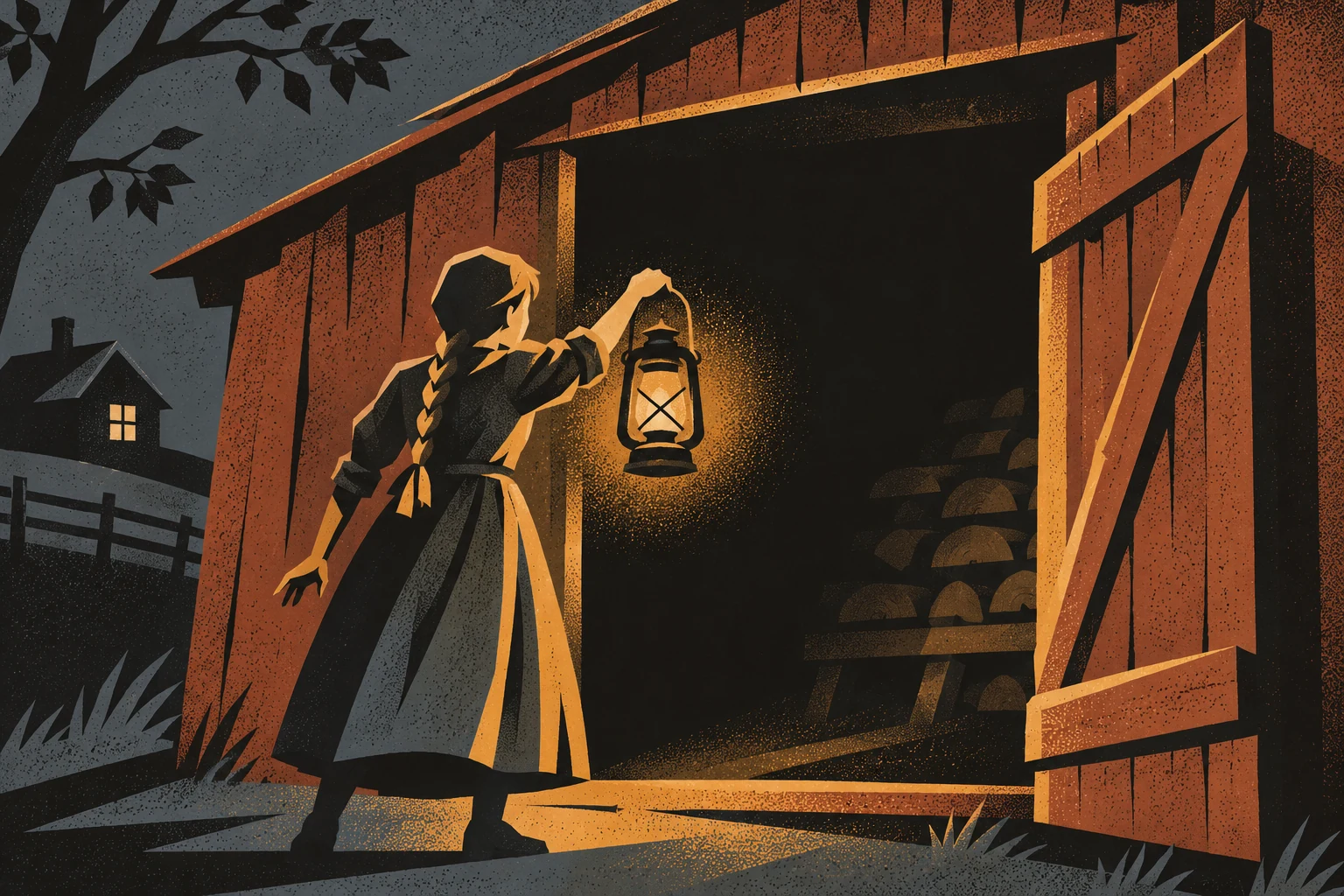
The voice talked most in the woodshed, a small outbuilding where Dinah would be found holding conversations with something nobody else could see. Accounts agree that it was coarse, abusive and obscene, and that it spoke only when the girl was nearby. That detail became the centre of every later argument about the case, because a voice that depends on one child’s presence invites an obvious question about where it was coming from.14
Most poltergeist reports involve noises, thrown objects and fires, but not conversation. Charles Fort, the American collector of anomalies who included the case in his 1932 book Wild Talents, singled out the voice as its most unusual feature, while doubting how faithfully it had been reported. The house in Clarendon offered something rarer than flying crockery, an entity willing to argue back.4
Word spread, and the crowds grew. Reporters came, followed by neighbours, and James Quinn later described leaving a halter on the doorstep, watching it vanish and then seeing it drop to the ground in front of the house. By the time the man who would make the case famous set out from Brockville, the farm was already one of the most talked-about places in the Ottawa Valley.5
The painter who argued with the dark
Percy Franklin Woodcock was an unlikely ghost-hunter. Born in Athens, Ontario, in 1855, he had studied in Paris and exhibited at the Salon, and in 1886 he had been elected a member of the Royal Canadian Academy of Arts. In 1889 he was principal of the government art school in Brockville, where his pupils included the young painter Robert Henry Lindsay.3789
He was also a spiritualist, which Fort considered worth pointing out. Woodcock went to Clarendon expecting that the dead might speak, and that belief shaped both what he looked for and how he wrote about what he found. Fort’s verdict on him was a joke at the painter’s expense, suggesting he might have “colored as much on paper as on canvas”.4
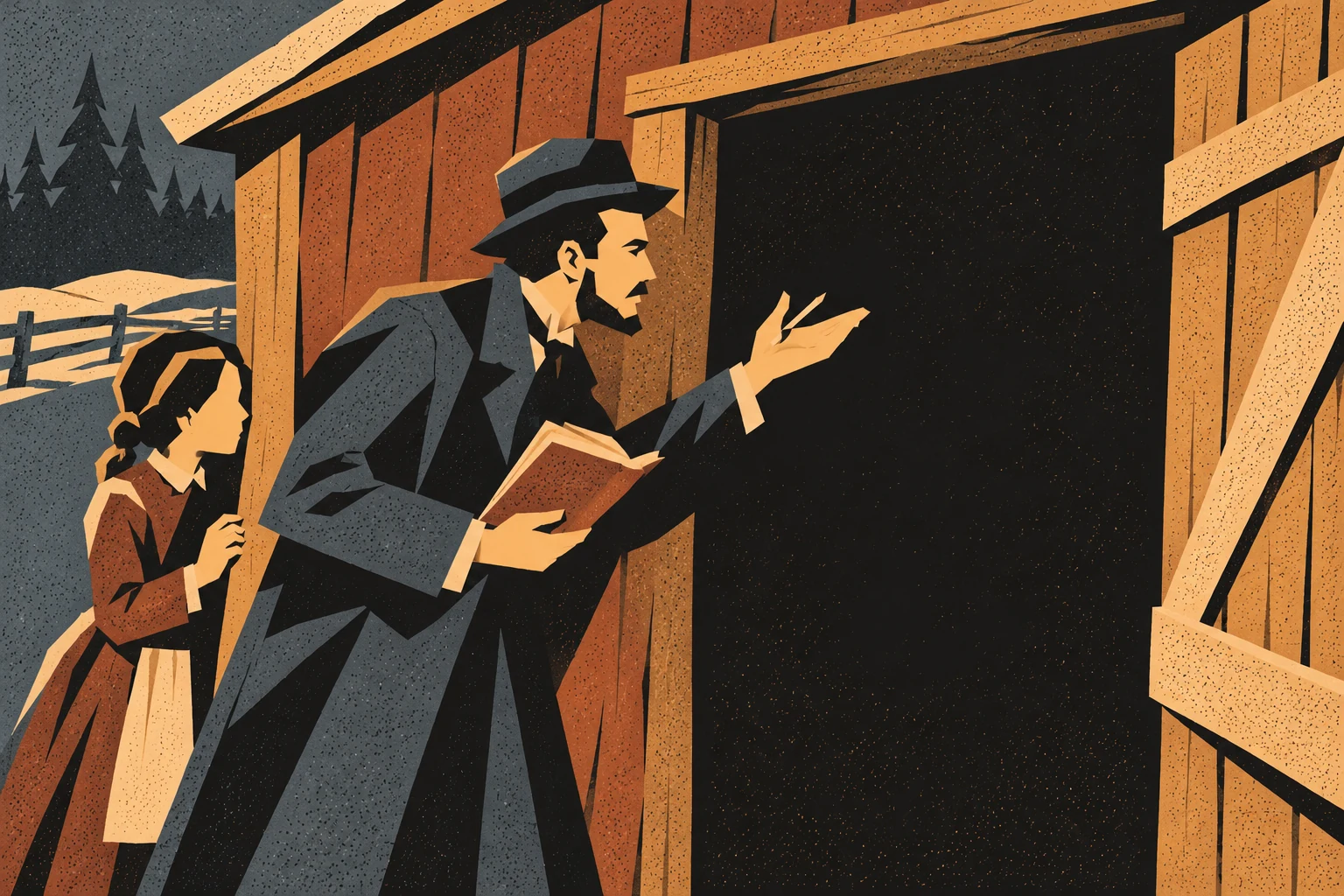
According to the chronology reconstructed by the Canadian writer R. S. Lambert, who wrote about the case in the 1950s, Woodcock reached Shawville on 14 November and the Dagg farm the next day. Dinah met him with the news that the voice had just spoken near the shed. He followed her there and heard a gruff voice that cursed him and told him to leave, and when he asked for proof, it wrote obscenities on a sheet of paper.35
Woodcock did not leave. He rebuked the voice for using such language in front of a child and the women of the household, and in the version Fort printed, the voice grew ashamed of itself and began to repent. In later retellings, the conversation went on for five hours, as the voice insisted it had only been amusing itself and had never meant to hurt anyone, and said it had lit fires only in daylight so that they could be put out.45
He tried at least one test. In the reconstruction based on the 1890 New York Herald report, Woodcock had Dinah fill her mouth with water to see whether she was throwing her voice, and the voice went on speaking clearly. The experiment was crude, and the account of it comes to us through several retellings, but it shows that the possibility of ventriloquism was raised at the time, by the investigator himself.5
Then the voice returned to Mrs Wallace. It claimed she had sent it to torment the Daggs and that her children had buried a book of spells in a nearby swamp. Farmers fetched Mrs Wallace to the house, where she called the voice a liar, and in Fort’s source the voice repeated its accusation but contradicted itself so badly that nobody believed it.45
A farewell for fifty listeners
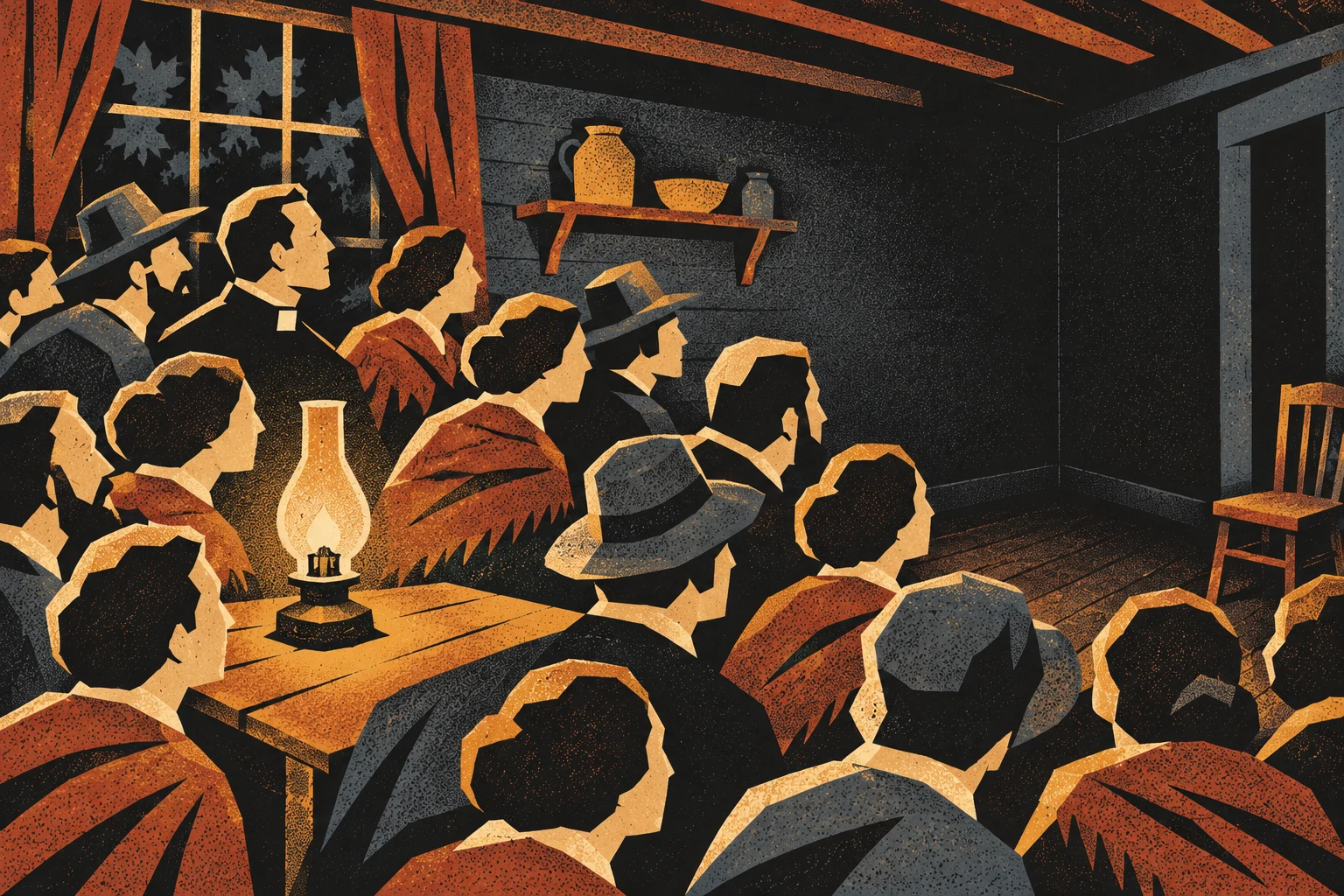
The voice announced that it would leave, and the news brought the neighbourhood to the house. By the evening of 16 November, according to the later chronology, more than fifty people had crowded into the farm to hear it go. Most of the time, Fort’s source says, the house was full.45
A second clergyman, the Reverend Bell, came to confront it and fared worse than the first. The voice questioned his fitness to be a minister, recited scripture alongside him as he read and, when he prayed against evil spirits, demanded to know by what authority he did so, at which point, in the version that survives, Bell left.5
The voice’s character then changed completely. It announced that it was an angel, revealed something a dying daughter had once told her father in private and sang hymns in a high, sweet voice that moved many of the women present to tears. In the early hours of the morning, it said goodbye and promised to show itself to Dinah, Mary and Johnny before it went.45
On Sunday, 17 November, Woodcock turned the night’s events into a signed record. His statement declared that the proceedings had begun on 15 September and were “still going on” that day, and it carried the names of seventeen men. Some lived in Shawville and Portage-du-Fort, and one had come from as far away as Cobden, Ontario.2
The signatures are often cited as if they confirm every incident in the case, but the document does not support that. It is a single statement drafted by an investigator who already believed in spirits, signed at the end of an emotional all-night gathering, by men who were mostly relatives and neighbours of the family. What it shows is that these men were willing to put their names to its summary, but not that each of them witnessed every fire, stone and apparition it lists.23
The man in white
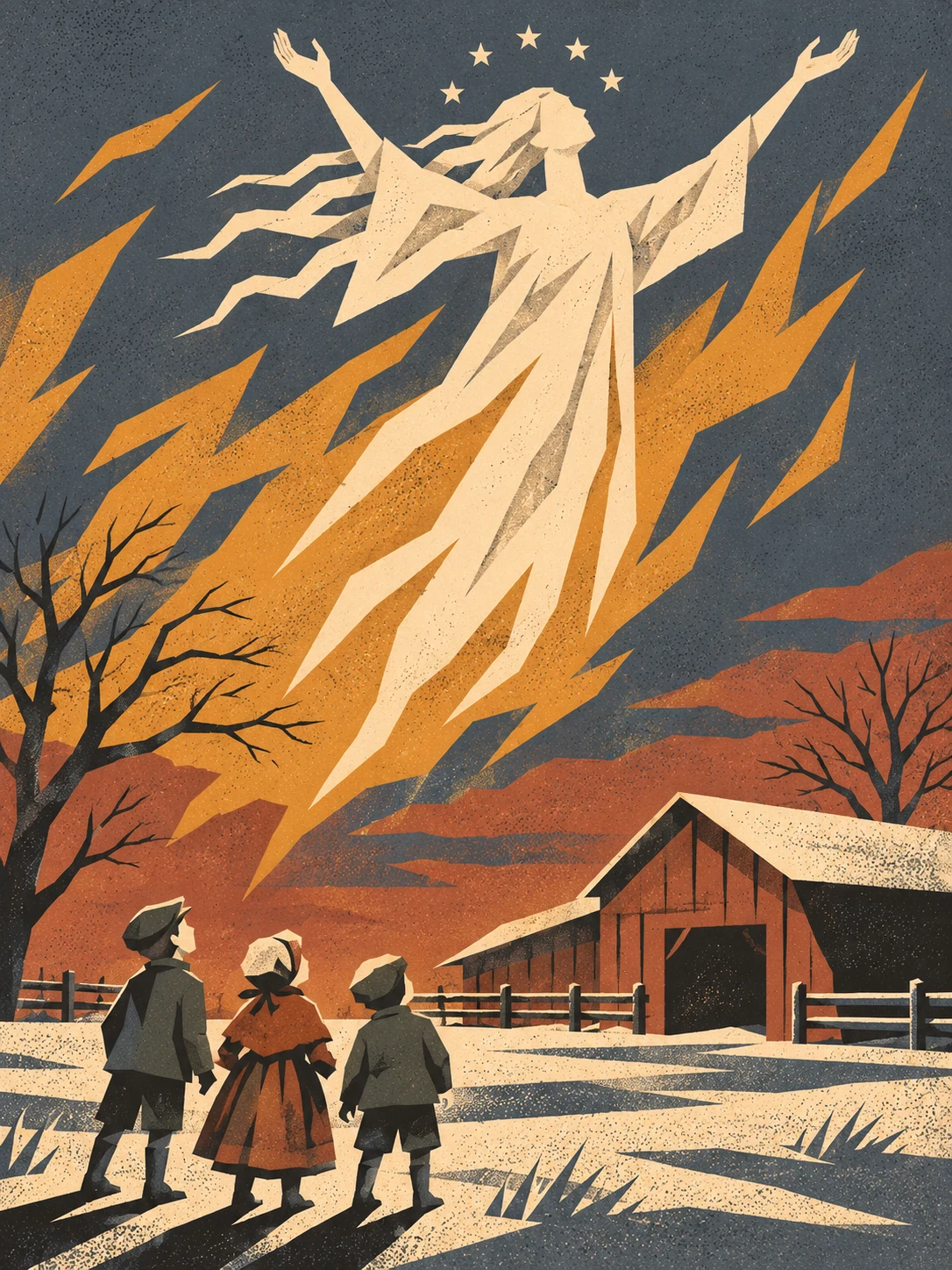
The next morning, the children said the presence had kept its promise. Dinah, Mary and Johnny described a beautiful old man with long white hair, dressed in shining white, who spoke kindly to Johnny, raised his arms and rose into the sky in a flash of fire. The statement records the same white-haired, crowned figure among the forms the children had seen.25
No adult claimed to have seen him. The ending rests entirely on the testimony of three children, two of them very young, describing a figure that matched the religious imagery around them. It brought the story to an end that many of those present found deeply satisfying, a foul-mouthed devil transformed into a singing angel that ascended into heaven.25
Woodcock went home to Brockville and wrote up the case. His account appeared in the Brockville Recorder and Times, and from there it travelled. A London spiritualist weekly, the Medium and Daybreak, reprinted it on 13 December 1889, and the Religio-Philosophical Journal in Chicago carried the case two weeks later.3
The reprints did not always agree on the details. Fort dated the Brockville report to 13 November, which would put it before Woodcock had even reached the farm, while a modern researcher working from Lambert’s chronology argues that the right date must be 23 November. Retellings disagree about the girl’s age, the children’s names and the day of the week on which Woodcock arrived, and some move the farewell from 17 November to the early hours of the 16th.345
Those discrepancies are the ordinary wear and tear of a story copied from paper to paper. They also mean that the most famous version of the Dagg case, with its five-hour debate and its tearful hymns, comes to us mostly from later compilations, not from a single surviving first-hand text that can be read in full today.35
The girl at the centre
Almost everyone who has written about the case has noticed that it revolved around Dinah. The voice spoke only when she was nearby, she reported the first apparitions and she was the one who led Woodcock to the woodshed. By late November, the Ottawa Journal was reporting the view that she was responsible.12
The case for a hoax is straightforward. An eleven-year-old who could throw her voice, light small fires and move objects while adults’ backs were turned could account for much of what the statement describes, especially in a crowded farmhouse where nobody was keeping a careful record. Woodcock’s water test does not rule that out, because a single improvised test, reported years later at second hand, settles very little.15
But the hoax explanation leaves its own gaps. Several incidents were said to have happened while Dinah was elsewhere, including the jar of water thrown in Susan Dagg’s face while she was alone in the house, and some witnesses insisted that the voice could not have come from a child. Those claims cannot now be tested, but they explain why the case has never settled into a simple confession story.25
There is also the question of what Dinah’s life was like. She was a child labourer in a stranger’s home, sent across an ocean by a charity that placed thousands of Scottish children on Canadian farms under indentures. A local tour operator who now tells the story has suggested she was mistreated by her adoptive family, though that claim comes without supporting evidence in the sources examined here.101113
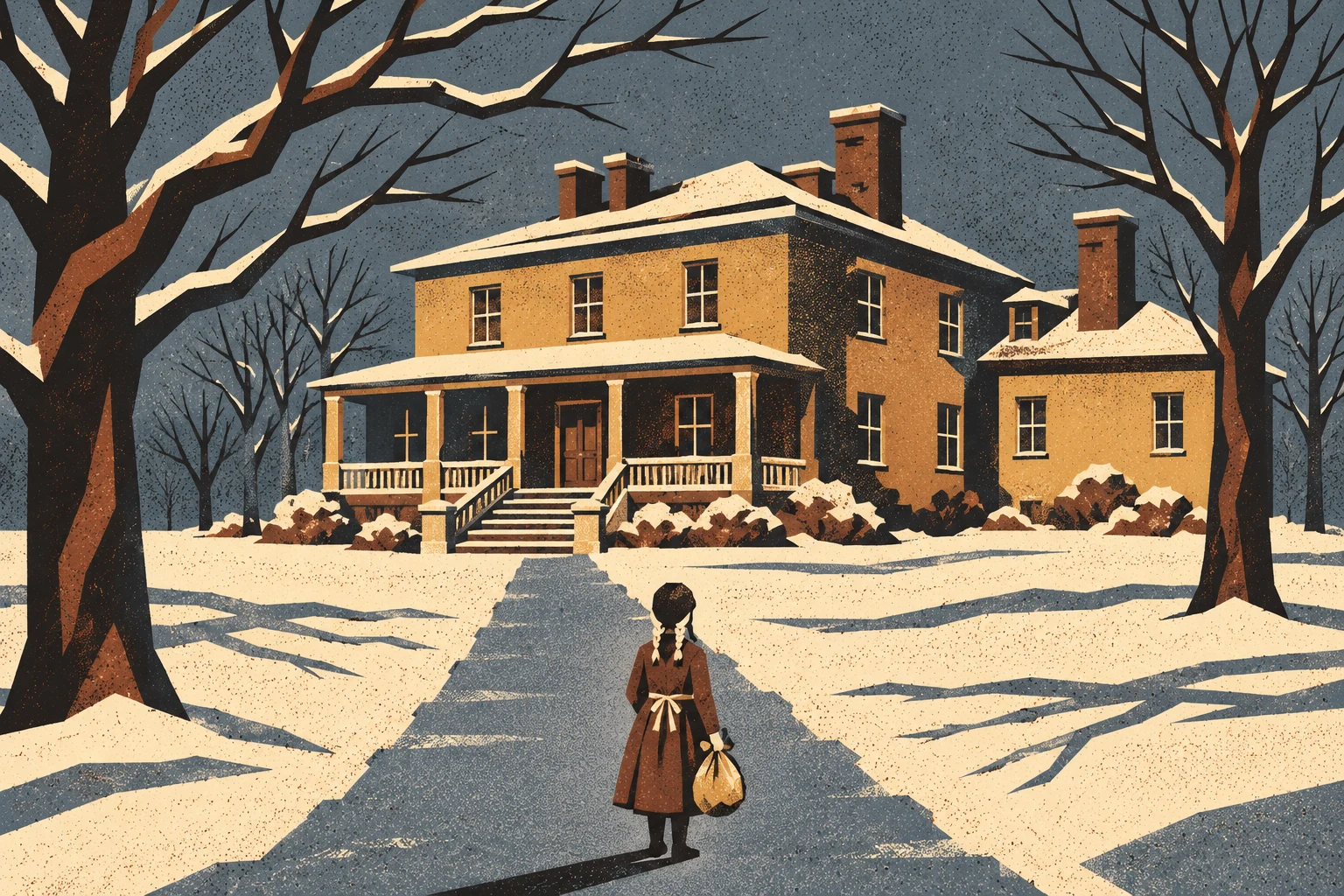
Whatever lay behind it, the haunting ended in the way such cases often did. The Daggs sent Dinah away to Fairknowe, the receiving home in Brockville that the Glasgow philanthropist William Quarrier had opened in 1887 or 1888 to distribute his children across Canada.21011
Where the voice went
After she left, the house went quiet. No later disturbance at the Dagg farm entered the record, and the family stayed in the district, where George Dagg lived until 1938.25
Dinah all but disappears from the record after that. A Philadelphia paper revisited the case in January 1891, and a caption claimed that a man had taken her away and that she was never heard from again. That is a newspaper flourish, not an established fact, and modern researchers say her life after Fairknowe is simply unknown.25
The story itself went on to a long second life. In 1957, the National Film Board of Canada released The Ghost That Talked, a dramatised documentary directed by Don Haldane and based on Woodcock’s first-hand report. Local guides in the Pontiac still take visitors to the area and tell the story, and some say the signed statement survives in a Shawville archive.613
As of November 2026, the evidence supports a clear outline but not an explanation. A farm family near Shawville reported months of fires, thrown objects and filth in the autumn of 1889, a voice was heard by many visitors when Dinah was present and seventeen men signed a statement summarising what they believed had happened. Whether a frightened, overworked child was behind it, alone or with help, or whether something else was going on, the surviving record cannot say.245
What would change that is the original material: Woodcock’s first Brockville article, the Ottawa Journal and New York Herald reports, the statement itself if it really survives, and any Fairknowe record of a Glasgow girl sent there after the haunting. Until those are read side by side, the most famous talking poltergeist in Canada is best understood through the people around it, and the girl at its centre remains the least heard voice in the story.23511
Linked case files


Sources13
- Dagg Poltergeist Mysterious Britain · Accessed 2026-11-08
- Ottawa Valley Poltergeist Arlene Stafford-Wilson · 2025-10-31 · Accessed 2026-11-08
- Fortean Notes: 1889 Mr. X (resologist.net) · Accessed 2026-11-08
- Wild Talents Charles Fort · 1932 · Accessed 2026-11-08
- Poltergeists in Canada: Part III (Dagg’s Demon) Mysteries of Canada · Accessed 2026-11-08
- The Ghost That Talked National Film Board of Canada · 1957 · Accessed 2026-11-08
- Percy Franklin Woodcock: biography askART · Accessed 2026-11-08
- Percy Franklin Woodcock (1855–1936) WikiTree · Accessed 2026-11-08
- Robert Henry Lindsay Glenhyrst Art Gallery · Accessed 2026-11-08
- The Orphan Homes of Scotland: the journey IRISS, The Golden Bridge · Accessed 2026-11-08
- Fairknowe Home, Brockville, Ontario, Canada Peter Higginbotham · Accessed 2026-11-08
- Her ancestor was known as a 'witch.' Why this woman wants to keep the legend of Plum Hollow alive Sarah Kester, CBC News · Accessed 2026-11-08
- Quebec tour company takes guests on a haunting historic tour of Pontiac County Superstitious Times · Accessed 2026-11-08