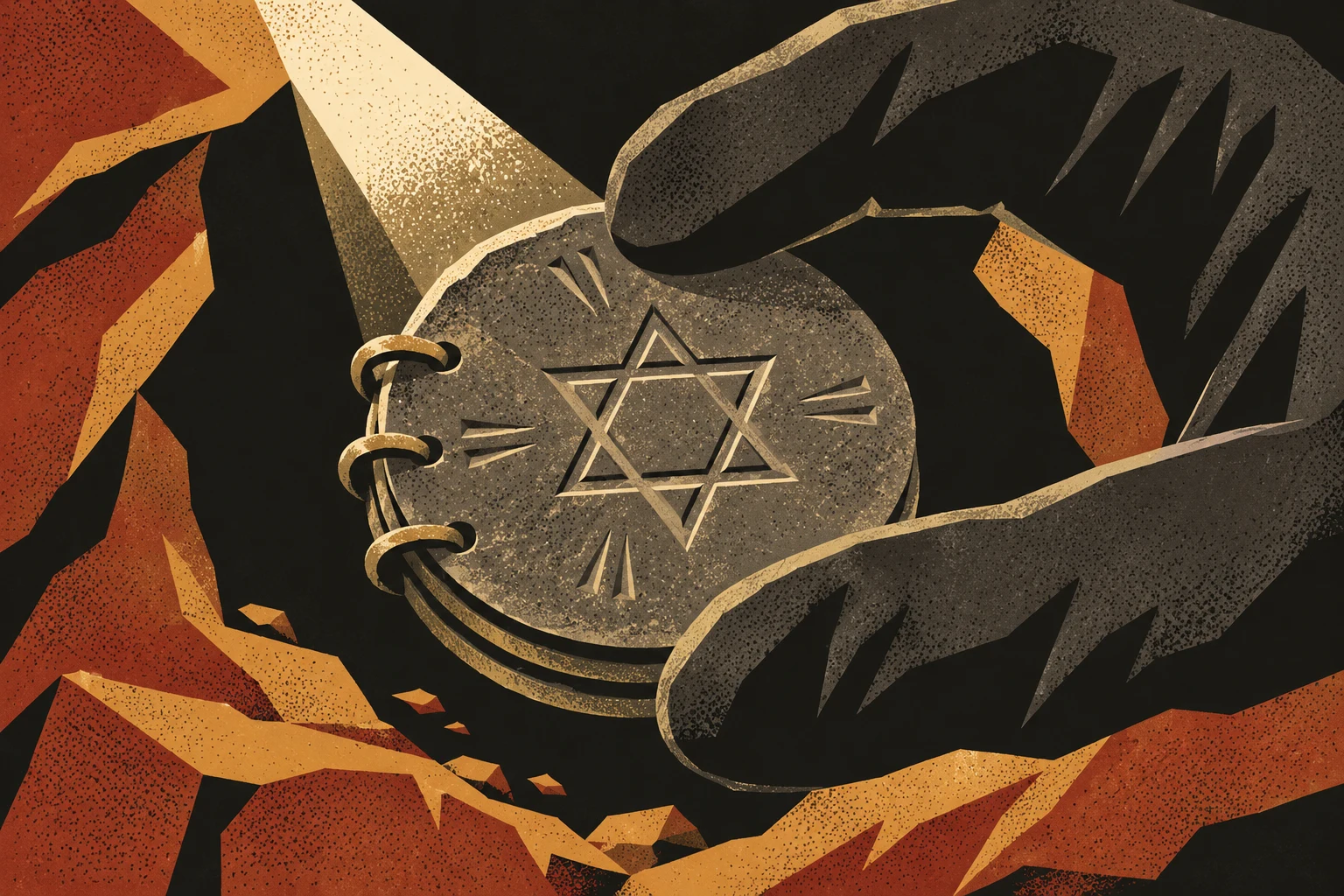
In 1588, workmen demolishing an old tower in Granada, a survivor of the city’s great mosque, found a lead casket in the rubble. Inside lay relics and a parchment claiming an ancient Christian origin for the city. Part of it was written in Arabic.1
The box in the broken tower
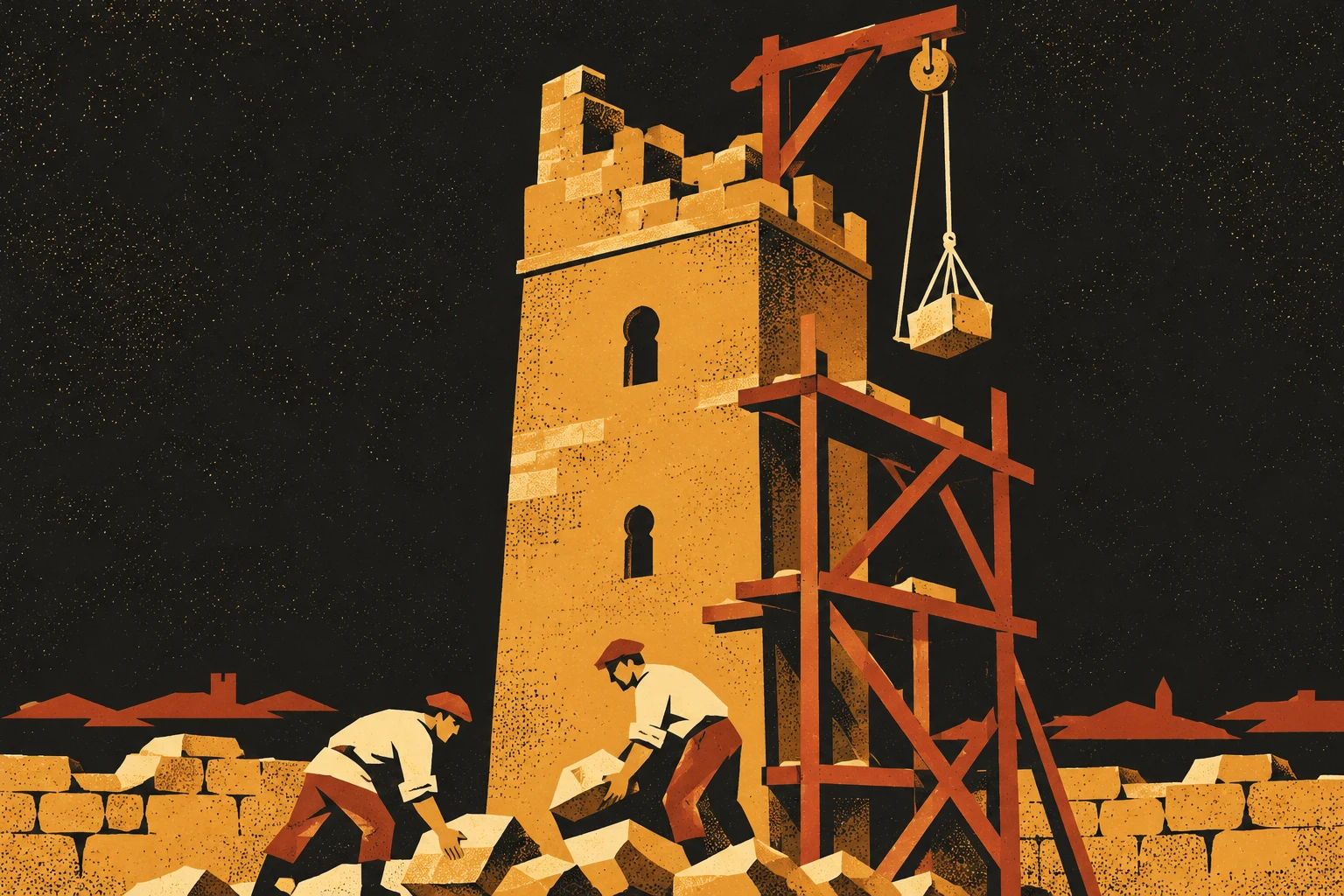
The tower was the Torre Turpiana, and it was coming down to make way for Granada’s new cathedral. The parchment combined Latin, Arabic and Spanish. It linked itself to Cecilio, traditionally honoured as Granada’s first bishop, and to a prophecy attributed to St John the Evangelist, set out in a grid of red and black letters that made it harder still to read. In a city whose Islamic past was visible all around the cathedral building site, demolition seemed to have uncovered something older, and far more useful to the new religious order.1
The document offered an ancient pedigree, a sacred author and an explanation of later history. It also confronted its examiners with a problem: its appearance of age was doing a great deal of work before anyone had established what it said.1
The casket began the affair of Sacromonte, one of Spain’s most consequential historical forgeries. The lead books that followed it were not lost first-century gospels. Their claim to antiquity would be rejected, and Rome would condemn them in 1682. But this was no simple tale of a gullible buyer and a fake. An archbishop, translators, royal officials, rival scholars and pilgrims were all drawn in, and the discoveries gave a hillside a sacred name and a lasting institution.18
There were doubts from the start. Why would a document from Roman Spain use languages and forms that seemed to belong to a much later world? How could its account of the past be tested, except against the objects found with it? A prophecy that accurately describes events its discoverers already know about may well have been written after them. Scholars inside the Church were perfectly capable of asking such questions without a modern laboratory.1
The parchment’s supporters had answers. Something hidden for centuries might need special expertise to understand, strange writing could be taken as a sign of great age instead of a warning that the text had been manufactured, another translator could correct a difficult reading, and contradictions became puzzles awaiting a solution. Doubt did not lead straight to rejection, but created demand for more interpretation.1
The casket also bound writing to devotion. A relic was an object through which a believer could approach a holy person, and a text could explain whose relic it was and why it mattered, so that found together, each seemed to vouch for the other. But that relationship could be manufactured, because if a forged document named an anonymous fragment of bone, the name gained nothing from the fact that the bone could be held in the hand.18
For several years, the discovery remained a disputed local marvel. Then a hillside outside the city began producing new objects that seemed to connect with the tower’s message. This time it would be harder to contain: not one baffling parchment but inscriptions, books, martyrs and a growing community of people who already believed.1
Books from the hollow hill
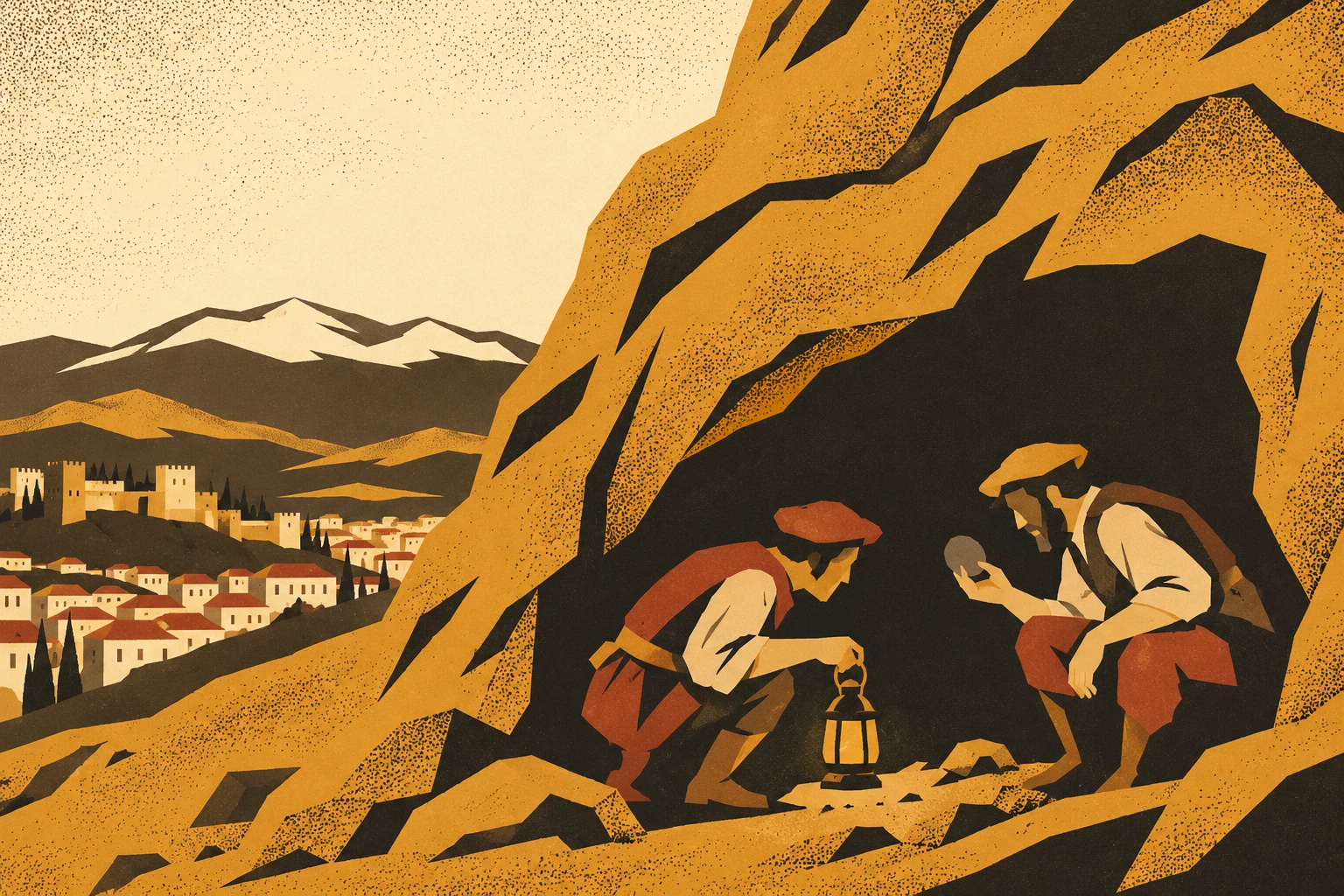
In February 1595, according to the nineteenth-century historian José Godoy Alcántara, men searching among underground ruins east of Granada found a strip of lead covered in writing. It could not be read at once, but eventually a reading identified a Christian martyr. The archbishop, Pedro de Castro, encouraged further digging, and more inscriptions followed, linking the place to followers of the apostle James and to martyrdoms under the emperor Nero. The discoveries seemed to put names to the remains found around them.1
Bones, charcoal and ash took on meaning from the inscriptions, which described martyrdom while the material around them seemed to fit the description. One inscription announced that a disciple of James had written a book on lead and hidden it in the caves. The book duly appeared. What looked like corroboration was also a sequence in which each discovery prepared people to recognise the next.1
The books were extraordinary objects. Their pages were thin circles of lead, small enough to hold in the hand, fastened together and engraved on both faces, with covers of lead too. Lead was a striking alternative to paper or parchment, perfect for a message supposedly meant to survive burial, and it made the books unforgettable before anyone understood what they said.1
A later inscription tied the hillside directly to the tower by invoking Cecilio and his prophecy, so the finds were no longer isolated curiosities but seemed to belong to one hidden history, with objects in different parts of the city pointing to one another. For supporters, that made the whole collection stronger, while for investigators it raised the possibility that the objects had been designed together.1
The finds kept coming over the following years, some credited to labourers, others to people searching or moving earth around the site. The stories of their discovery became part of their authority. A book with no ancient history to prove where it had been could acquire a compelling recent one instead: it had come out of this cave, after that inscription, among remains already treated as holy.1
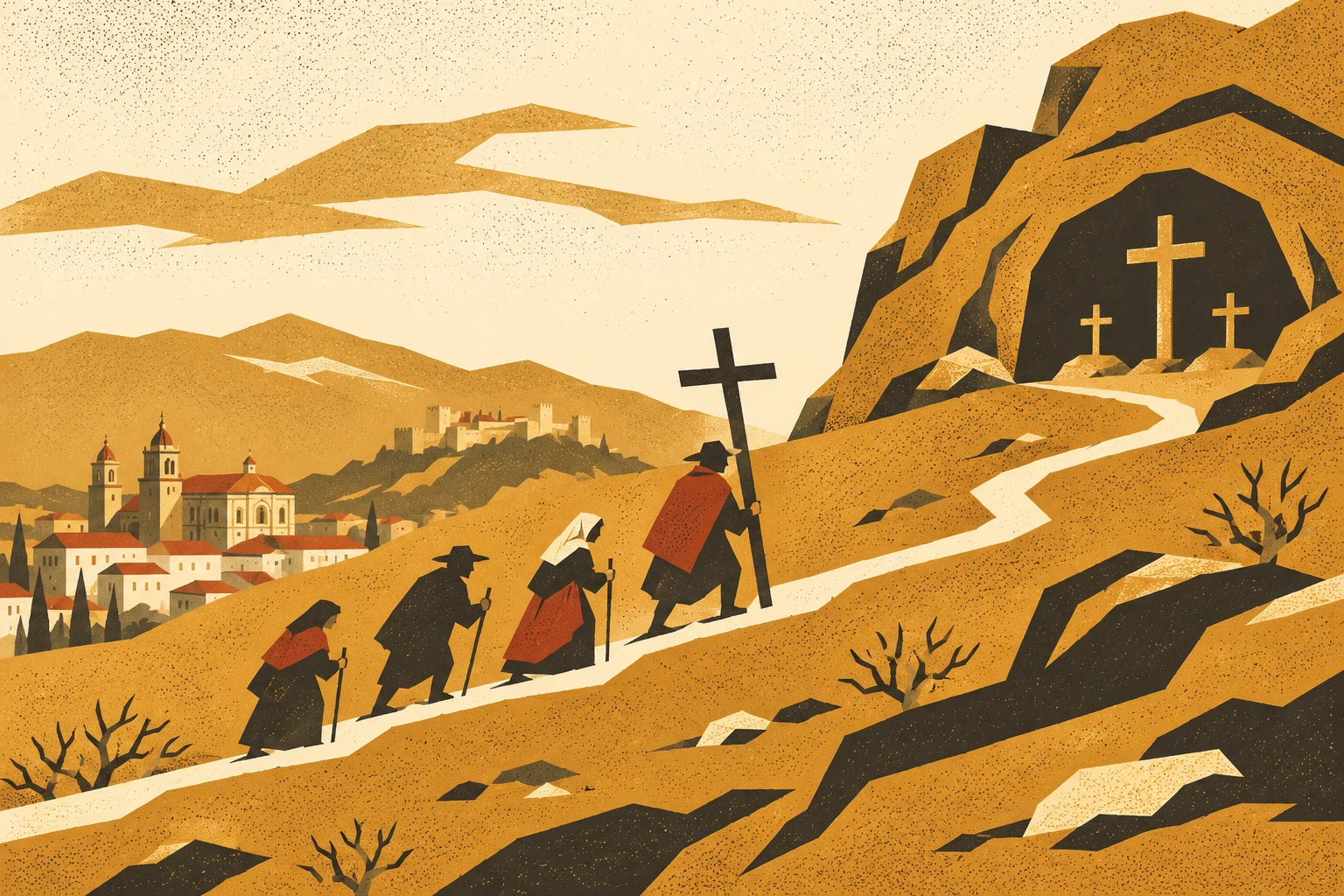
Godoy records the enthusiasm that followed: celebrations, pilgrimages to the hillside and crosses raised on its slopes. He reproduces earlier descriptions of barefoot pilgrims and crowded paths. Those descriptions belong to the history of belief in the discoveries, not to proof of events in Roman times. They show the affair creating a landscape of devotion while the argument about the texts was still going on.1
That momentum mattered. Once people had prayed at a place, given money to it or defended it in public, a verdict on its authenticity threatened far more than a translator’s reputation. The objects were becoming part of the city’s religious life. A book could be taken away for examination, but the hopes built up around it could not. Granada was acquiring a sacred past in public, and some of its most powerful citizens had reasons to want that past to be true.1
A past worth forging
Granada at the end of the sixteenth century was living with the consequences of conquest and forced conversion. The city had passed to Christian rule in 1492. Its Muslims and their descendants faced mounting pressure to conform, and the word *Morisco* came to mean someone descended from Muslims who had been baptised. A Christian identity imposed by law did not produce a single private faith. Belief, language, ancestry and public behaviour stayed painfully tangled.15
The suppression of Arabic customs and language gave an apparently ancient Arabic Christian document real force. If the first people to bring Christianity to Spain had themselves been Arabs, Arabic could no longer be dismissed as the language of an alien faith. If Granada’s Christian beginnings were written in Arabic, people associated with that language could claim a place in the city’s sacred history. The books offered a way of arguing about the present through an invented past.1
None of this made every Morisco a party to the forgery, or every reader an enemy of Catholicism. The persecuted population included people of many different practices and convictions, and persecution does not reveal what whoever composed each text intended. It explains why the books’ claims were useful. A story about Arab disciples and ancient revelation could meet cultural, religious and political needs all at once.1
Catholic Granada had its own reasons to welcome the discoveries. A city with a long Islamic history could now point to a Christian past reaching back to the apostles. The cult of St James connected the local story to one of Spain’s most powerful sacred traditions, and Cecilio supplied an early bishop and martyr. On the hillside, that history could be touched, through relics, inscriptions and pilgrimage.18
Pedro de Castro became the discoveries’ greatest champion in the Church. It would be easy to turn him into either an accomplice who knew everything or a dupe who understood nothing. The record shows a committed supporter who sought interpretation and confirmation, and whose hopes for the books shaped the questions asked of them. An archbishop responsible for his city’s religious standing had far more at stake than an abstract antiquarian puzzle.1
The interpretation most often offered to general readers is that the books attempted a reconciliation: make Arabic ancestry Christian enough to survive, while giving the Church authorities a past they could celebrate. That captures something important, but it does not explain the texts fully. Their religious content challenged Catholic teaching as well as flattering Catholic devotion, and a message that seemed acceptable at first glance became far more troubling once somebody insisted on an exact translation.1
The alliance behind the books was unstable. A supporter could welcome the claim that Granada was anciently Christian without accepting everything the books said about Jesus, Mary or revelation, and a Morisco reader could recognise meanings a Catholic sponsor missed. The objects had gathered supporters who wanted different things from them. Their success depended on how long those differences stayed hidden.1
Who could read the metal?
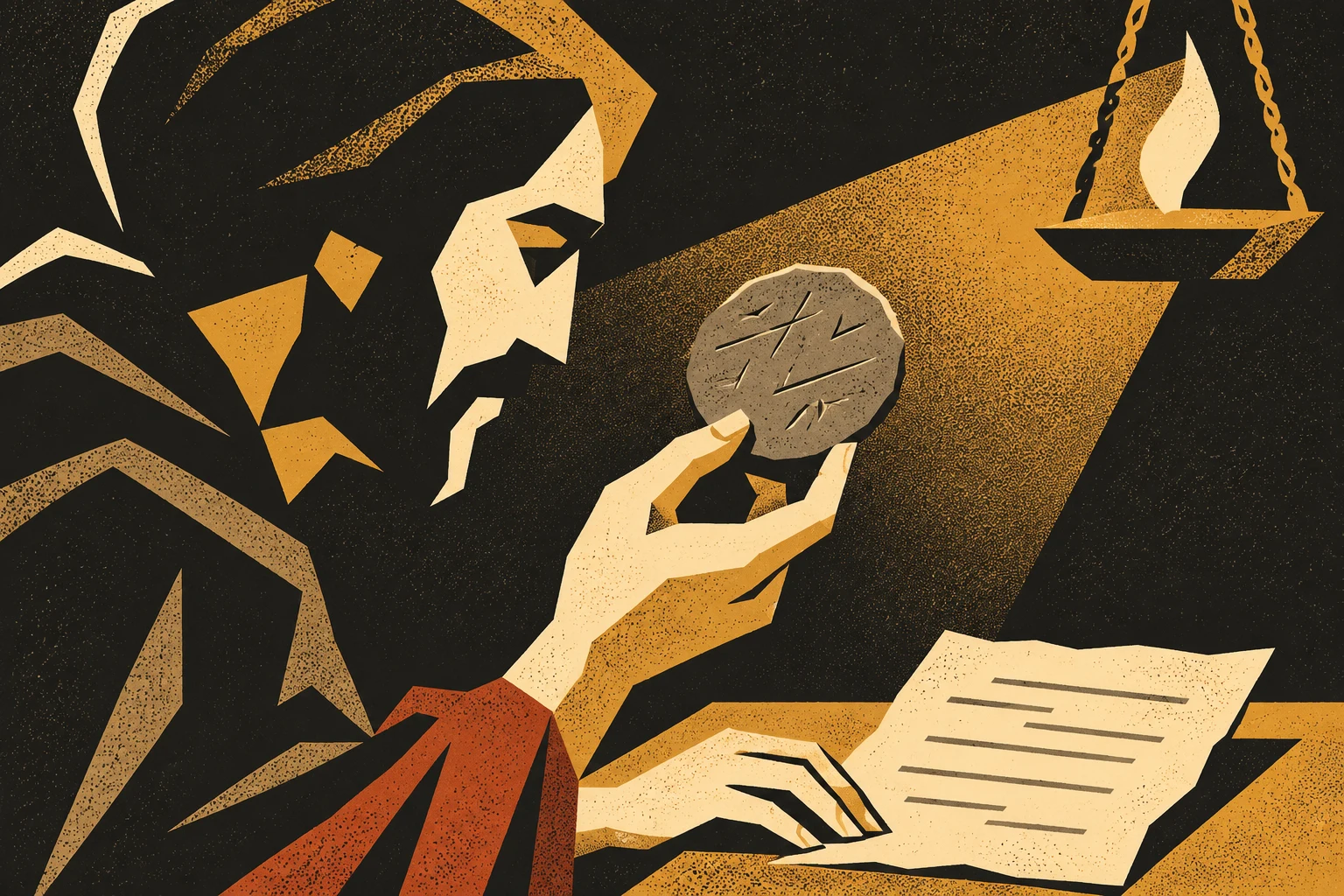
Reading the books required knowledge that most of their patrons lacked. The Arabic script was unusual, and the texts were associated with supposedly ancient or special forms of writing; calling the characters “Solomonic” linked their difficulty to sacred authority. Obscurity could then look like a feature of the revelation instead of a flaw in the object, and every uncertain letter left room for a translator’s judgement.1
Two names became central: Miguel de Luna and Alonso del Castillo. Both were Moriscos from Granada, doctors and interpreters with connections to royal service. That made them invaluable to the investigation and, later, obvious suspects in the making of the books. A translator might be the person best equipped to expose a forgery, or the one best placed to control what everyone else believed it said. The role alone could not decide which.12
Castillo’s experience went well beyond this controversy. He had interpreted Arabic inscriptions and documents for the authorities, which explains why he was consulted and undermines any idea that no competent Arabic scholar was available. The knowledge existed, but it was spread among people whose patrons, histories and religious positions differed, so the question was never simply who knew Arabic, but whose reading would be believed.12
Other specialists joined the dispute, and not all of them supported Castro. Their objections concerned language, historical setting and religious content. A supposedly apostolic document was open to challenge because its words belonged to a later age, because its claims contradicted known history or because its meaning depended on a conveniently generous translation, and a text could fail several of those tests at once for different reasons.1
Deciphering and interpreting were different jobs. Recognising the letters did not settle what a passage meant, and a fluent translation did not show when the original was written. Even if a book contained a religious idea its patron believed, that did not prove it was ancient. The dispute kept crossing those boundaries, and a defence of the books’ doctrine could slide into a defence of their date without the missing historical evidence ever appearing.1
Royal interest raised the pressure. According to the abbey’s museum, Philip II issued an order on 9 August 1596 for the lead books to be translated and interpreted. They were no longer just the talk of the town. Reading them had become an official undertaking, involving specialists and producing records of its own, and every new translation could be presented as progress even when it exposed new disagreements.7
That process also exposed how much people had already decided. A version that made the books sound comfortably orthodox was welcomed by their supporters; one that stressed incompatible teachings could be attacked as incompetent or hostile. Neither reaction showed which translation was right. The metal might be fixed, but most people only ever encountered the versions made from it, and the argument over the originals was also a fight over those intermediate texts.1

A gospel with two audiences
The books placed familiar holy figures at the centre of an unfamiliar story. Jesus, Mary and James appeared in accounts that gave Arabic-speaking people an ancient role in the Christian history of Spain. Mary mattered most. Her authority helped the collection reach a Catholic world in which devotion to her could be intense. But the role the revelations gave her did not simply repeat the doctrine her Catholic admirers already knew.13
One of the most intriguing books was called the *Essence of the Gospel*. Much of it was cryptic, and that difficulty became part of its religious meaning. The promise that its full sense would become clear at some future moment protected it from demands for an immediate explanation. A reader who could not understand it had not disproved it. The text supplied its own reason why understanding would have to wait.1
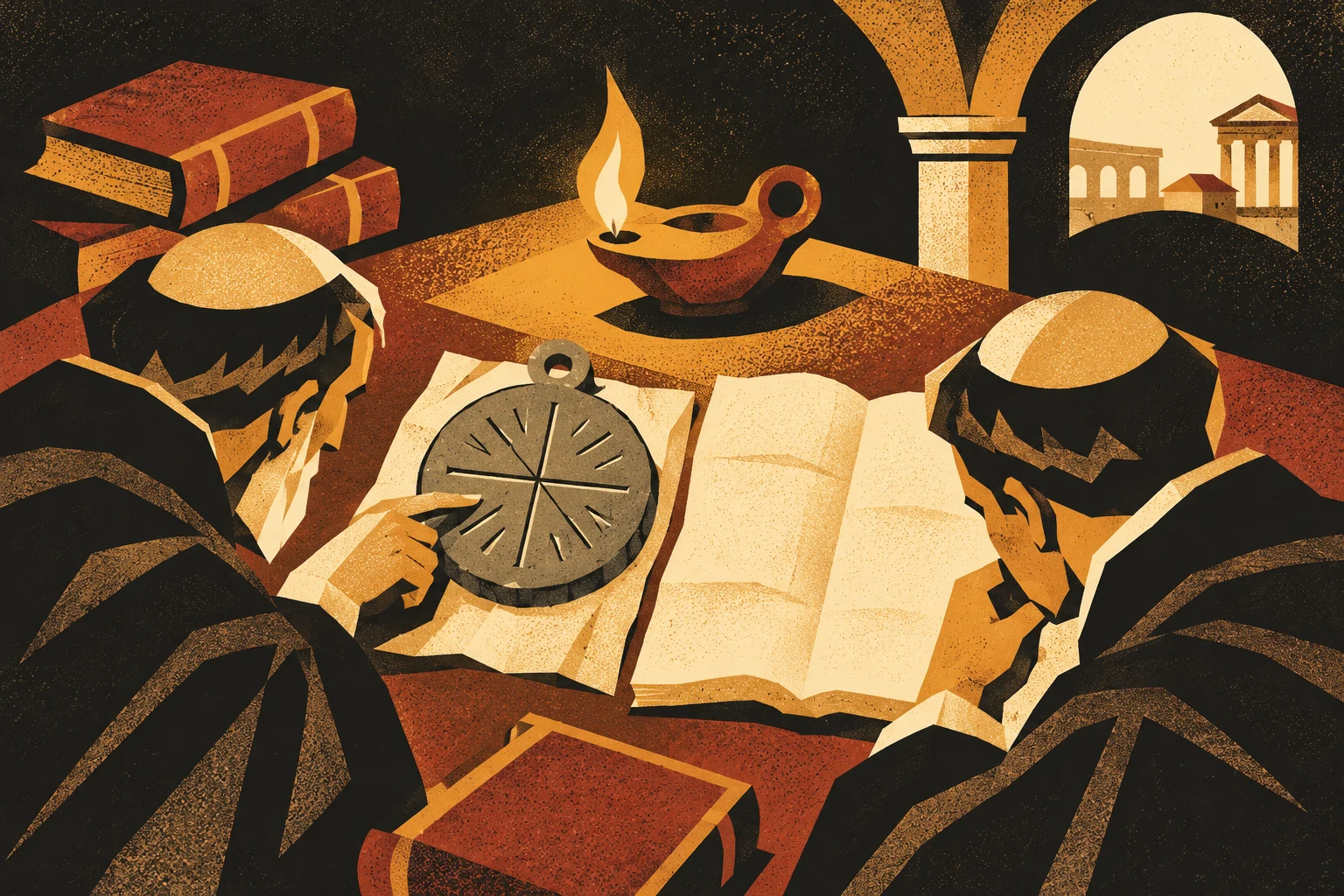
The Seal of Solomon appears again and again in the books, its interlaced geometry linking the writing to an older tradition of protection and hidden knowledge. The symbol gave the books no supernatural power. It belonged to the language in which they claimed importance: a recognisable sign could make an unfamiliar text seem part of a world of secret wisdom, while doing nothing to establish its date.1
Reading the collection only as a plea for tolerance would miss much of its force. It offered an account of revelation and a future in which its truths would be vindicated. Modern scholars studying its religious vocabulary have stressed Islamic meanings beneath or alongside the Christian names. A book can invoke Mary and Jesus without saying what a Catholic theologian means by those names.3
Older accounts called the result a hybrid religion, stitched together from Christianity and Islam. The label is convenient, but it implies a neat compromise that neither authors nor readers necessarily held. A text can be deliberately inclusive, deliberately ambiguous or read differently by different audiences, and a later reader can sharpen one strand while suppressing another. Proving that the history was forged does not make the books’ religious purposes simple.1
Godoy’s own account shows the danger of treating a translated summary as a clear window onto the original. He read the books through a later Latin version and judged their blend of teachings from a nineteenth-century Catholic point of view. His history of the affair remains valuable, but the Arabic texts, and the choices their translators made, need separate attention. A judgement about what the books were trying to do should not rest on the preferences of one later critic.1
For the authorities, that complexity became a serious problem. Supporting a local discovery was one thing, but letting a newly found collection speak with the authority of apostles was quite another. The books’ defenders wanted recognition without giving up the meanings that had made the discoveries attractive, while their opponents wanted the texts tested by people outside the circle that had already invested in them. The longer the dispute went on, the harder it became to pretend everyone was defending the same revelation.1
Rome demands the books
Meanwhile, the sacred landscape kept growing. A provincial council in Granada accepted the relics in 1600, and Castro founded the Abbey of Sacromonte in 1610. Both were important acts, and neither settled whether the books were genuine. Relics, texts and the identities assigned to them had been bound together in the story of their discovery, but they could be judged separately, and keeping them separate would eventually let the abbey survive the rejection of the writings so closely tied to its founding.68
Getting the books out of the hands of their local defenders took years. They were not simply available for any investigator to carry off: where they were kept, who looked after them and how they were displayed mattered to people who considered them holy. Godoy describes disputes over moving them and their guardians’ reluctance to give up control. Moving the originals would change who could examine them, and weaken Granada’s grip on the investigation.1
The collection went to Madrid and then, in the early 1640s, to Rome. There it could be studied by experts in Oriental languages and Church authorities less committed to the devotions of the hillside. Studying it meant reading, transcribing and comparing, not just admiring an ancient-looking surface. The famous names involved in the Roman examination included Athanasius Kircher and Ludovico Marracci, but even they could not make it quick or free of argument.1
The defenders kept fighting. Supporting the books took letters, agents, money and appeals to powerful friends, and a dispute that had begun with objects in the earth had become a long institutional campaign. Godoy reproduces evidence of the financial strain it placed on its backers. That record is a different kind of evidence from the alleged martyrdoms: the campaign left a paper trail that can be followed without believing the sacred history it promoted.1
In 1682, under Pope Innocent XI, the books were condemned as fabrications containing teachings incompatible with the Catholic faith, and their authority could no longer be invoked as their champions had wished. The verdict came almost a century after the tower discovery, long after Castro’s death, and after the people most directly affected by the pressures of the 1590s had suffered a different catastrophe.18
The condemnation did not destroy the hillside or erase every devotion connected with it. The books and the relics were treated differently, and Granada’s sacred geography had taken on an institutional life of its own. Visitors could go on visiting a Christian shrine without the books being accepted as genuine scripture.8
The books survived too. They were never melted down, and their survival would eventually allow a new kind of inquiry: studying them as products of early modern Spain. The question would change from whether they should be believed to how people had written, translated, defended and used them. For that investigation, a forgery is valuable evidence precisely because it belongs to the time of the people who made it.1
Who wrote the revelation?
The best-known accusation points at Luna and Castillo, the interpreters who made the texts readable. Godoy argued that they were involved and tried to distinguish different hands and habits within the collection, drawing on their language skills, the themes of the writings and parallels with Luna’s other work. It was a historian’s attribution, not a confession found in the caves.1
Luna had already presented himself as the translator of an allegedly ancient Arabic account of the conquest of Spain. His *True History of King Rodrigo* offered a version of the past that could restore the reputation of Arabic figures and traditions within a Spanish story, though the “true” in its title is no guarantee of its reliability. For anyone investigating the lead books, it was an important comparison, because it was another apparently rediscovered Arabic history made available through the same interpreter.1
Such parallels explain the suspicion, but they do not identify the hand that engraved every letter in the lead. Writing the texts, making the objects, staging their discovery and translating them were separate tasks, and not everyone who accepted an early date knew it was false. The first successful readers may have included both people running the deception and people sincerely trying to understand it.1
Recent scholarship still regards Luna as a probable major author while distinguishing his knowledge from Castillo’s. In his 2025 study, Gerard Wiegers stresses Luna’s apparent command of the parchment’s difficult forms and codes, and treats the later interpreters in more detail than the familiar picture of two doctors jointly manufacturing an entire revelation. Who composed or made each object remains unknown.4
Motive is just as hard to pin down. The books could raise the status of Arabic ancestry, offer hope to a persecuted people, satisfy Catholic devotion and advance Granada’s claim to sacred antiquity. Those aims were not all compatible, and the original makers did not necessarily share them all. A forgery can change direction as patrons, translators and believers take it up, and its consequences are easier to document than the intentions behind its first hidden page.1
There is also a difference between explaining a deception and assigning collective guilt. The books came out of a world in which Moriscos supplied essential language skills while facing suspicion and coercion. Their involvement does not make an entire people responsible. A claim that particular individuals made the texts needs evidence about those individuals, not a category imposed by the state.1
The open questions about authorship are historical questions. They are no reason to revive the claim of an apostolic date. The makers can be unknown while their claim to ancient revelation is plainly false. Investigating the people behind the objects should sharpen that distinction, not turn uncertainty about a workshop or a collaborator into an argument that the buried history might have been true after all.1
After the exile
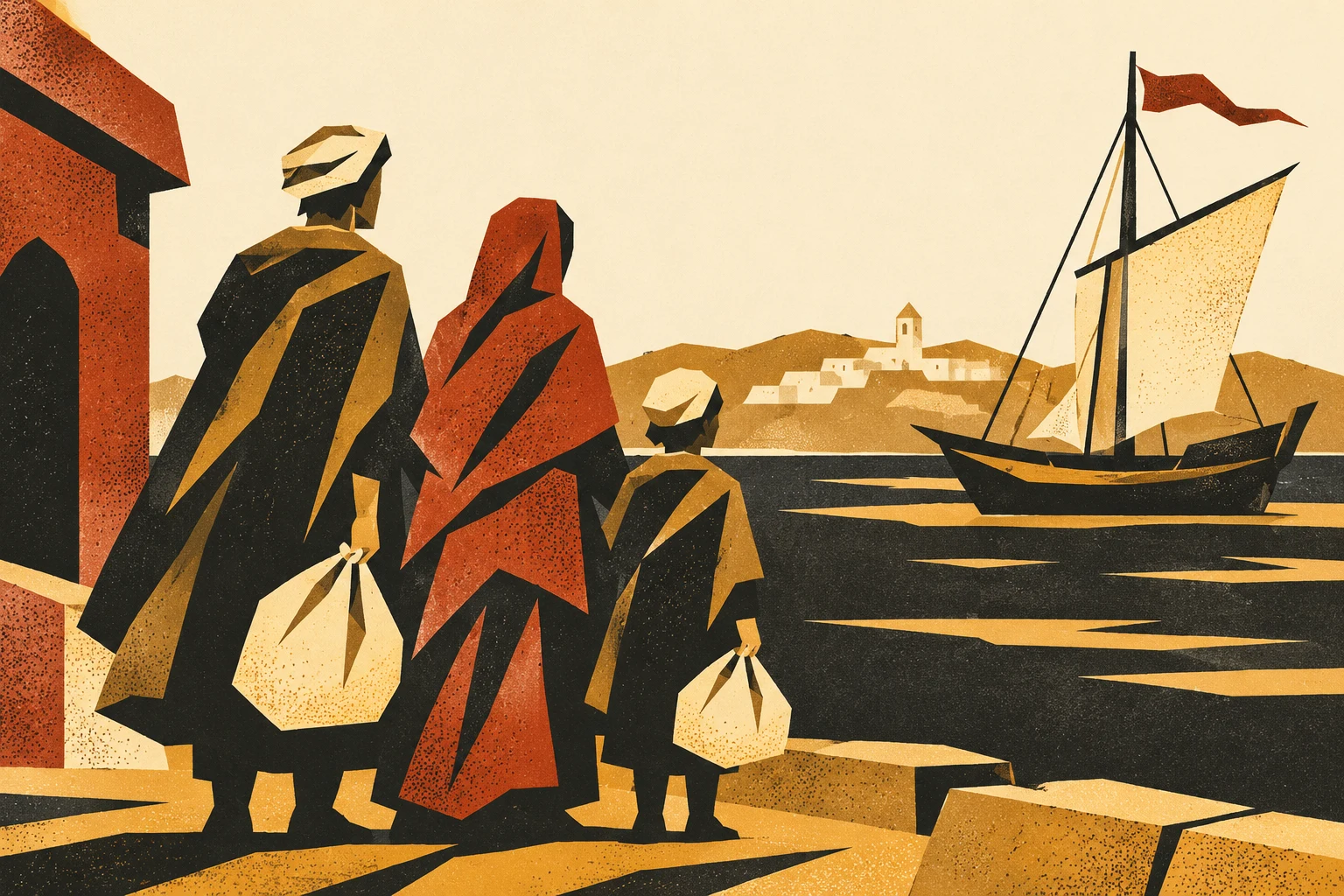
In 1609, the Spanish crown began expelling the Moriscos. The books had not won a place in Spain for the people whose Arabic ancestry they honoured. But their story did not stay in Granada or Rome. Copies, translations and memories went with the people forced to leave, and texts buried beneath a Christian city found new readers across the Mediterranean.4
One of them was Ahmad al-Hajari, known in Spain as Diego Bejarano, who had translated the tower parchment before leaving for North Africa. In his later writings, he preserved and interpreted material connected with the discoveries. Oumelbanine Zhiri’s 2024 study examines how his work defended Islam and challenged Spanish Catholic claims. A reader in exile stood in a very different place from a translator working for an archbishop in Granada.5
Wiegers’s 2025 research distinguishes hazy memories from more precise transmission through copies and named intermediaries. He also finds selective readings that brought the books closer to the religious expectations of their new audiences. In a believer’s eyes, the books could remain ancient and sacred while their meaning changed, and their rejection by Rome did not stop them offering other readers a prophetic future.4
The original lead books returned to Granada in 2000. Their return was the transfer of historical objects, not a verdict restoring them as genuine first-century scripture. The abbey now displays them as part of its history, alongside material documenting the controversies, the provincial council and the efforts to translate them. The lead is now evidence of the controversy.67
As of November 2026, the real questions about the lead books concern who wrote them, how they were translated and how they were received, not whether apostolic gospels were dug out of a Granada hillside. The discoveries helped build a shrine, but the people who read them never agreed on the past or the future they promised. The lead pages, and the rival versions made from them, are the record of that disagreement.15
Linked case files

Sources8
- Historia crítica de los falsos cronicones José Godoy Alcántara · 1868 · Accessed 2026-11-07
- Los Plomos del Sacromonte, in the history of Arabic translation Fernando Rodríguez Mediano / PHTE · Accessed 2026-11-07
- History and the Study of Religion: Prophecy, Imagination and Religion in the Granadan Lead Books Gerard Wiegers / Journal of Religious History · 2022 · Accessed 2026-11-07
- Transmission, Interpretation, and Use of the Parchment of the Torre Turpiana and Sacromonte Lead Books by Moriscos in Exile Gerard Wiegers / Brill · 2025 · Accessed 2026-11-07
- Early Modern Imperial Philologies: Ahmad al-Hajarî and the Lead Books of Granada Oumelbanine Zhiri / Religions · 2024-03-29 · Accessed 2026-11-07
- Historia Fundación Abadía del Sacromonte · Accessed 2026-11-07
- Sala 1: Los orígenes y los Libros Plúmbeos Fundación Abadía del Sacromonte · Accessed 2026-11-07
- A History of the Inquisition of Spain, volume IV Henry Charles Lea · 1907 · Accessed 2026-11-07