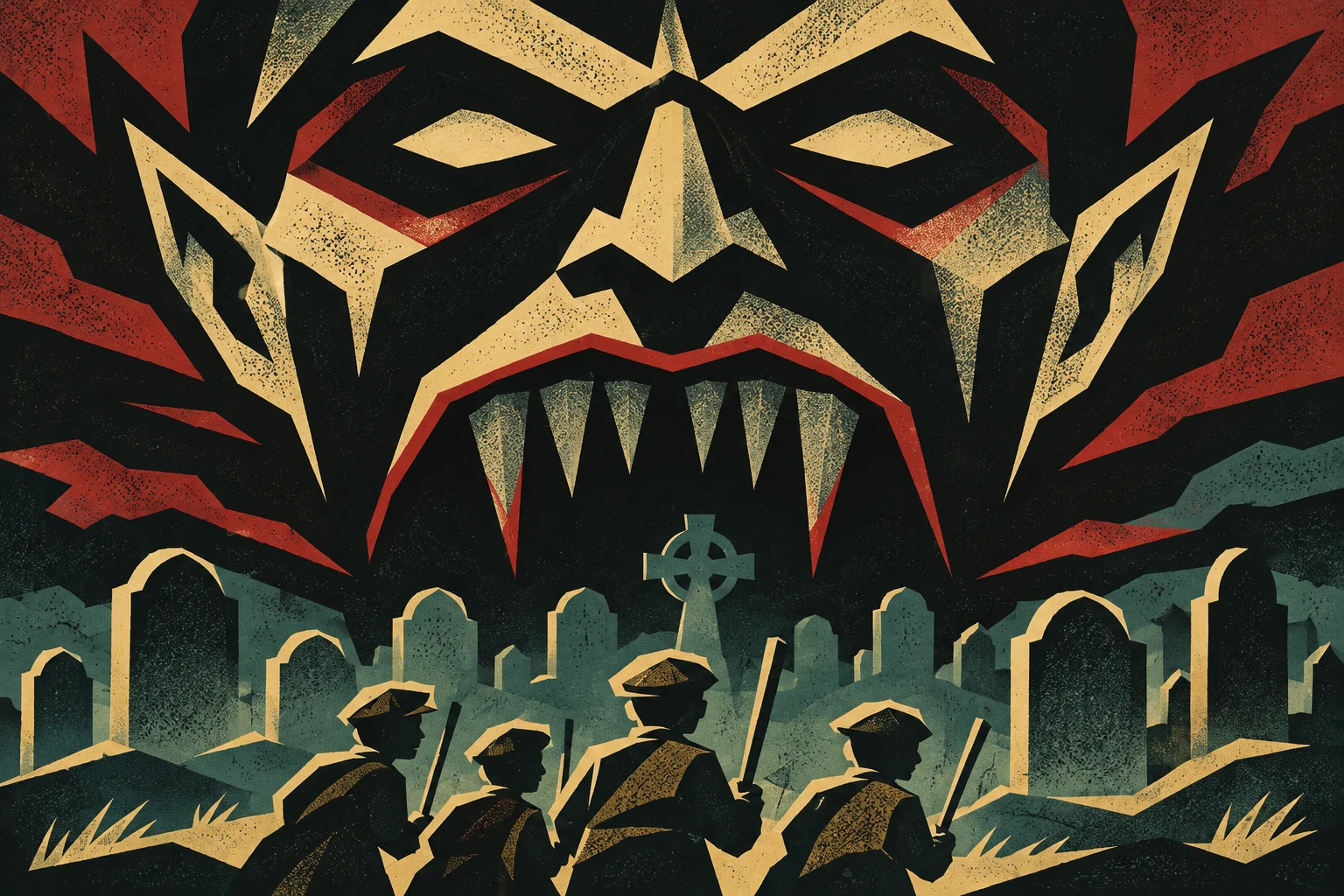
On the evening of 23 September 1954, police in the Gorbals were called to the Southern Necropolis, where hundreds of children were climbing into the cemetery. Some carried sticks and stones. They had come, they said, to kill a vampire.12
Hunters among the graves
It was residents of Caledonia Road who complained. *The Bulletin* reported children from all over Hutchesontown pouring into the graveyard, determined to kill the creature. Whatever they were hunting, the crowd was real, and the police had to deal with it.1
The cemetery was big enough for a rumour to grow in. The Southern Necropolis opened in 1840 and became the resting place of generations of Glaswegians; its heritage group records more than a quarter of a million burials. It lay right in the children’s own neighbourhood, with walls, gates and monuments for a search to move through. It is not the city’s better-known Necropolis, across the Clyde.3
The monster they were hunting was far more specific than a nameless ghost. Folklore Scotland’s account describes a seven-foot figure with iron teeth, said to have kidnapped and eaten two boys, details that came from the rumour itself, since no body was ever found and no eyewitness to a killing ever came forward. The hunt is documented, but the victims belong to the story that sent the children looking.4
Any adult arriving at the cemetery faced two questions. The first was whether children were gathering, armed and frightened or excited, and *The Bulletin*’s report leaves no doubt that they were. The second was whether their story was true, and a crowd can repeat the same tale without containing a single witness to the event it describes. The numbers made the hunt an urgent practical problem, but they did not show that anything with iron teeth was waiting among the graves.
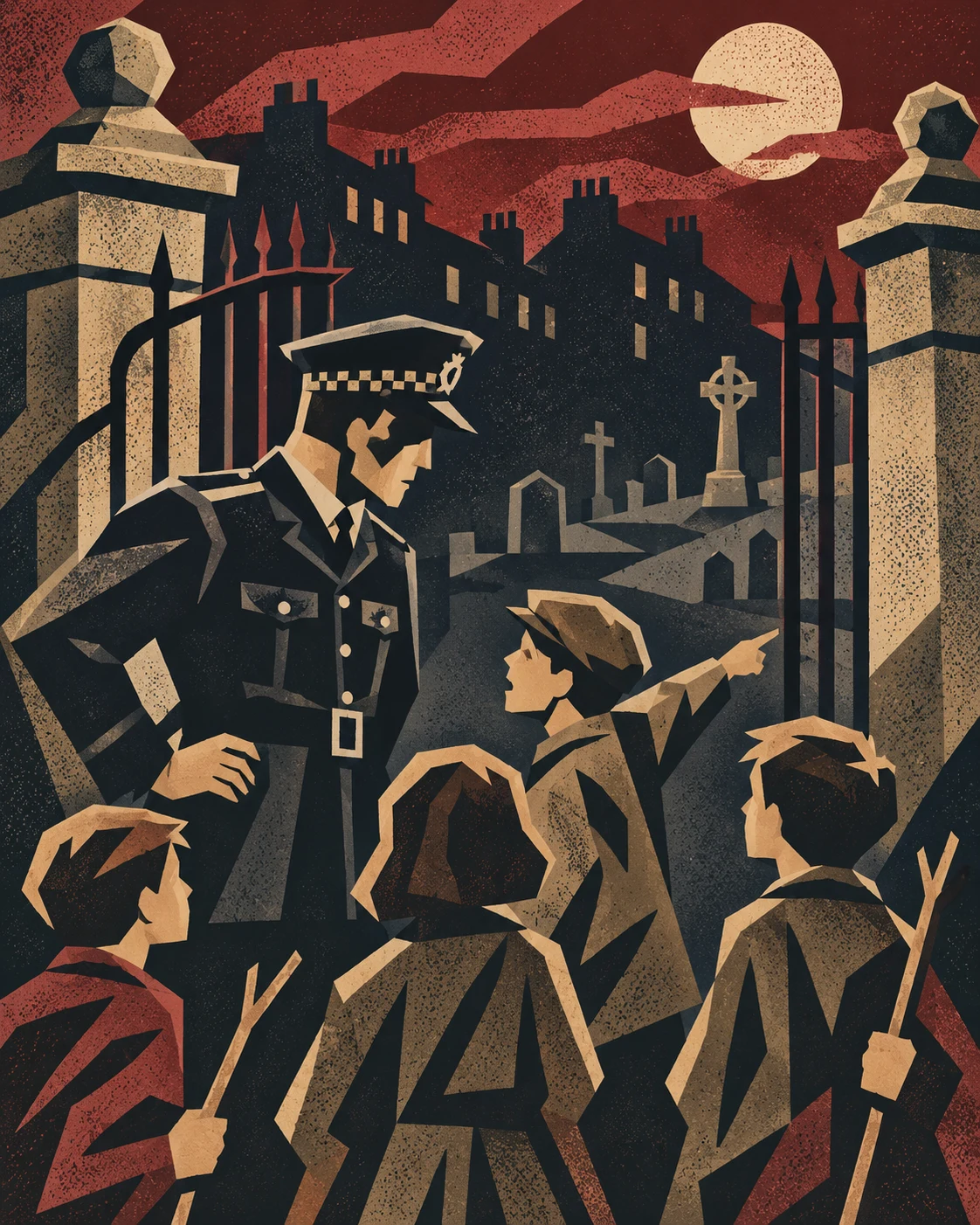
Constable Alex Deeprose found himself facing children all talking at once and adults asking whether the story might be true. Darkness and rain eventually cleared the crowd. *The Bulletin* reported a disturbance, and nothing to suggest anyone had been killed.1
Later versions add detail and atmosphere. Spooky Scotland, for example, describes a local headmaster becoming involved and sets the cemetery against the industrial skyline dominated by the ironworks known as Dixon’s Blazes. Such retellings show how the episode came to be remembered: a frightening burial ground, children acting together and adults trying to restore order. They cannot tell us exactly what each child saw, heard or believed that evening.5
Part of the story’s appeal is the direction the children were heading, towards the place where the danger was supposed to be. Whatever mix of fear, curiosity, bravado and play each brought, together they had turned an accusation into a mission, and while the police could clear a cemetery in an evening, clearing away the explanation adults would attach to the hunt took far longer.
A monster makes the papers
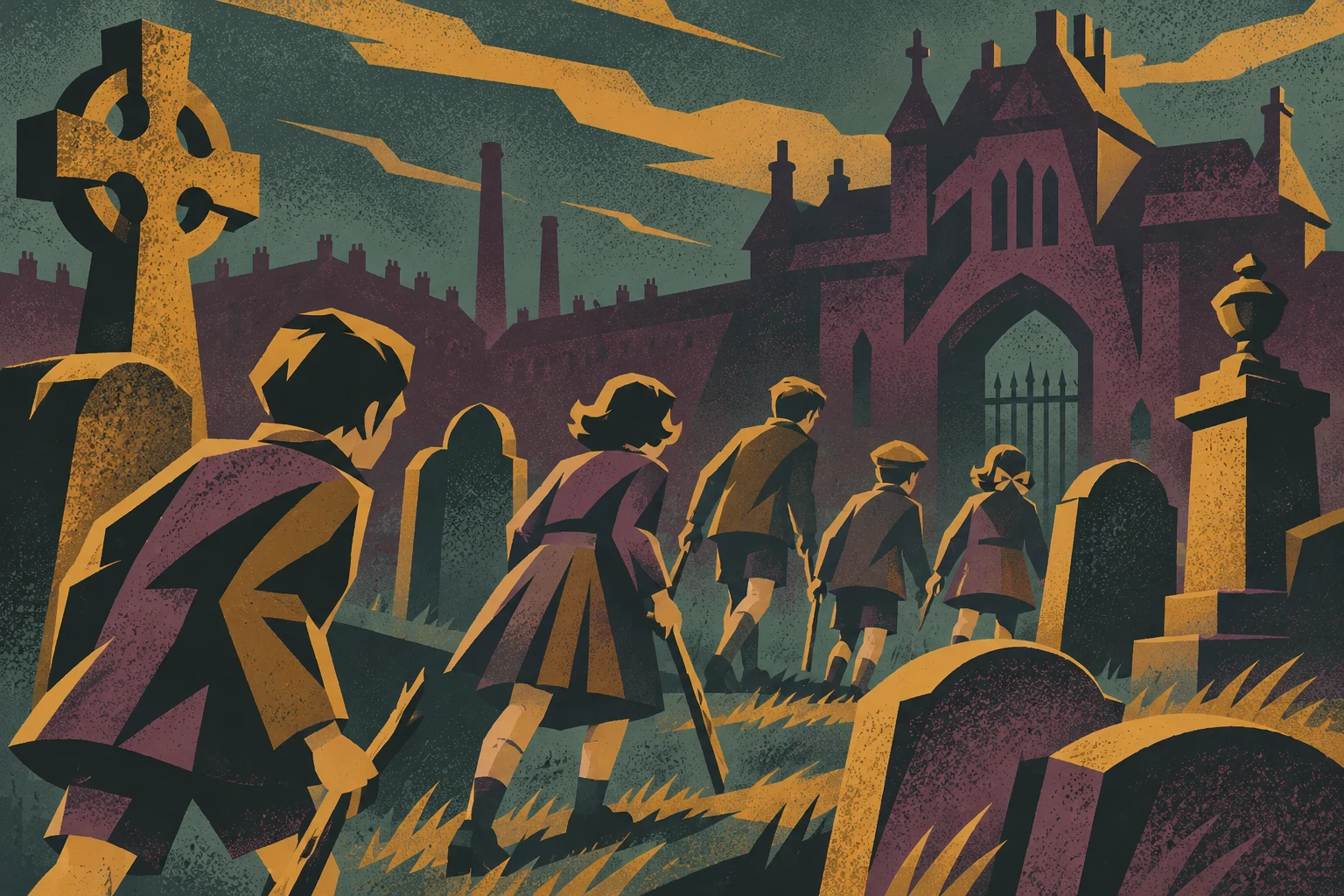
Decades later, Sandy Hobbs and David Cornwell traced how the story got from the graveyard into the newspapers. In 1985 they interviewed Deeprose and the original reporter, Malcolm Nicolson. Nicolson, they found, had rung Lawmoor Street police station on his regular round of calls for news, been told at first that nothing was happening and then heard about the vampire. Their research separates the gathering itself from the decisions that made it a news story and, later, a political cause.6
The first report, on 24 September, described the disturbance and ended by suggesting a local horror film might be to blame. It did not mention comics. The explanation that would later dominate the case is missing from the earliest account.1
*The Bulletin* returned to the story on Saturday 25 September with a headline reporting that the vampire hunters were out again. The surviving excerpt, quoted in Hobbs and Cornwell’s comparison of the coverage, attributes the comics explanation to local mothers. It shows that the hunt continued and that an explanation was taking shape. It does not show anyone tracing the rumour to a particular child reading a particular comic.7
By Monday, the paper had a different ending: the vampire no longer frightened anyone. That was a newspaper’s framing, not a survey of everyone who had been there, but it shows the episode already being wrapped up. A crowd had gathered, returned and dwindled away. The story could have ended there, as an odd police incident remembered by those who went looking.8
Another paper found a bigger use for it. The *Daily Record*’s coverage, traced through contemporary excerpts, set the vampire alongside its campaign against horror comics and their effect on children. A local incident was becoming ammunition in an existing fight. The paper did not need to say outright that comics had caused the hunt. Stories on the two subjects, printed side by side again and again, invited readers to draw that conclusion.9
By 1 October, the *Catholic Observer* had made the connection explicit. In the passage reproduced by Hobbs and Cornwell, it blamed lurid American comics for throwing the children into a state of fear. That is evidence of the accusation at the time. It is not evidence for the claim, and strong wording on a front page did nothing to supply the missing link between a published story and the children in the cemetery.10
The newspapers did not invent the episode, because reporters had a real event to describe and campaigners had real publications to attack. What changed was the connection drawn between them, as a possible influence hardened into an explanation while nobody established what these children had actually read.
The comics already on trial
Britain had been arguing about American-style comics long before the Gorbals hunt. A Commons debate on 1 August 1952 discussed how widely they circulated and what the government could do. Ministers distinguished between controlling who could enter a cinema and restricting the sale of printed matter, and warned of the wider censorship that licensing publications might bring. The problem had reached Parliament more than two years before children filled the cemetery.11
That puts the story in the right order. The vampire did not create national anxiety about what children read. It handed a vivid example to people already looking for evidence that something had to be done. A frightening monster, a crowd of children and a police response made a far more memorable story than any argument about definitions, or about the uncertain relationship between a reader and a fictional character.
The Comic Book Legal Defense Fund’s later account places the scare within that campaign and stresses the gap between the vampire’s alleged victims and reality. It also describes how the story passed from the local papers into national attention. The organisation exists to defend comics and their readers, so it has an obvious point of view. Its central distinction still holds: what campaigners said the hunt proved is not the same as what the hunt actually showed.2
A genuine concern lay behind the political argument. A disturbing publication need not provoke a literal imitation before an adult has reason to worry about it. A child might be frightened by a picture, by somebody else’s description or by a story whose source has long been forgotten. Demanding an exact copy of an illustrated scene would be far too narrow a test of influence. But fear alone cannot identify the publication that supposedly caused it.
Hobbs and Cornwell returned to the subject in a conference paper, “The Science and Politics of Play”. They contrasted the attention given to the vampire hunt with another episode, in which children were reported to have harassed a family of travellers. Their point was about which children’s behaviour gets noticed and how it is explained: some episodes become persuasive public examples, while other troubling ones are forgotten. The vampire’s role in the comics debate helped make it famous.12
The comparison also complicates the cosy version in which the hunt was simply a glorious adventure. Children carrying makeshift weapons and moving as a crowd could alarm the adults around them, even when their target was imaginary. That concern can be taken seriously without accepting the explanation chosen for it. The question is what the evidence allows us to say about where the rumour came from.
Searching through old comics could answer one part of the problem: had anyone published a close enough story before September 1954? It could not explain why so many children went to that particular cemetery. The older campaign supplied an adult interpretation. To understand the monster itself, investigators had to look beyond the newsagent’s shelves.
Jenny at the bedroom door
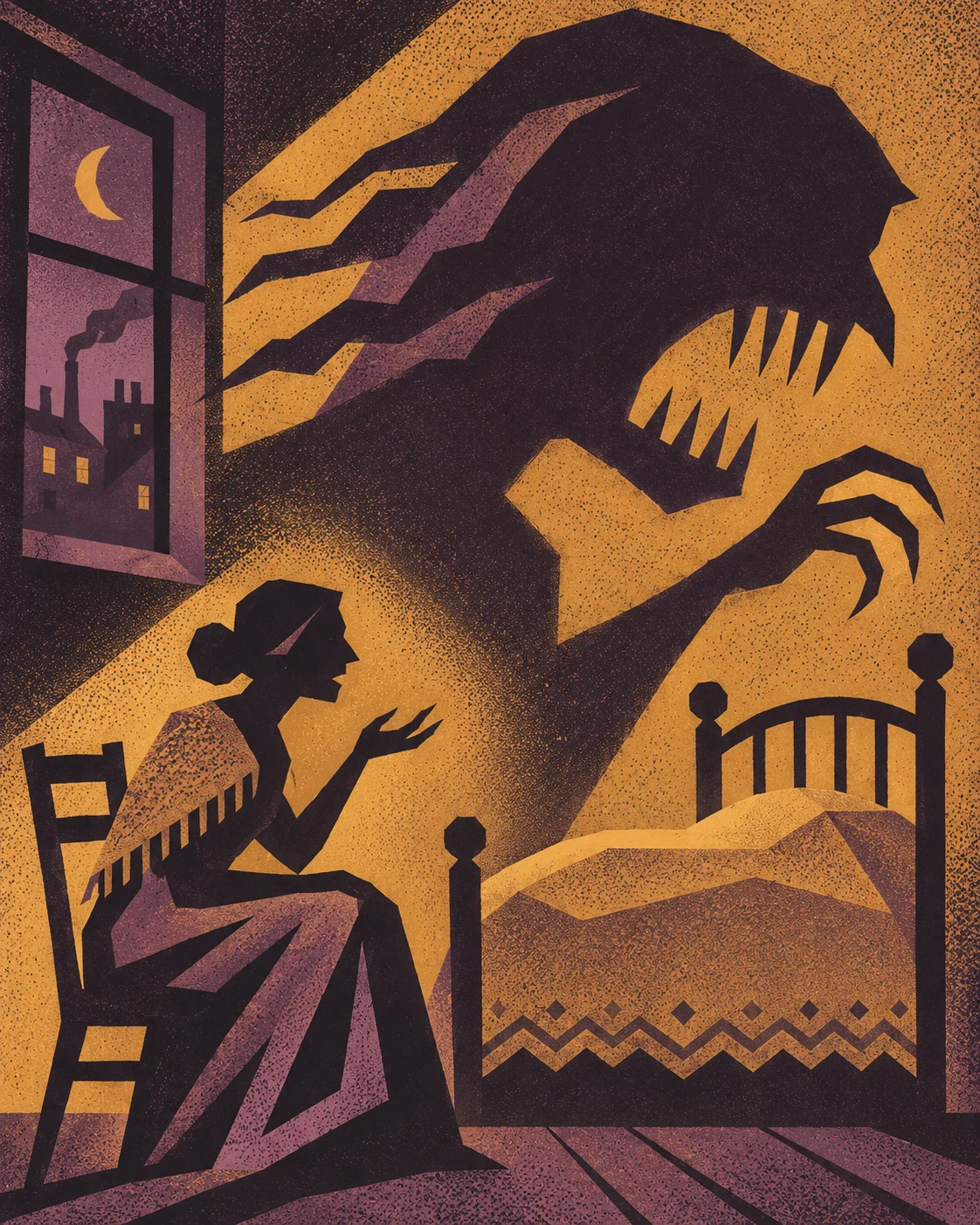
A monster with iron teeth already existed in Scottish literature. Alexander Anderson’s poem “Jenny Wi’ the Airn Teeth” appeared in his *Ballads and Sonnets* in 1879. It opens with a mother trying to settle a restless child while she has work to finish. She calls on a bogeywoman to come and take the child away. The threat becomes a presence at the door, and the mother pulls the child close before sending Jenny elsewhere.13
Jenny wi’ the airn teeth, Come an’ tak’ the bairn.
The poem shows exactly how such a figure can be made real. The monster enters through an adult’s attempt to manage a child: a bedtime performance, complete with footsteps supposedly approaching from the street and comfort for the child who finally falls asleep. Its last verses turn to the fears of older people. Anderson gives adults a hand in making monsters believable, instead of placing frightening imagination entirely in children’s entertainment.13
The resemblance to the Gorbals vampire is striking but incomplete. Both figures have iron teeth and both threaten children, but Jenny is a bogeywoman conjured in a mother’s bedtime routine, while the graveyard rumour concerned a vampire said to have already eaten two boys. The older figure widens the range of possible influences without showing that one of the hunters remembered Anderson’s verses and started the story.
The image is older still. The Book of Daniel describes a devouring beast with great iron teeth, so the pairing of monstrous appetite and metal teeth long predates twentieth-century comics. The verse belongs to a prophetic vision with a quite different purpose, and has nothing to say about a Glasgow cemetery. A resemblance in language is a possible lead, not a chain of transmission.14
Folklore Scotland includes the old Scottish bogey among the possible explanations for the vampire, so the hunt is now told alongside local tradition as well as American comics. That corrects too narrow a search for a single source. A detail can pass through stories, school lessons, family warnings and playground talk without anyone remembering where it came from.4
In their 1988 study, Hobbs and Cornwell placed the episode within a wider tradition of children’s hunts, while stressing that interviews conducted decades later have limits, because remembered dates, numbers and connections are not equally reliable. They suggest that the company of other children can make a frightening place more tempting to approach, with curiosity and fear working together and the group changing what each child dares to do. It is an interpretation of behaviour, not a claim that every child believed the same thing.6
Old folklore does not rule out modern entertainment. A familiar bogey can acquire a new name, and a comic can lend an image to a rumour with much older roots. There need not be a single pure original. A monster with several possible ancestors fits comfortably into a playground story told as though its latest crime had happened just down the road.
The vampire on the page
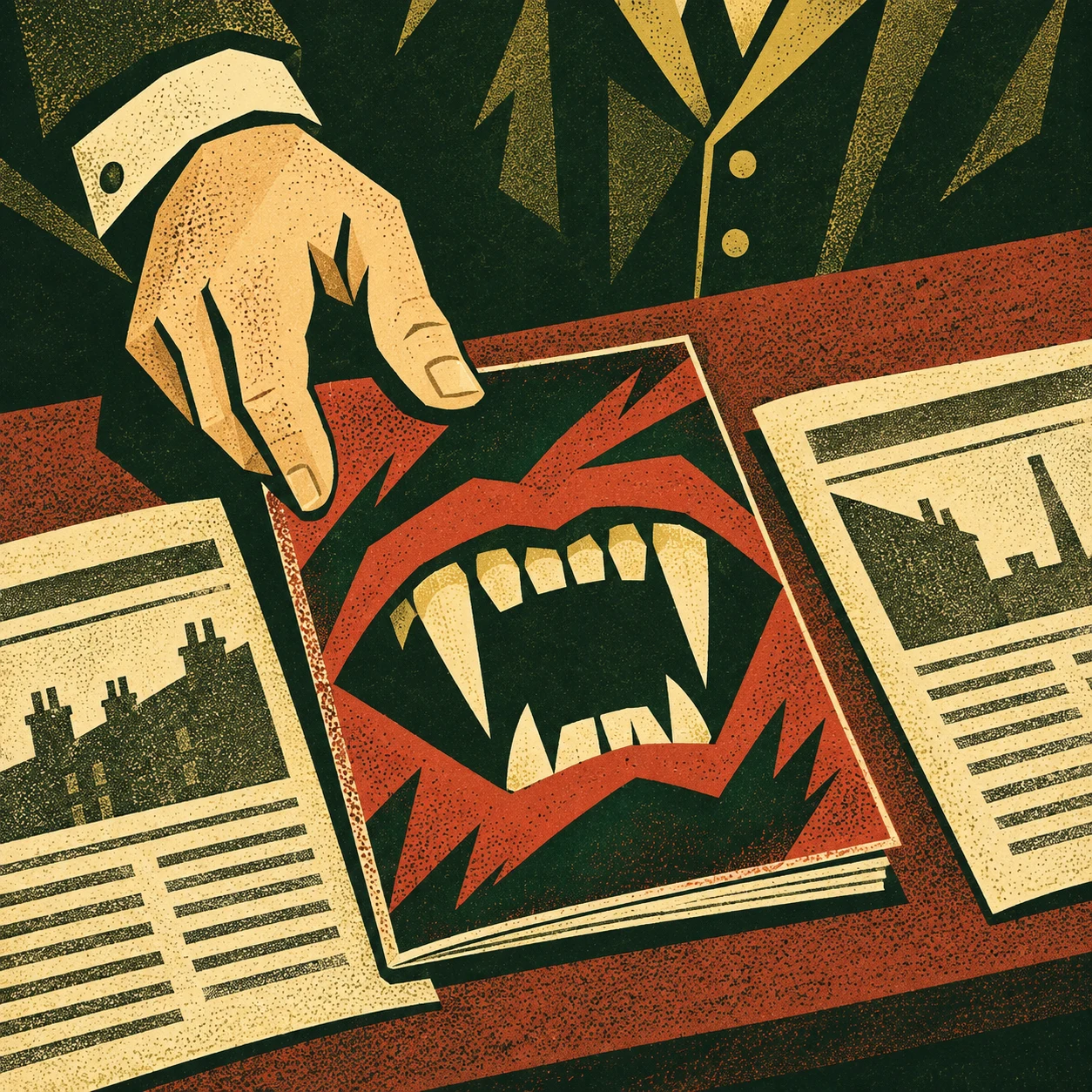
There was, in fact, an American comic with a strikingly similar title. The specialist bibliography *English-Language Vampire Comics, 1935–2000* lists “The Vampire with the Iron Teeth” in *Dark Mysteries* number 15, dated December 1953, so claims that no such comic existed before the Gorbals hunt are wrong, and its date and subject make it a serious candidate.15
The date establishes a possibility, because an issue published before the hunt could have been circulating before it. Several questions remain, including whether this issue reached Glasgow, who read it, and whether a child passed its details on and how they became attached to the Southern Necropolis. The title answers none of them, and although it is a far better clue than a general dislike of horror comics, it is still only a clue.
The comics collector Steve Banes, writing as Karswell on the blog *The Horrors of It All*, made the case for it in 2010. His post drew attention to the story, linked to its 1953 issue and treated the find as the answer to the vampire’s origins. This is the comic theory in the words of a genuine advocate, and a near-matching vampire in print is exactly the kind of evidence a serious search should welcome.16
The story itself is not the Gorbals hunt in pictures. Fifties Horror’s summary describes an aristocratic setting, a woman in need of replacement teeth and a plot involving iron dentures and a vampire’s fangs. Its characters and plot have little in common with a giant creature in a Glasgow graveyard accused of eating two local boys. What it does offer is one distinctive feature that could have been borrowed without the rest.17
Differences in plot do not rule out influence. Children retelling a story rarely get it right, and a rumour can easily fasten borrowed details onto a familiar place. The specific match in the teeth counts for more than the missing cemetery or the absent victims count against it. Even so, a plausible transformation remains a hypothesis until something links the comic to the children who passed the story on.1617
The collector’s discovery changes what can responsibly be said. No argument can rest any longer on the idea that no relevant comic existed. Equally, the comic does not prove that its readers started the hunt when nobody knows who those readers were. Both the old dismissal and the new solution go beyond the evidence. What is needed is narrower: a contemporary reference, a local copy with a traceable history or a documented connection to a reader.
That is why the story remains worth investigating now that the comic has been found. The question is not whether something supernatural escaped from a drawing, but how particular details travelled between printed entertainment, ordinary talk and an accusation about a real place. A surviving comic shows what was available to borrow, while how it might have been borrowed is a separate part of the history.
Horror on the screen
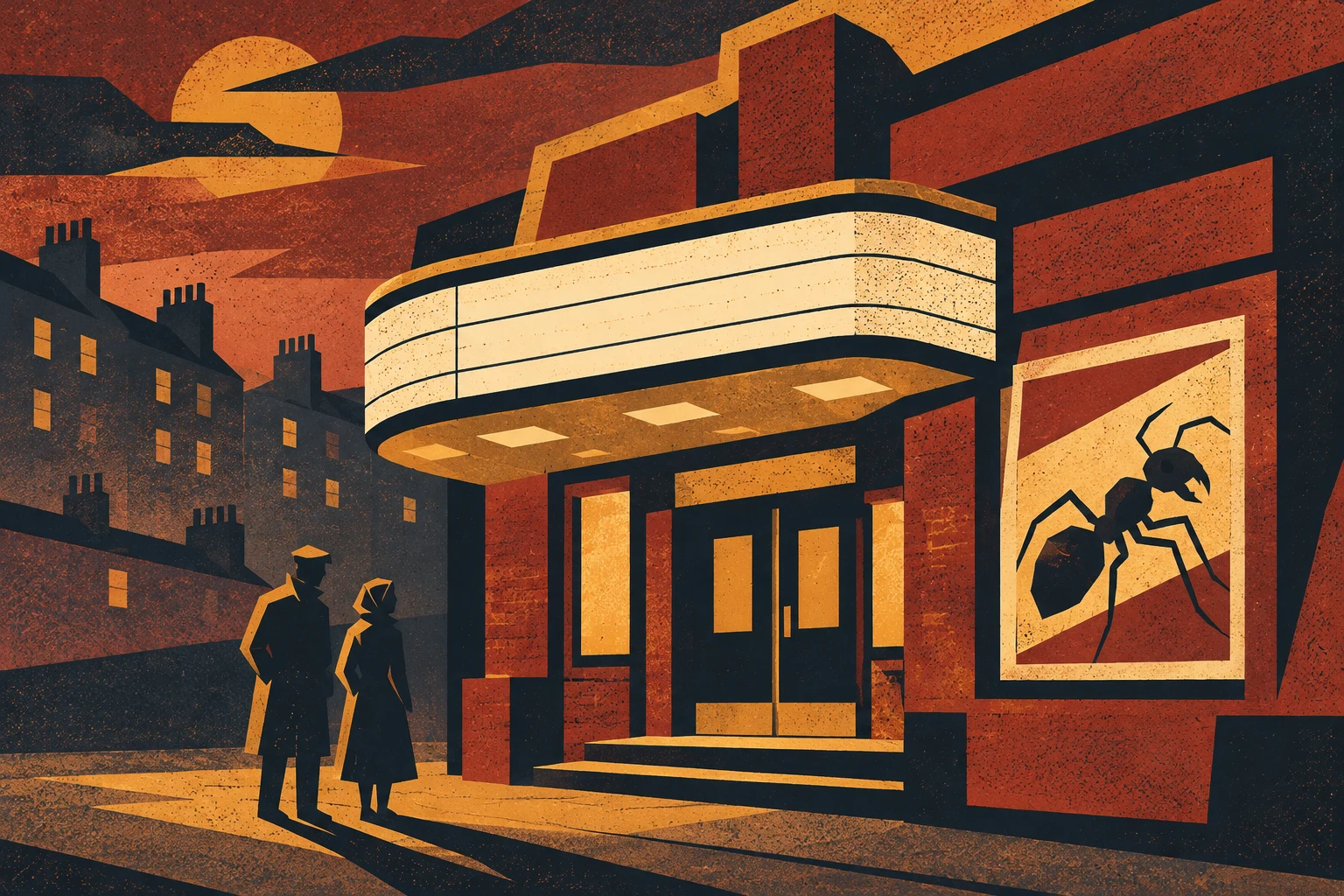
The first newspaper report blamed a local horror film.1 Hobbs and Cornwell later checked local cinema advertisements, which included *Them!*, with its giant ants.6 A film could supply a vocabulary of monsters without supplying this particular vampire, and neither a cinema listing nor a newspaper’s guess shows what the hunters had actually seen.
Film classification complicates the picture of children watching whatever horror was showing nearby. According to the British Film Institute, the X certificate replaced the H category in 1951 and barred anyone under sixteen, so a 1954 newspaper referring to an “H” film was using terminology already out of date. The word could survive in everyday speech after the system changed, but it identifies neither a film nor its audience.18
Nor does an age limit settle what children knew about a film. Posters, an older sibling’s description and talk outside the cinema are all different from seeing the picture, and any search for a source should include them, though doing so multiplies the gaps. A title in a listing shows that a film was advertised. Knowing that particular children had heard of it would need another source.
The neighbourhood lent all this a certain weight. Later local accounts describe the cemetery lit by the red glow of the nearby ironworks, and Spooky Scotland links that setting with memories of the hunt, an atmosphere many modern retellings make central. The connection is understandable: iron in the skyline, iron in the monster’s mouth. It remains an interpretation, not proof that the furnaces inspired the story.5
It is tempting to give the tale a single starting point that can be pictured: a poster, a furnace, an old poem or a page of a comic. Playground rumours are less obliging. They gather details as they travel, lose their first teller and reach the next child as something everyone already knows. The lack of a single recoverable beginning does not make the hunt mysterious in any supernatural sense.
Joining a hunt is also different from believing in its quarry. The rumour supplied the vampire with victims and a lair, but a child might join because everyone else was going, because the story was frightening or because it sounded exciting. The surviving records cannot divide the crowd by motive. A photograph of children among the graves, if one could be securely identified, would show who was there, not what each of them believed.
Like the comic and folklore theories, the film theory works best on that modest scale. Entertainment and older stories could all contribute to a shared vocabulary of threats, but no record identifies one film as the trigger. And by the time Parliament discussed the episode, the vampire had acquired a far firmer role in an adult story about what children needed protecting from.
A monster in Parliament
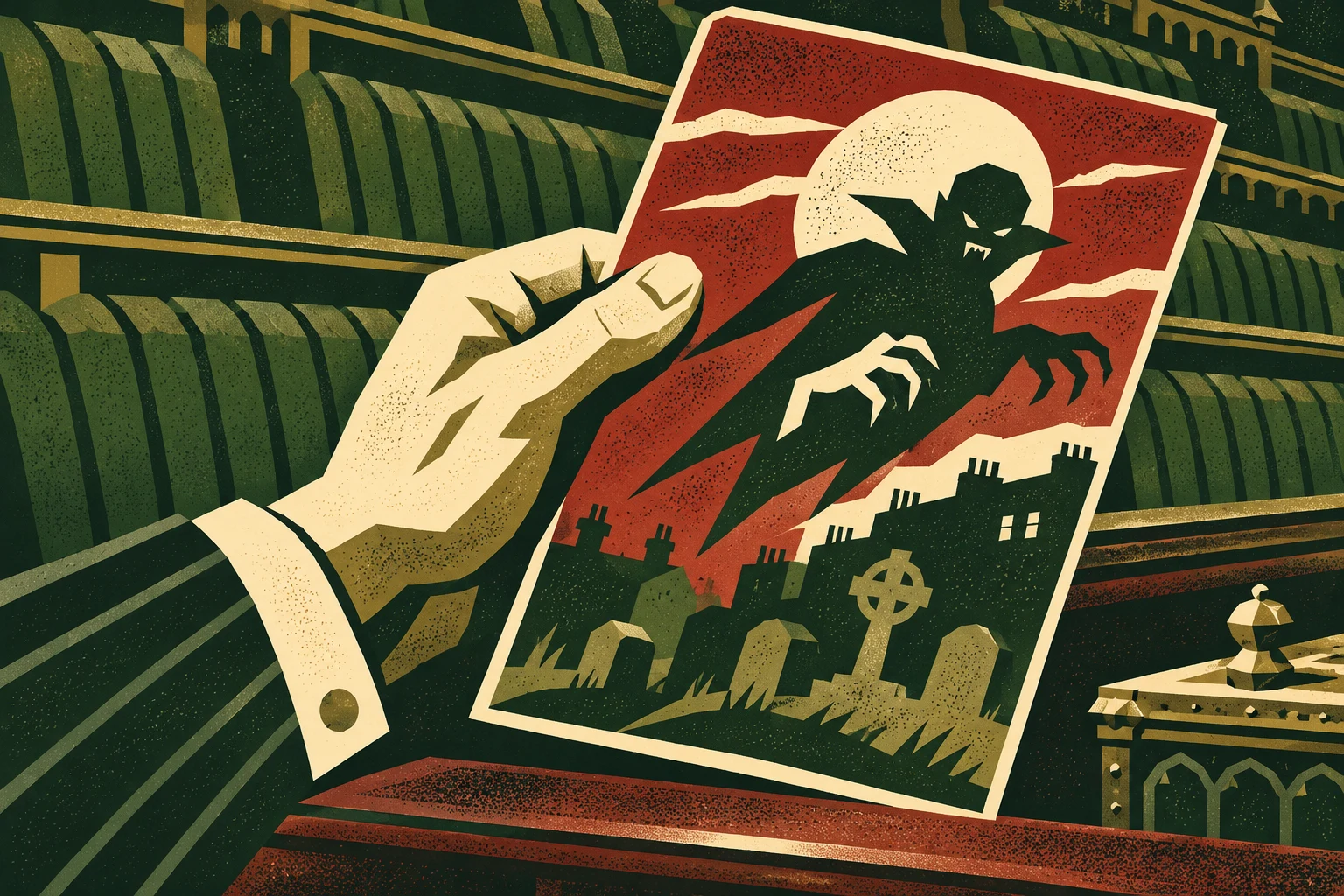
On 22 February 1955, John Rankin, the MP for Glasgow Tradeston, raised the cemetery hunt in the Commons debate on the Children and Young Persons (Harmful Publications) Bill. He described children arming themselves against a vampire with iron teeth and used the difficulty of controlling them as an argument for the Bill. In the same debate, Roy Jenkins warned against assuming that two things were connected simply because both had happened. The argument about evidence was already under way.19
The parliamentary record does not confirm the vampire’s alleged crimes, but it shows how an episode could be used to argue for legislation. Rankin made the children’s behaviour a vivid example of harmful influence, while Jenkins asked what actually linked reading to behaviour, and their exchange shows that the doubts did not wait for later sceptics, because people at the time disputed how much the evidence could bear.19
The government also had to define what it wanted to restrict. In the House of Lords on 21 April, Lord Mancroft explained that the Bill targeted publications consisting wholly or mainly of stories told in pictures, depicting crime, violence, cruelty or horrible incidents in a way that made the publication as a whole corrupting. Its supporters wanted a narrow tool aimed at horror comics, and acknowledged how hard it would be to avoid wider literary censorship.20
Nursery rhymes and classic works entered the argument, because frightening content was hardly confined to the comics being condemned. Mancroft dealt with examples including “Three Blind Mice” and insisted that the definition had to be read as a whole. The debate concerned form, context and likely effect as well as gruesome scenes. Parliament, trying to separate a harmful comic from an acceptable frightening story, faced the same ambiguity as Jenny’s bedtime threat.20
The Act received Royal Assent on 6 May 1955. Its original text defines the publications it covers and sets out offences of publishing and selling them, powers of seizure and destruction and restrictions on imports, but it does not mention the Gorbals vampire or say anything about what caused the hunt. The law belongs to the history of the wider campaign and cannot identify the source of one playground rumour.21
Calling it “the vampire that changed the law” makes a good headline but squashes the chronology. Parliament had debated American comics in 1952, the hunt later gave the Bill’s supporters a striking example to add to their other arguments, and the Act addressed a whole category of publications without investigating any single incident. The sequence connects the hunt to the campaign. It does not make the hunt the decisive cause.1121
The irony was not lost on later observers. A monster supposedly threatening children had become evidence in an argument about protecting children from frightening stories. The Act records what Parliament decided and the debates record how members argued. Neither can supply the reader, or the first teller, at the start of the graveyard story.

The teeth that stayed
The vampire lived on in a new form. On 28 and 29 October 2016, the Citizens Theatre staged Johnny McKnight’s play *The Gorbals Vampire*, the result of a community project. The theatre’s own record describes local involvement, recorded memories and school activities, including comic-art workshops. A story once used against children’s reading had become a source of creative work by children. The play is a documented event in its own right, though its scenes are not evidence about 1954.22
McKnight explained the story’s attraction in an interview with *Glasgowist*: the idea of children choosing to confront the monster instead of staying safely indoors appealed to him as a playwright. That explains much of the story’s modern appeal. The children become determined heroes, and the creature gives their collective courage a stage.23
Official records show how far the project reached. A 2018 Glasgow City Council report recorded an audience of more than 1,500 across the production’s three performances. Another council report described work with fifty-five pupils at St Francis Primary, using the vampire hunt to introduce local history and the Southern Necropolis. The story had become a way into the area’s past, whether or not anyone could identify the first child who told it.2425
A mural gave the legend a further public life. The South Glasgow Heritage and Environment Trust credits it to Ella Bryson and artists from Art Pistol, in an archway on St Luke’s Place near the theatre, and describes related exhibitions, local artwork and school writing, all new works made around the legend that show the vampire’s place in local culture.26
The record extends to collections as well. The Hunterian’s announcement for its 2016 exhibition *Comic Invention* included a scrapbook kept by the poet Edwin Morgan about horror comics and the Gorbals scandal. More recently, Glasgow Caledonian University interviewed a fashion student whose designs drew on both Jenny and the vampire. The forms keep changing: a newspaper story, a political weapon, a scrapbook, a play, a mural and clothes inspired by a remembered fright.2728
As of 7 November 2026, no evidence shows that a vampire killed two boys, and no single trigger for the hunt has been proven. The record combines a real gathering with uncertain routes of influence, in which the near-matching comic, the old Scottish bogey and the children’s search are all genuine. What is still missing is the link that would turn one plausible ancestor into the origin of the rumour.
The children went home without their monster, but the story proved harder to send away. Campaigners, scholars and artists could each borrow its teeth, because the hunt offered each of them something to recognise, whether a warning about entertainment, a puzzle in folklore or a crowd of children deciding to face danger together. Somewhere behind that crowd on a wet September night in 1954 was the child who first said the word “vampire”, and nobody knows who it was.
Linked case files
Sources28
- Police Had to Clear “Vampire” Hunters The Bulletin · 1954-09-24 · Accessed 2026-11-07
- How Comics Were Blamed for the Vampire Panic in 1950s Scotland Comic Book Legal Defense Fund · 2018-10 · Accessed 2026-11-07
- Southern Necropolis: historical and educational assets Friends of Southern Necropolis / Colin Mackie · undated · Accessed 2026-11-07
- The Gorbals Vampire Rebecca Brown / Folklore Scotland · undated · Accessed 2026-11-07
- The Gorbals’ Vampire: The Iron-toothed Child Eater Spooky Scotland · undated · Accessed 2026-11-07
- Hunting the Monster with Iron Teeth Sandy Hobbs and David Cornwell · 1988 · Accessed 2026-11-07
- Vampire Hunters Out Again The Bulletin · 1954-09-25 · Accessed 2026-11-07
- Vampire Doesn’t Scare Any More The Bulletin · 1954-09-27 · Accessed 2026-11-07
- Vampire with the Iron Teeth / campaign coverage Daily Record · 1954-09-25 to 1954-09-29 · Accessed 2026-11-07
- Front-page report linking comics and the hunt Catholic Observer · 1954-10-01 · Accessed 2026-11-07
- American-Style Comics UK Parliament · 1952-08-01 · Accessed 2026-11-07
- The Science and Politics of Play Sandy Hobbs and David Cornwell · 1985-09 · Accessed 2026-11-07
- Jenny Wi’ the Airn Teeth Alexander Anderson · 1879 · Accessed 2026-11-07
- Daniel 7:7 King James Bible · 1611 translation · Accessed 2026-11-07
- English-Language Vampire Comics, 1935–2000 Robert Eighteen-Bisang, J. Gordon Melton and Massimo Introvigne / CESNUR · 2007 · Accessed 2026-11-07
- The Re-Post with Iron Teeth: The Gorbals Vampire Myth Karswell / Steve Banes · 2010-03-23 · Accessed 2026-11-07
- The Vampire With The Iron Teeth Fifties Horror · undated · Accessed 2026-11-07
- 10 Great X-certificate Films Anton Bitel / British Film Institute · 2019-05-23 · Accessed 2026-11-07
- Children and Young Persons (Harmful Publications) Bill: Second Reading UK Parliament · 1955-02-22 · Accessed 2026-11-07
- Children and Young Persons (Harmful Publications) Bill: Lords Second Reading UK Parliament · 1955-04-21 · Accessed 2026-11-07
- Children and Young Persons (Harmful Publications) Act 1955, as enacted UK Parliament / HMSO · 1955-05-06 · Accessed 2026-11-07
- The Gorbals Vampire Citizens Theatre · undated retrospective of 2016 production · Accessed 2026-11-07
- Glasgowist Meets The Gorbals Vampire Playwright Johnny McKnight Sophie McNaughton / Glasgowist · 2016-10-26 · Accessed 2026-11-07
- Citizens Theatre redevelopment report Glasgow City Council · 2018-02-22 · Accessed 2026-11-07
- Gorbals heritage learning project report Glasgow Community Planning Partnership · 2018-08-13 · Accessed 2026-11-07
- Gorbals Vampire Mural Saskia McCracken / South Glasgow Heritage and Environment Trust · 2020-10-26 · Accessed 2026-11-07
- Comic Invention Opening Soon University of Glasgow / The Hunterian · 2016-03-14 · Accessed 2026-11-07
- Student Sinks His Teeth into Vampire-inspired Fashion Project Glasgow Caledonian University · 2025-07-04 · Accessed 2026-11-07