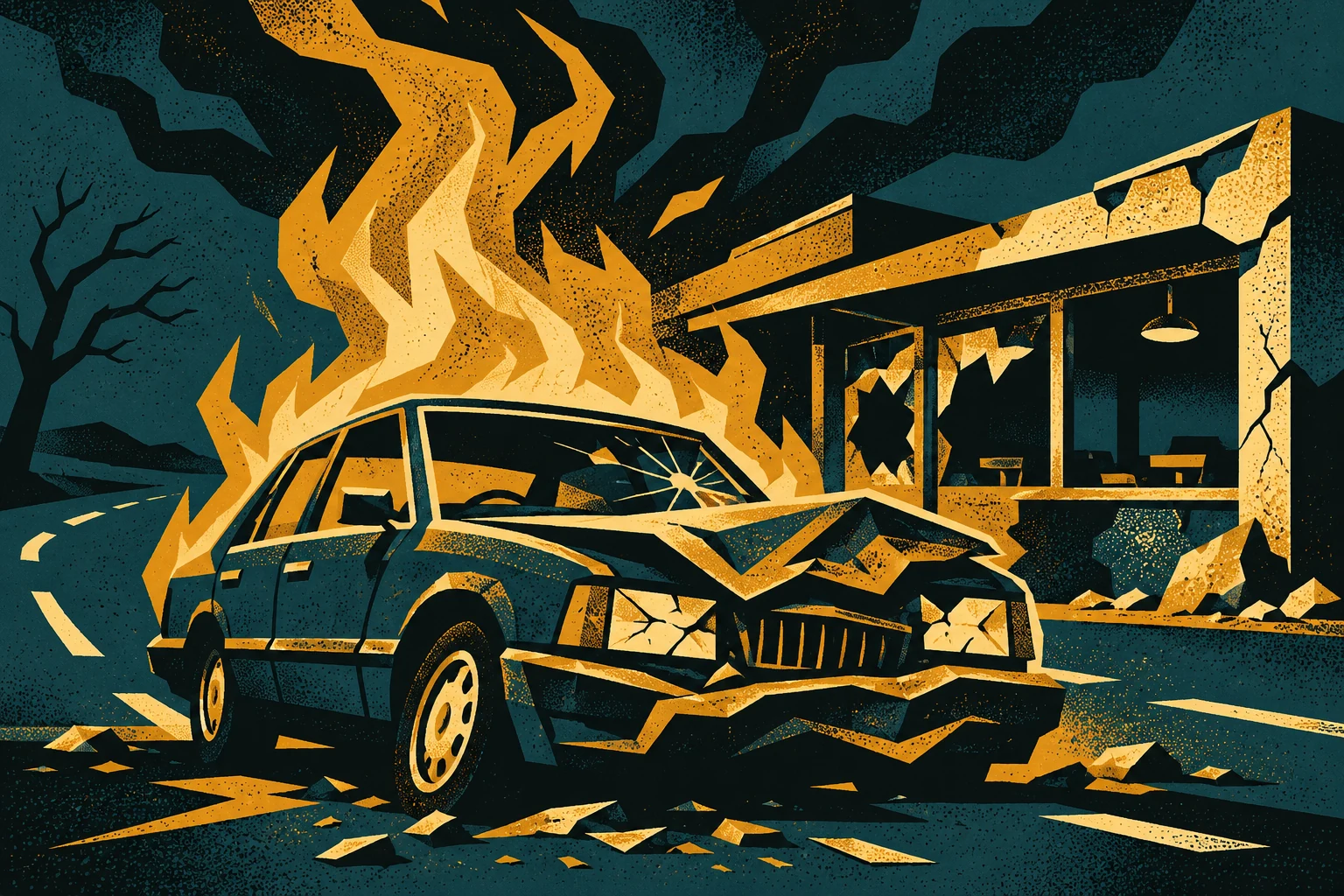
On 30 March 1987, a car driven by the defence researcher David Sands crashed into a disused café and burst into flames. Sands was killed. His was not the first death among Britain’s military electronics staff that had people asking questions, and it would not be the last.12
Two men in Bristol
Seven months earlier, the body of Vimal Dajibhai had been found below Bristol’s Clifton Suspension Bridge. The 24-year-old worked for Marconi Underwater Systems, part of a group whose electronics helped Britain detect submarines and guide weapons to their targets. He died in August 1986, and the inquest left his family with questions it could not answer.34
In October 1986, another young Marconi employee died near Bristol. Ashad Sharif, 26, worked for Marconi Defence Systems. His death involved a car and a rope, and it was so violent that later descriptions often drowned out the few facts investigators agreed on. The coroner recorded a verdict of suicide in Sharif’s case, but Dajibhai’s verdict stayed open.3
Two young men from different parts of the same defence company had died in the same city within a few months. The coincidence caught the eye of the technology journalist Tony Collins, whose reporting in Computer News helped turn two local investigations into a national story. Collins looked into the men’s work, their prospects and the circumstances of their deaths.5
According to Collins’s account at the time, the Bristol coroner, Donald Hawkins, had raised the possibility of a “James Bond” connection. An espionage story offered an explanation for deaths that made no sense to the people who knew the men. It also gave the press a memorable way to describe a case involving secret weapons and young computer specialists.5
Dajibhai and Sharif soon appeared together in Parliament. On 23 March 1987, the Labour MP Dale Campbell-Savours asked the Home Office about their deaths and the disappearance of another researcher, Avtar Singh-Gida. The minister, Douglas Hogg, replied that the Bristol inquiries were complete. He gave the two inquest verdicts and said there was no evidence linking the three cases beyond the limited connections he described.3
Hogg placed the men in different parts of Marconi, though he said Dajibhai and Singh-Gida had probably known each other at Loughborough University in 1979. The government accepted a possible personal connection but would not treat it as evidence of a crime, and Singh-Gida was still missing, with Derbyshire police still looking for him.3
An open verdict means the coroner could not decide how someone died, so it does not choose between murder, accident and suicide, while Sharif’s suicide verdict was a separate finding. The two deaths could be investigated together for possible links while keeping different conclusions about the evidence in each.4
For the families, that distinction offered little comfort. A police inquiry could close with the central question still unanswered, and the secrecy surrounding the men’s jobs made their work hard to discuss in public. Collins’s interest gave the cases an audience beyond the inquest room. Then another car crash brought a third defence researcher into the story.25

Weapons behind closed doors
Marconi was a familiar name attached to unfamiliar work. Its underwater systems, radar and computer research were part of the machinery of the Cold War, in which better detection or guidance could tip the balance between the two sides. Collins argued that computer simulation connected several of the men. Their expertise helped model situations too dangerous, expensive or secret to recreate for real.5
A simulation lets an engineer see how a system behaves before sending it into the sea or the air. In Collins’s account, jobs that looked separate could feed into related military problems. That gave the supposed pattern a firmer basis than the fact that the dead had all used computers.5
The other explanation was broader and less sinister. Large defence firms employed many specialists across separate divisions, laboratories and contracts, so a shared employer or discipline could explain why the names appeared in the same trade paper. Showing that the men worked on the same task would take evidence about the projects themselves, including who worked with whom and when.
Over all of this hung the promise of “Star Wars”. On 23 March 1983, President Ronald Reagan had called on American scientists to develop defences that could shoot down strategic nuclear missiles. In a televised address, he presented the research as a way out of relying on the threat of retaliation, and asked whether technology could make nuclear weapons obsolete.6
The Strategic Defense Initiative, usually shortened to SDI, became a powerful backdrop for stories about secret science. A shield against nuclear attack raised formidable problems of sensing, tracking, computing and interception. British expertise could be relevant to that research without every British defence contract belonging to the American programme.6
Marconi and the Ministry of Defence denied that the men’s work had anything to do with SDI.7 Collins’s own argument was narrower, and concerned the military uses of their skills. The two positions could both be true: a technology might interest missile-defence researchers while a particular employee worked on something else. Much of the public argument turned on how loosely “connected to Star Wars” was being used.
Later lists blurred the distinction, often describing all the dead as SDI scientists. An engineer working on an underwater system, a university researcher with a defence grant and a worker at a company later swallowed by another group could all end up with the same label. The result sounded like the destruction of a single team.18
That was a more alarming claim than Collins’s original reporting had shown. He had identified people whose careers crossed the secret world of defence electronics. The idea that an enemy was eliminating an irreplaceable group of missile-defence specialists rested on connections that were still disputed when the deaths first reached Parliament.35
The men’s careers also cut against an easy explanation. Collins reported that Dajibhai was about to leave for a better-paid job and that Sharif was about to take on more responsibility at Marconi. Sands had just finished a long project. These were good reasons to look closely at their circumstances, though a promising career shows only part of a person’s life.5
The list grows longer
Sands worked for Easams, another company in the General Electric Company group. His crash on 30 March 1987 sharpened concern about the Bristol deaths. The fire, the abandoned building and the unexplained purpose of his journey gave reporters a scene that was hard to dismiss as an ordinary road accident.12
The inquest did not settle what he had intended. In June 1987, The Scientist listed Sands among several researchers with military links whose deaths had produced inconclusive findings. The magazine also reported that local officials were working together to find out whether the cases were related. The uncertainty was public, even as ministers resisted a wider inquiry.2
Sands’s last weekend had already prompted a question in Parliament. On 9 April 1987, the Labour MP Eric Deakins asked why police had visited his home before he died, and Hogg replied that local uniformed officers had called on the evening of 28 March after Sands’s wife reported him missing, an ordinary missing-person call.9
That answer explained a visit that might otherwise have sounded ominous, and it also showed how the political campaign worked. MPs asked about individual incidents, officers and employers, hoping for details that would strengthen or weaken the proposed connection, but each answer closed one question without settling the whole controversy.9
Peter Peapell’s death brought a different workplace into the pattern. Peapell, 46, was a metallurgist at the Royal Military College of Science at Shrivenham, and police said he died of carbon monoxide poisoning on 22 February 1987 and was found under his car in his garage. The inquest recorded an open verdict.4
Reports at the time recorded his wife’s disbelief that he had meant to die. Where his body lay, beneath the car, became central to later accounts, which argued that he could not have put himself there. The claim appears in John Booth’s later discussion of the case, which draws on Collins and an April 1987 newspaper report.410
Booth also wrote that he had interviewed Peapell’s widow at length. He said she had felt threatened by efforts to persuade her that her husband had killed himself, and that another bereaved woman she contacted had been too frightened to meet her. Booth’s account adds a reported experience of pressure, but who was applying it, and why, was never established.10
Peapell’s case also shows how the paper trail can split. The shortened Computer News article circulated by the computer scientist Brian Randell gave an accidental-death verdict. Police reporting at the time gave an open verdict, which left the cause undecided. The discrepancy survives in material often treated as one consistent account.45
Other names gathered around the best-known cases. Collins’s 1990 book, Open Verdict, advertised 25 mysterious deaths in the defence industry. The title supplied a number that would recur for decades, though the people it covered went well beyond Marconi’s own staff. A 1991 review described electronic warfare as the thread connecting them.8
Some later cases made the story more disturbing still. Alistair Beckham’s death by electrocution in 1988 entered the lists alongside that of a Marconi marketing executive named Ferry. Later lists disagree over Ferry’s first name, calling him John or Peter, but include him in the same pattern. These cases stretched the inquiry across more employers and more kinds of evidence.11112
The growing count forced a decision about who belonged in it. A list of Marconi employees over one period answers a different question from a list covering defence contractors, university staff and people with looser technical links over most of a decade. Newspapers and later compilers did not always draw the same boundaries.811
The chronology follows the 19 main cases named in the original account, using reported months or years where exact dates are uncertain. John Whiteman’s death is undated, and overseas assassinations discussed as comparisons are left off.1

What the police were investigating
The phrase “no inquiry” can suggest that nobody investigated the deaths, but police had examined the Bristol cases and coroners had heard evidence. What MPs wanted was an extra investigation into a possible common cause, bringing together cases handled by different forces, and ministers repeatedly refused to order it.31314
Deakins pressed the Home Office about the Bristol investigation on 9 April 1987. Hogg replied that detectives from the divisional Criminal Investigation Department had worked under a senior CID officer at headquarters. He repeated the two verdicts, open for Dajibhai and suicide for Sharif. The government was defending local investigations it regarded as finished.13
A separate Ministry of Defence police investigation was also under way, which gave suspicion plenty to feed on. In April 1987, Randell’s RISKS digest carried a summary of Computer News reporting about a Serious Crimes Squad inquiry based at Portsmouth. It concerned alleged fraud on defence contracts, and Sharif’s work in Portsmouth had attracted attention.15
A serious-crime inquiry at a secretive defence contractor sounded relevant to unexplained deaths among its technical staff, and it was a lead worth checking. But its existence made it easy to merge two different stories: an investigation into contract irregularities, and inquiries into how particular men had died.15
The government confirmed the contract investigation in November 1987. The defence minister Tim Sainsbury told the Labour MP Harry Cohen that Ministry of Defence police had begun looking into alleged irregularities at Marconi Defence Systems in October 1986. On 19 August 1987, the inquiry and any prosecutions had been handed to the fraud investigation group of the Director of Public Prosecutions.16
Sainsbury explained why he would say no more. The matter was now with the law officers, and he declined to comment further. His silence concerned a live fraud investigation. It told the public nothing about the allegations, and it gave no sign that any dead employee had uncovered evidence or was about to hand it to investigators.16
Doug Hoyle returned to the subject on 31 March 1988. In written questions, he asked for an inquiry into the security implications of six deaths, whether Peapell and Dr John Brittan had done subcontracting work for Marconi while employed by the department, and whether named men had been questioned in the contracts investigation. Sainsbury answered all three in a single sentence.14
The answer to all three questions is no.
Its brevity helps explain why the campaign carried on. MPs who wanted a detailed account got a refusal, a denial of the work connections and a denial that the named men had been questioned. Ministers had answered what was asked, but the public had little chance to compare the cases or see the reasoning behind the decision.14
What nobody had done was gather the records and test a common explanation. Collins and the MPs were trying to make the government do that in public. The government left it to individual police forces and coroners, whose findings varied from case to case.31314

An enemy in the shadows
During the Cold War, a foreign campaign against Western defence research was believable enough to take seriously. Scientists and senior industrialists could become terrorist targets. On 9 July 1986, a bomb near Munich killed the Siemens executive Karl Heinz Beckurts and his driver, Eckhard Groppler, on their way to work. German prosecutors blamed the Red Army Faction.17
Siemens later commemorated the two men with memorials near the road and at its Munich site. The bombing gave the sabotage theory a real event to build on: a senior scientific figure killed by a bomb, in an attack that plainly involved other people. The Bristol cases offered no comparable evidence of an attacker, but their loose ends could be set beside a known assassination.17
That comparison grew into a theory of a wider campaign. Marian K. Leighton revisited the British deaths in a 2015 article in the International Journal of Intelligence and CounterIntelligence, and according to a published summary she suggested that Soviet-backed terrorists and East German intelligence officers might have targeted people linked to missile defence, while admitting there was no irrefutable evidence.18
Leighton drew on the wider history of Soviet and East German dealings with violent groups. The question for the Marconi cases was whether that history pointed to an operation against these particular men. A secret service’s ability to recruit terrorists explains how an attack could have been organised. Showing that one was would take an order, a participant or a traceable link.18
The summary made the men’s supposed shared work on SDI central to the case. The range of employers on the lists leaves that premise in doubt. The sabotage theory gains force if a specific shared programme can be shown, and loses it when “Star Wars scientist” becomes a loose label for anyone doing sensitive technical work.1118
Another strand of speculation turned to psychological coercion. Reviewing Open Verdict in 1991, Mark Delmege described Collins’s account of Joe Vialls, who said he had suffered life-threatening psychological abuse after refusing to change his work in India. The book used his story to explore how people might be driven to destroy themselves.8
The idea could explain deaths that looked self-inflicted while keeping an outside hand behind them, but it also needed evidence of the coercion itself, and Vialls was describing only his own experience. A later writer’s comparisons could suggest lines of inquiry, but they could not show who, if anyone, had interfered with Dajibhai, Sharif or Sands.8
A murder disguised as suicide, a genuine suicide under work pressure and an accident tend to leave different evidence behind. A conspiracy theory becomes hard to test when it can absorb every outcome without saying who acted or what would expose them. The individual investigations remain the best route to answers.
The families’ objections deserve more than blind agreement or dismissal. They knew the men’s habits and plans, and could challenge assumptions about their lives, and what they knew belonged in the inquiries. An accusation of a coordinated intelligence operation needed evidence that no family could be expected to have.14

Who belongs on the list?
The earliest death in many versions is that of Keith Bowden, a computer scientist killed in a car crash in Essex in March 1982. Later accounts put his work and the disputed circumstances of the crash at the start of the sequence. Beginning there gives the story a longer history than the Bristol cases that first made it news.1
Bowden’s academic career left its own record. A catalogue compiled for the Contemporary Scientific Archives Centre lists his papers on a medical-records project run by the University of Essex and Guy’s Hospital. That side of his work is missing from most accounts of the alleged conspiracy.19
The dates also defeat the usual shorthand, because Bowden died before Reagan announced SDI in March 1983. He might be included because of earlier defence work or his technical skills, but he cannot have worked on a programme that did not yet exist, so each name on an expanded list needs its own explanation.16
Company history sets another trap. Plessey employees often appear beside Marconi staff, sometimes with the claim that Marconi had bought Plessey before the deaths. According to SIPRI, the GEC–Siemens bid for Plessey was launched in November 1988 and succeeded in 1989. A later change of ownership cannot turn an earlier Plessey employee into a Marconi colleague.20
A list published in the British UFO Research Association’s UFO Times shows how wide the net was cast. Alongside Marconi and Plessey staff, it includes people from government establishments, the Royal Military College of Science, British Aerospace and a polytechnic. It also separates open verdicts, accidents, suicides and a heart attack for which no inquest was held.11
Project Camelot’s online version shows the same problem in its first paragraphs. It announces at least 25 deaths among GEC-Marconi staff on a torpedo project, then says four of the dead worked for the GEC group. Its own introduction swings between a small group of employees and a much wider collection of cases.12
A catalogue like this records the history of a theory as well as a series of deaths. Its compiler has decided that certain jobs, dates and circumstances belong together, and readers are then invited to study the group. Change the rules for inclusion and the pattern changes too, even though every death on the list was a real loss.11
The number 25 cannot, by itself, show an unusual death rate. That would need a defined workforce, a fixed period and a consistent rule for which deaths count. Comparing a selected list drawn from several organisations with the staff of one company would give a misleading result. The surviving count supports no conclusion about excess deaths.
One supposed disappearance was solved while the controversy was still building. The Scientist reported in June 1987 that Singh-Gida had been found working in a Paris boutique and had come home. He had vanished while doing underwater acoustic research at Loughborough on a Ministry of Defence grant.2
His return changed that case. It left questions about why he had gone, but it took him off any list of the dead. The unexplained Bristol deaths could still be examined, and the links between workplaces could still be tested. But a researcher found alive in Paris was a long way from a missing colleague presumed murdered.23
A murder with an answer
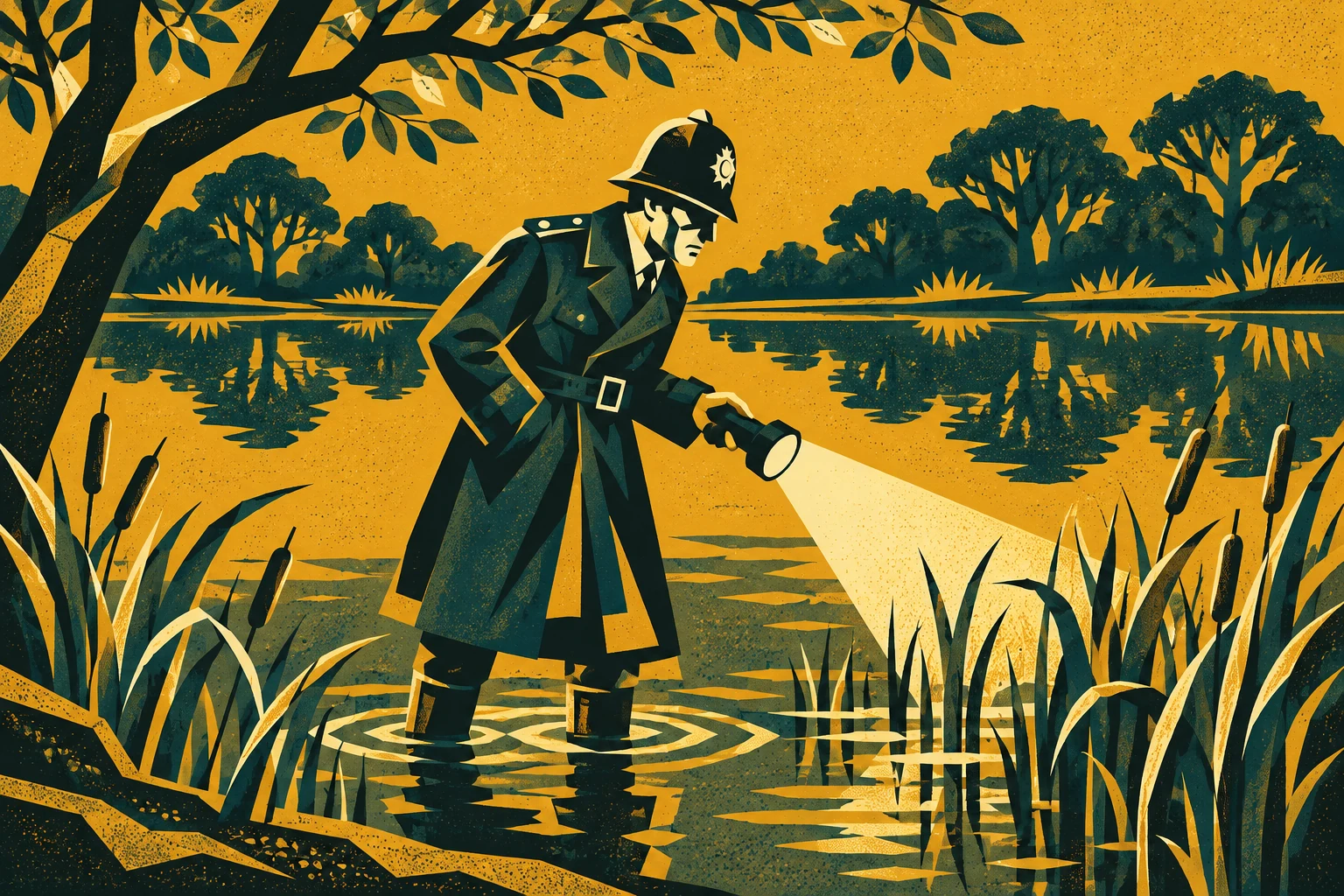
Shani Warren’s case became another fixture of the longer lists.12 Her body was found at Taplow Lake in Buckinghamshire in April 1987. She was 26, and the circumstances of her death gave her family every reason to reject the idea that she had taken her own life. Decades later, forensic evidence identified her killer.2122
Her brother, Stephen, remembered that she had mown the lawn on Good Friday and gone out to get rid of the cuttings, buy food and pick up an Easter card and egg. She was expected home soon afterwards. He described a young woman building an independent life, taking in lodgers and insisting on paying her parents back for their help.21
The Project Camelot list included Warren because she worked as a personal assistant at a company called Micro Scope, which it described as a later Marconi acquisition. It placed her death beside the others without any evidence of a shared attacker. Her employer was the only connection.12
In 2019, investigators re-examined material from the case using newer DNA techniques. A sample recovered from the gag linked Warren’s death to Donald Robertson, a convicted sex offender. For the first time, police had a suspect whose link to the killing could be tested in court, not just an association on a list.22
On 17 May 2022, a jury at Reading Crown Court convicted Robertson of Warren’s murder, indecent assault and false imprisonment. At the same trial, he was convicted of offences against another victim. Two days later, he was jailed for life for Warren’s murder, with a minimum term of 30 years.2122
The conviction solved a murder that had gone unsolved for 35 years. The evidence in court described Robertson’s violence against women, and the judge spoke about his responsibility for Warren’s death. None of it supported the idea of an attack on defence research. Putting Warren on a list had done nothing to identify the man who killed her.22
Her family had been right to reject suicide, but they were proved right by a sexual-murder investigation, not by the espionage theory. Both facts belong in the story, because an early explanation failed Warren and her family, while a later prosecution found her killer without supporting any link to the other deaths.2122
Stephen Warren said his parents had died before the case was resolved. The family waited decades for an answer, and his parents never heard a jury name their daughter’s killer.21

An American echo
Nearly forty years later, the same kind of list began to form in the United States. In late February 2026, William Neil McCasland, a retired Air Force major general who had once commanded the Air Force Research Laboratory, walked out of his home in Albuquerque and did not come back. Within weeks, online writers had grouped him with other scientists and laboratory staff who had died or disappeared since 2022, among them a physicist at MIT, a Caltech astrophysicist and several employees of Los Alamos.2627
The story moved quickly from Substack posts to the Daily Mail, which began a series on 22 March, and then to Congress. On 15 April a reporter asked the White House press secretary whether anyone was checking for a connection. Within a week the FBI said it was leading an effort to look for links, and the House Oversight Committee announced an inquiry of its own.2627
The resemblance to the Marconi affair was noticed almost at once, and podcasts and blogs set the two lists side by side. The Liberal England blog recalled George Younger, then Defence Secretary, telling an Australian television programme in 1989 that when thousands of people work on a project, quite a number of them are likely to die. The American list was built in the same way as the British one, from unrelated deaths and disappearances joined by a shared association with secret work.29
Unlike the Marconi cases, the American ones were examined quickly and in public, and most turned out to have ordinary explanations. Nuno Loureiro of MIT was killed in a shooting that the FBI said was the work of a gunman acting alone, Carl Grillmair died in a carjacking for which a man was charged, and a pharmaceutical researcher who drowned was found to have suffered no foul play. McCasland’s wife wrote that his clearances were commonly held and that it seemed unlikely he had been taken for his dated secrets.2627
The statistician David Hand put the numbers in proportion for Scientific American. About 200,000 American adults go missing every year, and with some 70,000 people working in nuclear-related fields, about fifty of them would be expected to vanish annually without any plot at all. As of November 2026, no public finding links the American cases and McCasland has not been found. President Trump said at the end of April that investigators were finding not much of a connection.262728
The files still to be read
Collins’s investigation outlived the news cycle. Open Verdict turned the story into a book in 1990, and later writers kept arguing over the deaths. Its readers inherited questions about particular men, along with a wider suspicion about what might have happened inside Britain’s defence industry.8
Government records have come out piecemeal. In June 2015, the Ministry of Defence answered a freedom-of-information request about how it had handled press reports of the deaths. The department released material but withheld personal information and some internal comments under exemptions that protect internal discussion. The request covered the government’s response to the publicity, not the full police files.23
The released attachment is an eight-page bundle on health concerns at the Royal Signals and Radar Establishment, including papers from 1989–91. It covers radar safety and proposed health research. The pages show officials preparing answers to concern about deaths and illness, but they are not a joined-up criminal investigation into the Bristol cases.24
Secrecy has shaped the story from the start. The men’s work was hard to explain in public, ministers often answered narrowly, and families struggled to match official findings with the people they knew. Collins’s reporting forced uncomfortable questions into the open. Its lasting value lies in the cases it brought to light, which are still worth checking against the original records.3514
A convincing common explanation would have to tie specific deaths together with evidence: a shared operation, a documented threat, a participant’s account that can be checked, or forensic findings pointing to the same killer. More work on a single case could also change its verdict without linking it to any other. Warren’s case shows how far apart those two questions can be.2122
Several of the original cases remain unresolved. Dajibhai’s open verdict still stands, alongside Sharif’s suicide verdict and the uncertainty left by Sands’s inquest. Parliament’s refusal of a wider inquiry was a government decision, and it filled in nothing about any man’s final hours.2314
As of 7 November 2026, none of the sources consulted contains public evidence of a coordinated campaign to kill the people grouped under the Marconi name. The full inquest and police records, Collins’s source material and the disputed project links are where the open questions should be pursued. The claim that 25 colleagues on one secret programme were murdered goes further than the evidence allows.
The Ministry of Defence did at least know about the book. On 26 June 1990, the Labour MP Paul Flynn asked whether a copy of Open Verdict could be bought for its library. The minister, Michael Neubert, replied that the library already had one.25
Linked case files

Sources29
- Dead Scientists: The Marconi Murders The Unredacted · 2018-02-21 · Accessed 2026-11-07
- Scientists’ Deaths Still a Puzzle The Scientist · 1987-06-15 · Accessed 2026-11-07
- Deaths (Bristol) Douglas Hogg, House of Commons · 1987-03-23 · Accessed 2026-11-07
- Sixth defense scientist dies mysteriously Ed Lion, United Press International · 1987-04-05 · Accessed 2026-11-07
- Defence deaths: the facts behind the story Tony Collins; reproduced by Brian Randell · 1987-04-30 · Accessed 2026-11-07
- Address to the Nation on Defense and National Security Ronald Reagan · 1983-03-23 · Accessed 2026-11-07
- Defense Work Links 3 Deaths in Britain The Washington Post · 1987-04-04 · Accessed 2026-11-07
- Mysteries from the Cold War Mark Delmege · 1991-11-13 · Accessed 2026-11-07
- Mr. David Sands Douglas Hogg, House of Commons · 1987-04-09 · Accessed 2026-11-07
- The David Kelly mystery: discussion of Peter Peapell John Booth, Lobster 76 · 2018 · Accessed 2026-11-07
- Defence-worker death list, UFO Times no. 32 British UFO Research Association · 1994 · Accessed 2026-11-07
- 25 Marconi Scientists, 1982–88 Project Camelot · Accessed 2026-11-07
- Scientists (Deaths) Douglas Hogg, House of Commons · 1987-04-09 · Accessed 2026-11-07
- Scientists (Deaths) Tim Sainsbury, House of Commons · 1988-03-31 · Accessed 2026-11-07
- The Marconi Affair Brian Randell, RISKS Digest 4.74 · 1987-04-14 · Accessed 2026-11-07
- Marconi Tim Sainsbury, House of Commons · 1987-11-02 · Accessed 2026-11-07
- Siemens gedenkt Karl Heinz Beckurts und Eckhard Groppler Siemens AG · 2011-07-08 · Accessed 2026-11-07
- The “Star Wars” Murders: published summary of Marian Leighton’s argument Marian K. Leighton; excerpt hosted by Kevin Lewis, National Affairs · 2015-03-18 · Accessed 2026-11-07
- Catalogue of papers and correspondence of Keith Frederick Bowden Jeannine Alton and Peter Harper / Wellcome Collection · 1985 · Accessed 2026-11-07
- SIPRI Yearbook 1990: defence-industry concentration Stockholm International Peace Research Institute · 1990 · Accessed 2026-11-07
- Statement from the brother of murder victim Shani Warren Thames Valley Police, publishing Stephen Warren’s statement · 2022-05-17 · Accessed 2026-11-07
- Shani Warren murder: Sex attacker Donald Robertson jailed for life ITV News Meridian · 2022-05-19 · Accessed 2026-11-07
- Response FOI2015/04063 Ministry of Defence · 2015-06-25 · Accessed 2026-11-07
- Health study at RSRE: MOD’s lines to take, attachments to FOI2015/04063 Ministry of Defence · Accessed 2026-11-07
- “Open Verdict” Michael Neubert, answering Paul Flynn, House of Commons · 1990-06-26 · Accessed 2026-11-07
- Missing scientists conspiracy theory Wikipedia · Accessed 2026-11-08
- How a speculative story about dead and missing scientists went from the fringe to the White House T. M. Brown, CNN (syndicated copy) · 2026-04-30 · Accessed 2026-11-08
- Math and statistics help explain the FBI’s ‘missing scientists’ cases Faye Flam, Scientific American · 2026-05 · Accessed 2026-11-08
- More missing scientists: The GEC-Marconi deaths of the Eighties Liberal England (blog) · 2026-06-19 · Accessed 2026-11-08