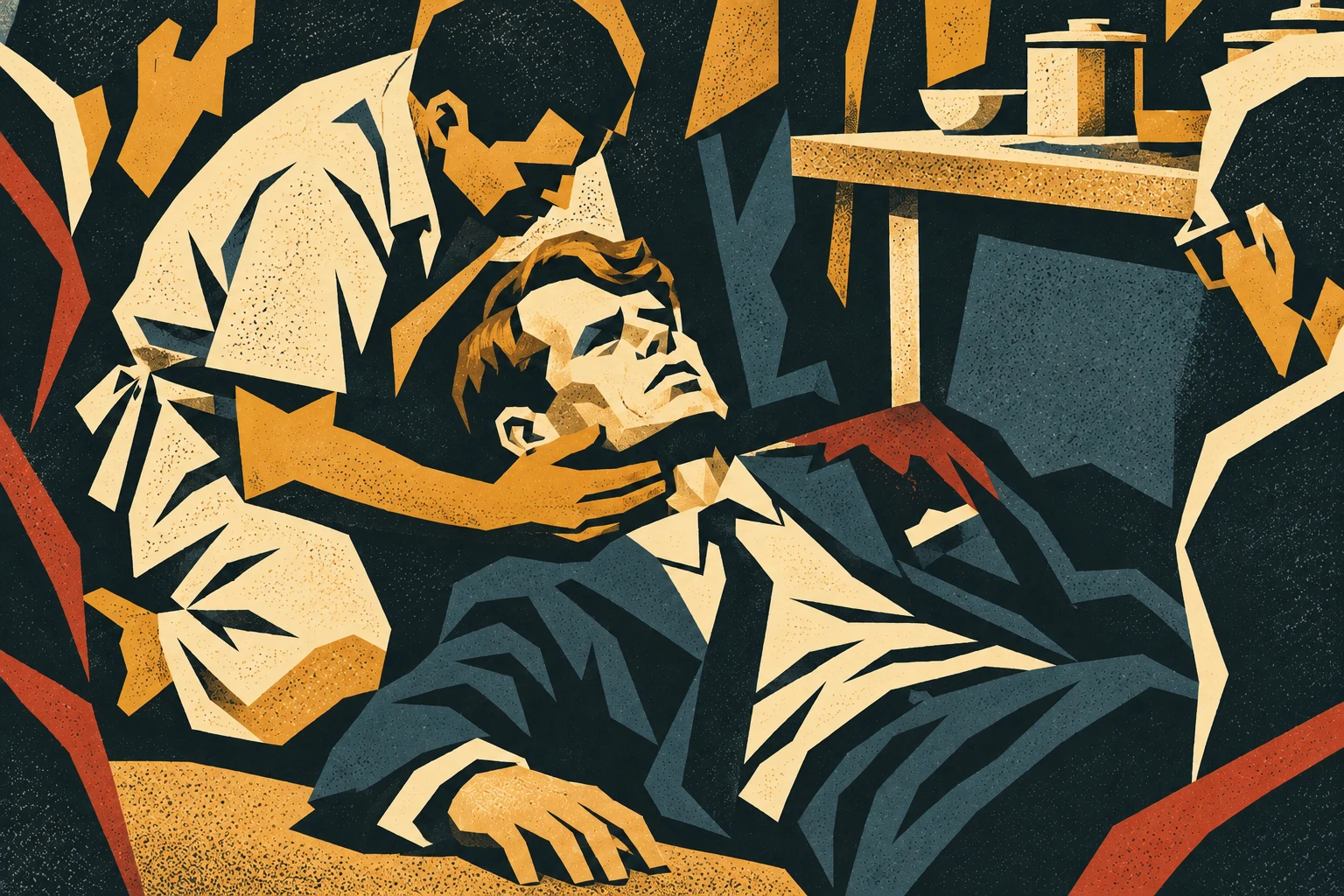
Shortly after midnight on 5 June 1968, Robert Kennedy left the stage of the Ambassador Hotel’s Embassy Ballroom in Los Angeles and took a short cut through the kitchen pantry. He paused to shake hands with the staff. Then a young man stepped forward with a revolver.117
After midnight at the Ambassador
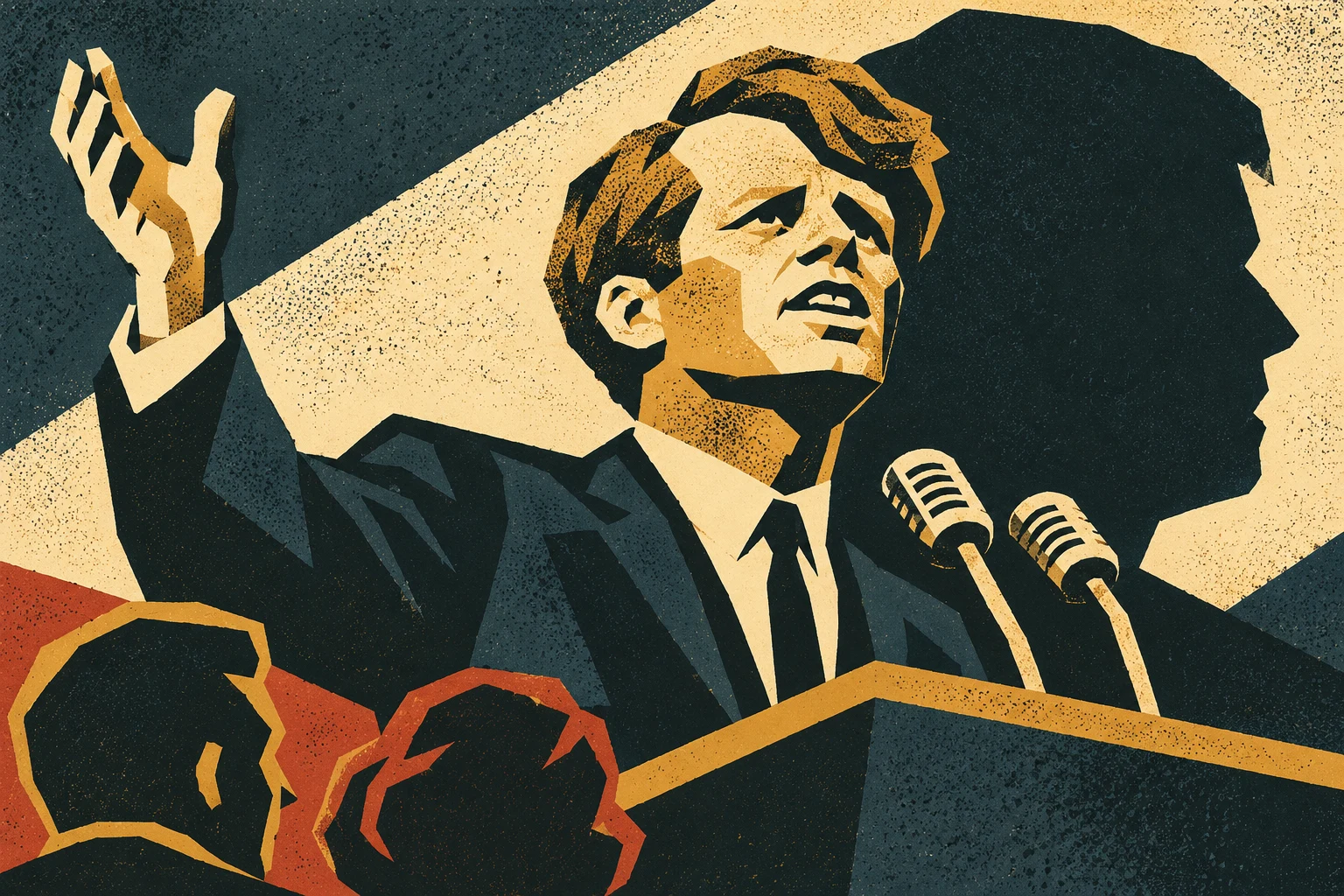
Kennedy had just won California, though not yet the Democratic nomination, let alone the presidency. The victory kept his campaign alive in a contest already scarred by the Vietnam War and bitter arguments over America’s direction. His speech to supporters ended with a promise to carry the fight on to the party convention in Chicago.17
He was forty-two, a former Attorney General and the senator for New York. His politics had shifted since his years as his brother’s closest adviser: civil rights, poverty and opposition to the war had become the heart of his appeal. His brother’s assassination in Dallas in 1963 was inseparable from the family’s place in American life. The night at the Ambassador would add another Kennedy murder, and another enduring argument over how it was investigated.2
After the speech, Kennedy and his party headed for the Colonial Room, which the press was using. The route took them through the pantry, a working service area, not a ceremonial exit. According to the evidence later summarised by the California Supreme Court, Sirhan Sirhan moved towards him there, produced a revolver and began firing. Kennedy and the campaign aide Paul Schrade fell.1
A hotel employee grabbed the gunman’s wrist, but the shooting went on during the struggle until others piled in and wrestled the gun away. Schrade survived, as did four others hit by the gunfire: Irwin Stroll, William Weisel, Elizabeth Evans and Ira Goldstein. Sirhan was held at the scene. This was no case of an unknown assassin vanishing into the city. It began with witnesses, a captured man and the gun he had fired.1
Juan Romero, a seventeen-year-old busboy, was among those Kennedy had just greeted. In a later interview for StoryCorps, he recalled the handshake, the shots and kneeling beside the senator. He put a hand under Kennedy’s head and remembered him asking, “Is everybody OK?” Romero told him yes, though others had been wounded too.18
The photographs made Romero part of the nation’s memory of that night. He later described receiving letters blaming him for holding Kennedy up with the handshake, and carrying the guilt of having failed to stop the bullets. It was a heavy burden for a young worker who had only tried to help. His memories are precious testimony about those moments, though no one in that crush could have tracked every movement of every gun.18
Kennedy underwent surgery but died on 6 June. The coroner attributed his death to a gunshot wound behind the right ear that penetrated the brain. That location, and the very short firing distance established at trial, would become the centre of the argument over a second gunman.13
The captured revolver seemed to make the murder exceptionally clear. The medical findings made reconstructing its exact course much harder. Over the following decades, the argument would spread from that cramped service corridor to courtrooms, police archives, a cassette recording and the memories of people who had stood only a few feet apart.
The gun and the notebooks
Sirhan was a twenty-four-year-old Palestinian immigrant, and the prosecution’s case went well beyond his capture. Witnesses placed him at the Ambassador before the shooting and at a firing range on 4 June, hotel employees said he had asked whether Kennedy would come through the pantry, and at his home in Pasadena police found writings threatening the senator, which was specific evidence of planning and intent.1
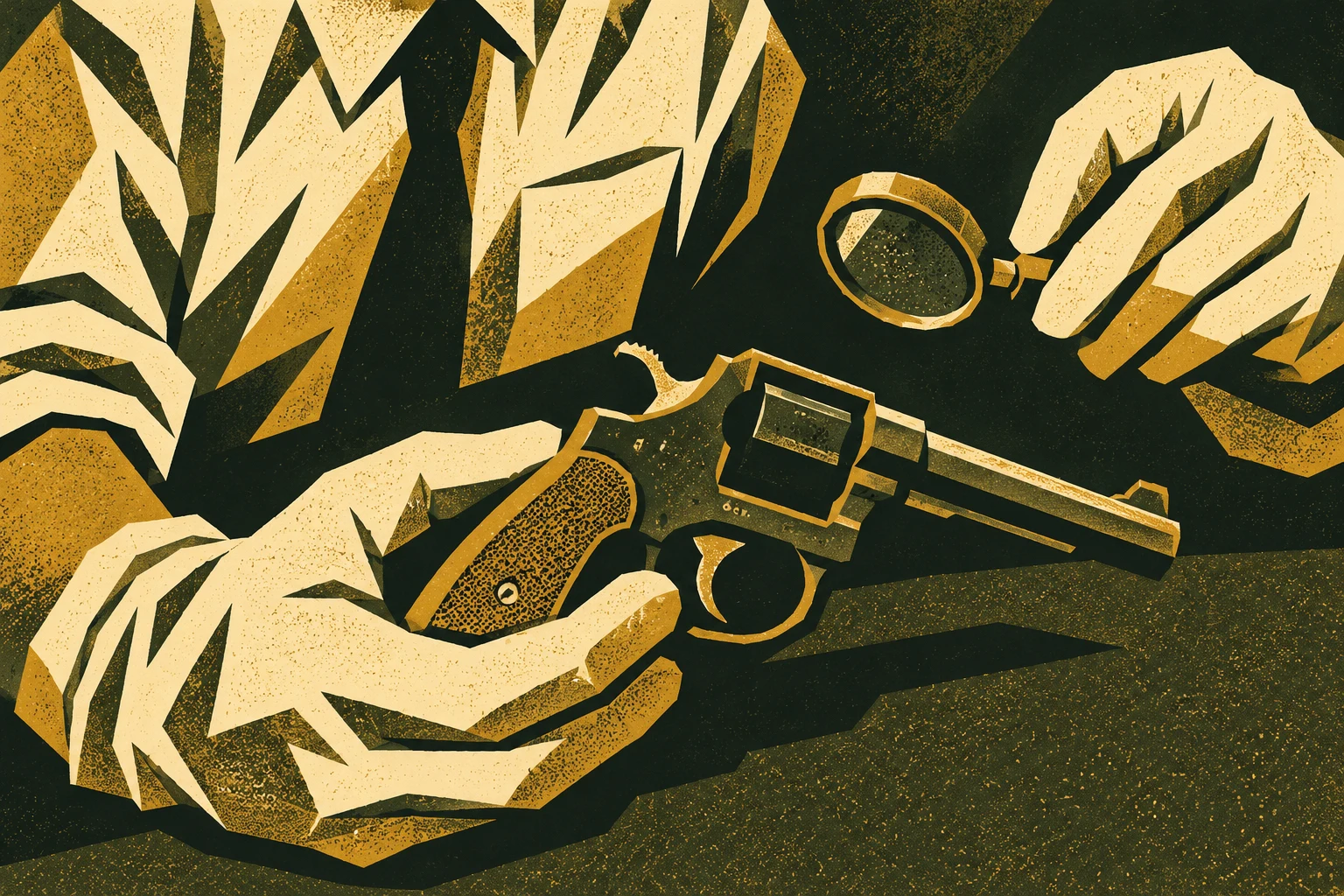
The notebooks were among the most disturbing objects in the case. Their repeated threats against Kennedy were in Sirhan’s handwriting, and they were found alongside other material that investigators and lawyers would comb for clues to his motive and state of mind. The California State Archives inventory lists notebooks, writings, books, clothing, the revolver and the bullets and fragments recovered from victims, a record of the whole physical range of the inquiry.16
Sirhan’s hostility to Kennedy’s support for Israel formed part of the trial evidence. He also spoke of an interest in the occult and claimed gaps in his memory of the evening. It is easy to turn those details into a ready-made explanation, whether a political fanatic acting alone or a suggestible man under someone else’s control. The trial itself was messier, with witnesses, medical experts and Sirhan himself giving accounts that did not agree.1
In his testimony, Sirhan admitted the shooting but said he could not remember doing it, describing drinking at the hotel, talking with a woman and then being choked, while others described him after his arrest as alert and composed. The jury had to weigh his claimed loss of memory against evidence of purposeful behaviour, so the choice was never simply between a confession and a story of innocence.1
The defence relied mainly on diminished capacity: the argument that his mental state prevented the premeditation required for first-degree murder. It did not argue that someone else had fired the fatal shot. Defence experts and the prosecution’s psychiatrist disagreed about his condition and his responsibility, and their diagnoses remain theirs.1
That strategy has shaped how the trial is remembered. Lawyers trying to save their client from execution could concede the act while fighting over its legal degree, but such a concession never tested the allegations about positions, bullets and a second weapon that came later. Nor does it show that the defence knowingly buried proof of an innocent client, so the evidence still has to be examined on its merits.
The jury convicted Sirhan on 17 April 1969, and he was sentenced to death. In June 1972, after the California Supreme Court struck down the state’s death penalty, the same court upheld his conviction on appeal with the sentence reduced to life imprisonment, so the punishment changed but the conviction stood.120
Older accounts, The Unredacted’s own original feature among them, used a misleading shorthand. Sirhan was convicted after a full jury trial, not on a guilty plea that made further evidence irrelevant. There is a substantial trial record, shaped by a particular defence strategy. The real question is how well that record answers the challenges made since.16
Inches behind the ear
The coroner, Thomas Noguchi, did not describe a shot fired from across a crowded room. His report placed the fatal entry wound in the right mastoid region, behind Kennedy’s right ear. The bullet travelled from right to left, slightly forwards and upwards, and broke into fragments. The report separately documented two wounds near the right armpit, one passing through the body and another leaving a recoverable bullet near the neck.3
The fairly intact bullet recovered near the sixth cervical vertebra was not the shattered bullet that caused the fatal brain injury, so matching the neck bullet to a gun cannot automatically identify the bullet in the head. Nor do an entry wound, an exit wound and a scatter of fragments necessarily mean three separate shots. Adding up every visible injury misreads the medical record.3
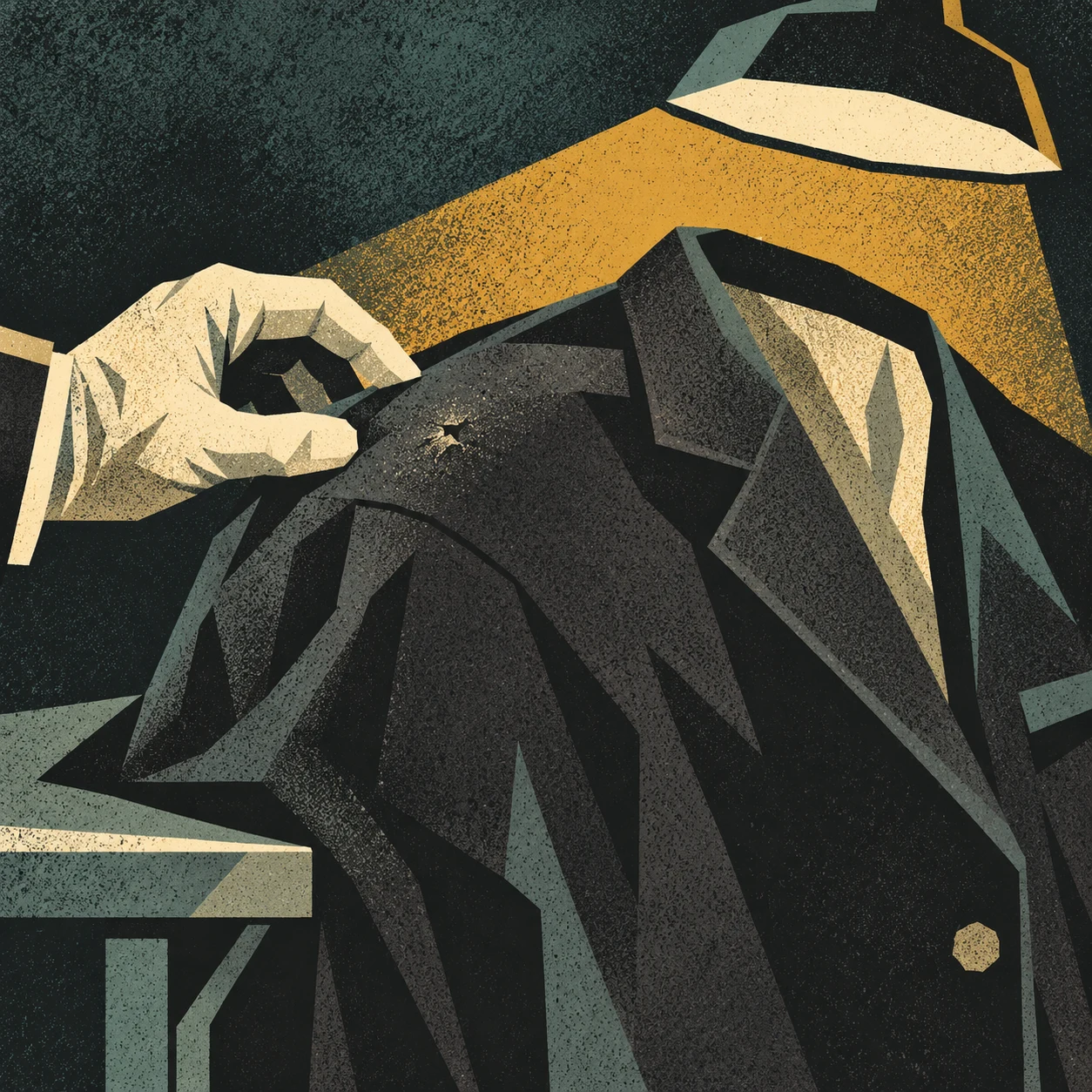
Kennedy’s jacket added another line of evidence. Noguchi recorded a bullet passing through the outer fabric across the top of the right shoulder, but not the lining, separate from the wounds in his body. The jacket helped show what the bullets had done. It could not show where anyone was standing when each shot was fired.3
At trial, expert evidence put the muzzle an inch and a half or less from Kennedy’s head when the fatal shot was fired. That is the hard physical fact at the core of the second-gunman argument. If Sirhan stayed well in front of Kennedy while another weapon fired from just behind his right side, the autopsy would support a very different story from the prosecution’s.1
Paul Schrade became the most persistent advocate of that view. In his statement to Sirhan’s parole board in 2016, the surviving victim argued that Sirhan had shot him but could not have shot Kennedy. He relied on the close-range wounds and on the accounts of the hotel employees Karl Uecker and Edward Minasian, who were escorting the senator and helped describe the struggle. To Schrade, their placing of Sirhan was incompatible with the fatal wound.4
That is a stronger argument than a vague feeling that the official story is unsatisfying. It combines the coroner’s findings with witnesses’ descriptions of where people stood. Its weakness is whether those descriptions capture the critical instant. Standing in front of a man, lunging towards him and struggling over a gun do not hold the same angles through a sequence of shots.
A federal court addressed exactly that problem in 2015. It noted the differing estimates of distance and testimony that Kennedy had begun to turn as the shooting and struggle unfolded. The witnesses on whom Sirhan’s petition relied had not described seeing the fatal shot strike, and the court concluded that their accounts did not rule out Sirhan reaching a position from which he could have inflicted the wound. It was a reasoned answer to the claim of impossibility, not a denial of the close-range findings.11
The ruling leaves a gap that nobody can fill by freezing everyone into a perfect tableau. The strongest version of the official account requires movement in a crowded struggle; the strongest challenge depends on accepting particular witnesses’ limits on that movement. The medical evidence narrows what could have happened. It does not, on its own, name the person holding the fatal gun.
Marks in the doorframe
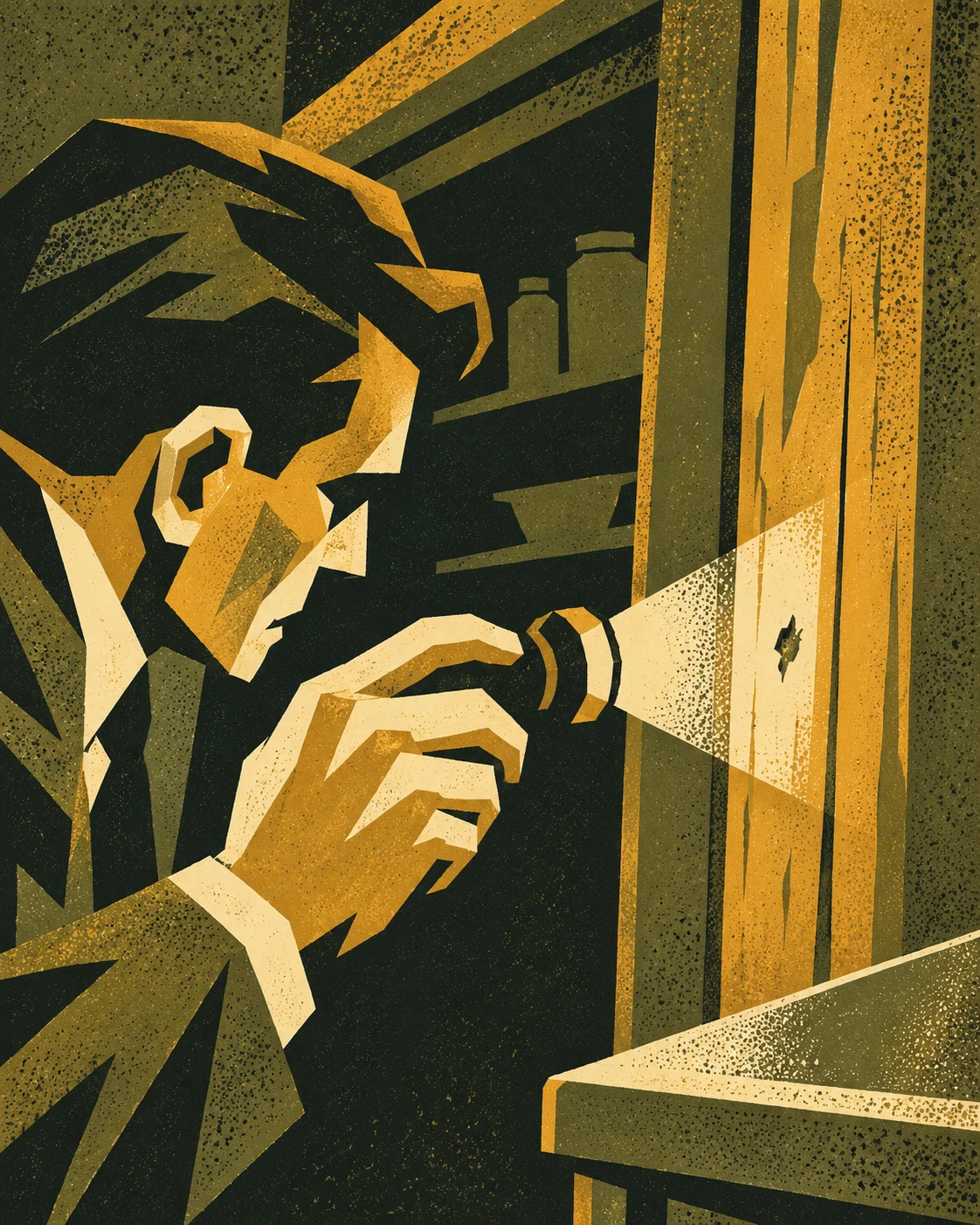
The second-gunman argument took another, seemingly simple form: too many bullets for Sirhan’s eight-shot revolver. Photographs and reports of holes in the pantry’s woodwork seemed to offer a count that did not depend on confused witnesses. If more than eight bullets were fired with no chance to reload, one gun could not explain them. Everything depended on establishing the number.5
The certainty fades as soon as a mark is asked to prove its origin. Was it a bullet strike, an older defect or damage from something else? Was a bullet actually recovered from it, or was a photograph later captioned as though one had been? Did it represent an extra shot, or a path already accounted for in a person or another surface? A photograph of a hole cannot answer those questions on its own.
The archive shows that the issue was investigated after the trial. Its guide lists a 1975 inquiry into bullet trajectories, with material removed from the Ambassador, photographs, field notes and interviews, and the physical-evidence inventory includes pieces of wood from the hotel’s doorframe. These are leads into a documented investigation. They do not certify every later claim about an extra bullet.67
The writer Dan Moldea took the doorframe evidence seriously, and by his own account his investigation began with suspicions about a second gun, reinforced by interviews with police and other officials, before he reversed himself and concluded that Sirhan had acted alone. Quoting only his early doubts would misrepresent his work, but so would treating his change of mind as a substitute for examining the evidence.5
There was also a narrower laboratory dispute. The police criminalist DeWayne Wolfer had testified that bullets from the victims matched Sirhan’s gun. In 1975, a court-appointed panel of seven firearms experts re-examined the evidence and could not reproduce a conclusive match between three victim bullets and new test bullets fired from the revolver. Years had passed, and the experts blamed fouling and the loss of fine detail for part of the difficulty.11
That failure undermined any claim that the original identification could simply be repeated. It did not show that the bullets had come from a different gun. As the 2015 court order explains, the panel found the bullets consistent with having been fired from a single gun and found no substantive, demonstrable evidence among those examined that more than one gun had been used.11
Sirhan’s later lawyers went further, alleging that bullets had been substituted and attacking how exhibits were identified. The court rejected that inference as unsupported. The ruling did not certify perfect record-keeping: there are real questions about markings, test material and handling. It meant that a match that could not be reproduced was not accepted as proof that officials had swapped the murder evidence.11
The wound count, the doorframe and the laboratory comparisons are connected but separate questions, because a coroner describes injuries, a scene examiner interprets damage and a firearms examiner compares marks on bullets. Each can expose weaknesses in the others, but adding up their uncertainties does not produce a ninth bullet with an established path.
The cassette that kept running
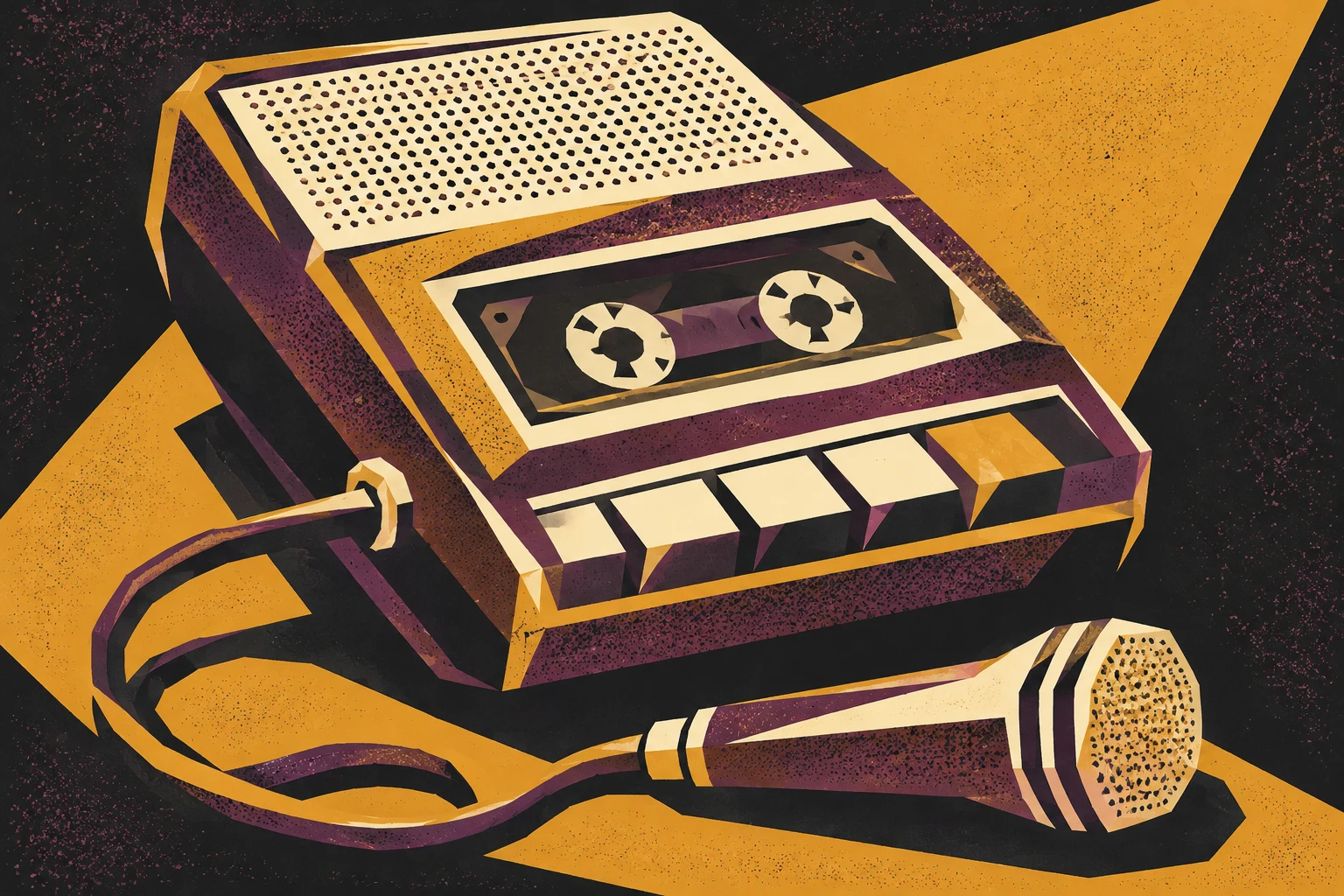
A recording seemed to offer a way past those difficulties. The Polish journalist Stanisław Pruszyński had taped events at the hotel, including Kennedy’s speech and the chaos that followed. The California State Archives identifies the tape as CSA-K123, investigation reference I-4837, and its catalogue cautiously describes possible shots, the hysteria after the shooting and the reporter describing what he saw.8
The engineer Philip Van Praag analysed copies and identified thirteen sounds he interpreted as gunshots. His argument went beyond the arithmetic. He identified pairs of sounds so close together that, in his view, they could not have come from Sirhan’s revolver, and differences in frequency that he attributed to a second weapon firing in another direction. It was a technical case for a second gun, not one more witness’s count.9
The appeal is obvious. People in the pantry could miss a movement, black out or misjudge where a sound came from, while a recording seemed to preserve something their memories could not later change, and if it reliably captured more shots than the seized gun could fire, a different explanation would be unavoidable. The question was whether the disputed sounds were gunshots at all.
Other analysts disagreed. Steve Barber’s account of his own examination describes seven shots he considered identifiable, with a possible eighth masked by a scream, and discusses work by Michael O’Dell and Philip Harrison that did not support the higher count. The sceptics were not unanimous about exactly eight clear shots either, and their own certainty had limits.10
The recordings themselves contain a trap. Sound recorded in the aftermath is not necessarily a recording of the shots. Barber distinguished the Pruszyński tape from broadcast material he considered useless for the purpose. A television programme can combine an authentic speech, genuine pictures from the hotel and added or unrelated sound without giving viewers an unbroken record of the shooting. Before anyone counts a single sound, the identity and continuity of the source have to be established.10
The argument reached the federal court. Its 2015 order weighed Van Praag’s analysis against Harrison’s contrary findings. The judges were deciding whether Sirhan had met the demanding legal test needed to overcome a procedural bar to his petition, not running a new acoustic experiment, and they did not accept the disputed analysis as conclusive proof of innocence. They also noted a discrepancy between a gun owned by one proposed suspect and the weapon he reportedly carried that night.11
Neither an analyst’s credentials nor a dramatic chart of peaks can settle what a sound is. The result depends on the recording, how many times it was copied, how the reference sounds were made and the choices used to separate a gunshot from noise. A precise-looking timeline has not verified every label on it.
The cassette preserves a serious dispute, not a settled count of thirteen shots. Resolving it would take a reproducible analysis of the best available source, showing why one classification succeeds and the other fails. Even then, evidence of an extra shot would not identify who fired it. A second sound cannot supply a second gunman’s name.
The woman on the stairs
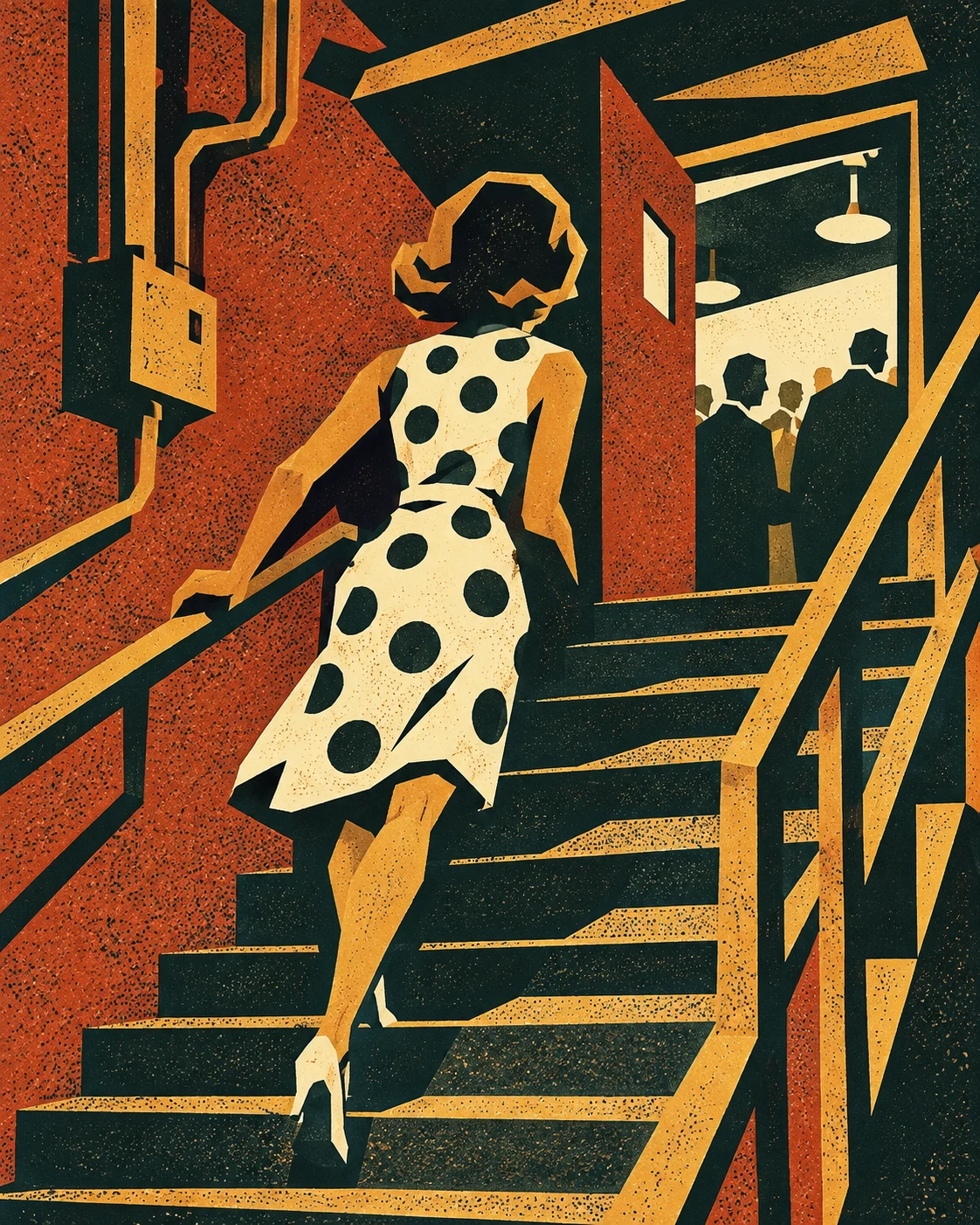
The polka-dot dress gave the conspiracy story a figure as memorable as the revolver. Sandra Serrano, a campaign worker, said she had seen a woman in such a dress on the hotel’s back stairs with a group of men. She also said she heard the woman claim responsibility after the shooting. If accurately remembered and correctly understood, those words would be a powerful reason to ask whether Sirhan had help.8
Calling Serrano either a perfect witness or a fantasist settles nothing. The archive’s catalogue of interviews records her account on 5 June and its repetition during a return visit to the scene. Three entries for 20 June show a progression: she described the woman, held to her account during a polygraph examination and, according to the catalogue, recanted in the interview that followed. How her account changed is itself part of the history.8
The filmmaker Shane O’Sullivan later interviewed Serrano and studied the recorded questioning. In his doctoral account of the work, he describes the police examiner Enrique Hernandez putting suggestive pressure on her and appealing to her loyalty to Kennedy. That is O’Sullivan’s reading of the recording. It is a good reason to scrutinise how the recantation was obtained, but criticism of the interviewer does not make the unidentified woman an accomplice.12
The archive records a similar problem with a waiter, Vincent DiPierro, who first described seeing a woman and later withdrew the account after being told the examination did not support it. Similar descriptions from different witnesses can justify an inquiry, but they also raise questions about contact between witnesses and the effect of later questioning. A remembered dress is not an identity, and an identity would not prove a role in the murder.8
Another theory addresses the gaps in Sirhan’s memory. Later defence experts, including the psychologist Daniel Brown and the law professor Alan Scheflin, argued that coercive persuasion or hypnotic programming could explain his behaviour. That makes Sirhan the instrument of an unknown organiser, not an independent assassin. It is a different claim from a second gun, and it needs different evidence: proof that someone else caused or directed his actions.11
The 2015 court examined those opinions and found that they did not make the required case for innocence. The difficulties included the lack of any case-specific evidence for the proposed drugs or conditioning, disagreement among specialists and the decades separating the assessments from the event. A man’s susceptibility to suggestion, however assessed, does not identify a handler, a programme or an order to kill Kennedy.11
It is tempting to make the woman the handler and the amnesia the result, merging two unresolved questions into one plot. That connection would have to be proved. The woman’s alleged words do not establish a hypnosis operation, and a hypnosis theory cannot verify her presence on the stairs. Each claim gets weaker when it is used to fill the other’s gaps.
Serrano’s account remains part of the record, and so does the way the police handled it. Sirhan’s claims about his memory remain part of his case, alongside the evidence and opinions that challenged them. Both deserve scrutiny without inventing a complete operation behind the pantry door.
The men in the photographs
The theory of an organised plot eventually reached the hotel’s surviving photographs and film. O’Sullivan’s early investigation proposed that figures at the Ambassador were CIA officers. If the identification had held, it would have raised obvious questions about why they were there. But it depended on recognising people decades later in pictures taken for other purposes, often with poor views of the faces being compared.12
O’Sullivan later recorded a major correction. Two men he had identified as the CIA officers Gordon Campbell and George Joannides turned out to be Bulova watch salesmen attending a meeting at the hotel. In his own words, the theory began to unravel as contrary information emerged. Circulating his original identification without that correction gives the allegation a certainty its own author abandoned.12
A separate accusation centred on Thane Eugene Cesar, an armed security guard who was close to Kennedy in the pantry. Supporters of the second-gunman theory saw his position as significant. As a line of inquiry, that is understandable, but standing nearby with a gun is not evidence of firing it. Cesar denied any involvement. The 2015 order distinguishes the .38 he reportedly carried that night from a .22 he owned, which featured in one advocate’s acoustic comparison.11
Moldea’s investigation shows the limits of that line of inquiry. In a later interview, he described approaching Cesar as a likely second gunman, finding inconsistencies in his accounts and arranging a polygraph test. Cesar passed, Moldea said, and Moldea turned his attention back to Sirhan before rejecting the second-gunman theory altogether. Those are Moldea’s account and conclusions, and a polygraph is no substitute for a recovered bullet.19
Moldea also explained that his long prison interviews with Sirhan were never recorded. His published dialogue relied on notes, which Sirhan and his brother were given the chance to correct. That does not make the interviews worthless, but their provenance is different from that of a tape. A researcher’s confidence after an interview is not evidence that another reader can check.19
The history of the archive has become part of the story. The California State Archives received the LAPD files in 1987, and they were opened to the public the following year. The collection holds records of reinvestigations, firearms work, transcripts, interviews and exhibits, and no single report speaks for it all. Specialist collections, including the one at the University of Massachusetts Dartmouth, preserve the work of people who challenged the official account.720
Opening the archives made it possible to check claims against their sources. It also exposed the differences between a surviving object, a reference to a missing object and someone’s later description of what that object once showed. Gaps in an archive can frustrate a reconstruction, but a missing item cannot reveal its own contents, why it vanished or who removed it.
The political weight of Kennedy’s death makes a larger explanation emotionally compelling. But a proposed organiser needs the same evidential link as any other suspect. A resemblance in a photograph, an armed guard and failures in handling evidence do not add up to an operation just because each looks troubling on its own.

A release is not a verdict
In 2025, the federal government released a large volume of further material. The National Archives lists three main tranches: 10,185 pages on 18 April, 64,686 pages and seventeen audio files on 7 May, and 9,653 pages on 12 June. Those are page counts, not discoveries. The files gather records created at different times for different purposes, including much that researchers already knew.13
One file shows the difference. It contains a letter from Robert Kennedy Jr., dated 25 September 2012, supporting Paul Schrade’s request for a new investigation, along with Schrade’s earlier letter and a summary of Van Praag’s acoustic work. Their inclusion makes the campaign for a new inquiry accessible in a federal collection. It does not turn the allegations in those letters into FBI findings, or show that the acoustic claim was new in 2025.9
The separate question of Sirhan’s punishment has divided the Kennedy family. A parole panel recommended his release in 2021, but Governor Gavin Newsom reversed that decision in January 2022 on grounds of public safety. Another panel denied parole in March 2023, a decision Sirhan’s lawyer publicly challenged. These were decisions about release, not new murder trials, and they did not resolve the forensic dispute.1415
The 2015 federal ruling came in a particular legal setting. Sirhan’s petition was out of time, and he needed to pass through an exception for actual innocence. The court considered his evidence at length and rejected that claim without ordering a new hearing. It was neither a fresh jury verdict on every historical detail nor a dismissal on a technicality.11
As of November 2026, the records establish the shooting, the conviction and the long series of challenges to the lone-gunman account. They do not identify a second shooter or prove an intelligence operation. The close-range medical findings remain an important constraint, while the exact movements during the struggle are less fully recorded. The higher shot count is still disputed, and the researcher behind some of the most influential claims about the photographs has corrected them.
The Unredacted’s 2016 article gave the second-gunman theory far more certainty than the evidence supports. This account keeps its questions but corrects its dates and its balance, and separates witness reports, forensic interpretations and findings. The documented difficulties justify continued scrutiny. They do not justify describing the case as an assassination for which no one was convicted, or every alternative as equally well supported.16
New records could still change particular conclusions. A securely identified extra bullet, a reproducible acoustic result or a corroborated account of another person firing would each address a different part of the problem. None would identify who organised an attack. Evidence of a second gun and evidence of a political plot would have to be found separately.
The pantry gave investigators a gunman before it gave them a full account of the gunfire. The record is firmest where it fixes an object, a wound or an action that can be checked, and weakest where reconstructions must supply a moment that nobody fully saw. Kennedy’s death remains a documented political assassination, and the hardest questions still come down to a few crowded feet of floor in a hotel pantry.
Linked case files
Sources20
- People v. Sirhan, 7 Cal.3d 710 Supreme Court of California · 1972-06-16 · Accessed 2026-11-07
- Robert F. Kennedy John F. Kennedy Presidential Library and Museum · undated · Accessed 2026-11-07
- Medicolegal Investigation on the Death of Senator Robert F. Kennedy Thomas T. Noguchi / Los Angeles County Medical Examiner-Coroner · 1968-06-06 · Accessed 2026-11-07
- Statement before Sirhan’s parole board Paul Schrade · 2016-02-10 · Accessed 2026-11-07
- The murder of Senator Robert Kennedy Dan E. Moldea · undated · Accessed 2026-11-07
- RFK Investigation Guide, Appendix A: Physical Evidence California State Archives · undated · Accessed 2026-11-07
- Guide to the LAPD Records of the Robert F. Kennedy Assassination Investigation California State Archives · 1988 and later updates · Accessed 2026-11-07
- RFK Investigation Guide, Appendix E: Audio Tapes California State Archives · undated · Accessed 2026-11-07
- 2012 request for a new investigation and accompanying acoustic summary Robert F. Kennedy Jr., Paul Schrade and Philip Van Praag · 2012 · Accessed 2026-11-07
- The Robert F. Kennedy Assassination: The Acoustics Evidence Steve Barber · 2007-03-25 · Accessed 2026-11-07
- Sirhan v. Galaza: Order accepting report and recommendation and denying habeas petition Beverly Reid O’Connell / US District Court, Central District of California · 2015-01-05 · Accessed 2026-11-07
- Enemies of the State: Framing Political Subversives in Documentary Film Shane O’Sullivan · 2013 · Accessed 2026-11-07
- Records Related to the Assassination of Senator Robert F. Kennedy US National Archives and Records Administration · 2025 releases; consulted 2026-11-07 · Accessed 2026-11-07
- Governor Newsom reverses parole decision for Sirhan Sirhan Governor of California · 2022-01-13 · Accessed 2026-11-07
- RFK killer Sirhan Sirhan denied parole by California board Julie Watson / Associated Press · 2023-03-01 · Accessed 2026-11-07
- Assassination of RFK: The Second Gunman The Unredacted · 2016-03-25 · Accessed 2026-11-07
- Remembering Robert F. Kennedy California State Archives · 2018 commemoration · Accessed 2026-11-07
- The Busboy Who Cradled a Dying RFK Recalls Those Final Moments Juan Romero, interviewed by StoryCorps; Emma Bowman / NPR · 2018-06-01 · Accessed 2026-11-07
- Dan Moldea Interview Gary James interviewing Dan E. Moldea · 2023-05-28 · Accessed 2026-11-07
- Robert F. Kennedy assassination archives collection University of Massachusetts Dartmouth, Claire T. Carney Library · undated · Accessed 2026-11-07