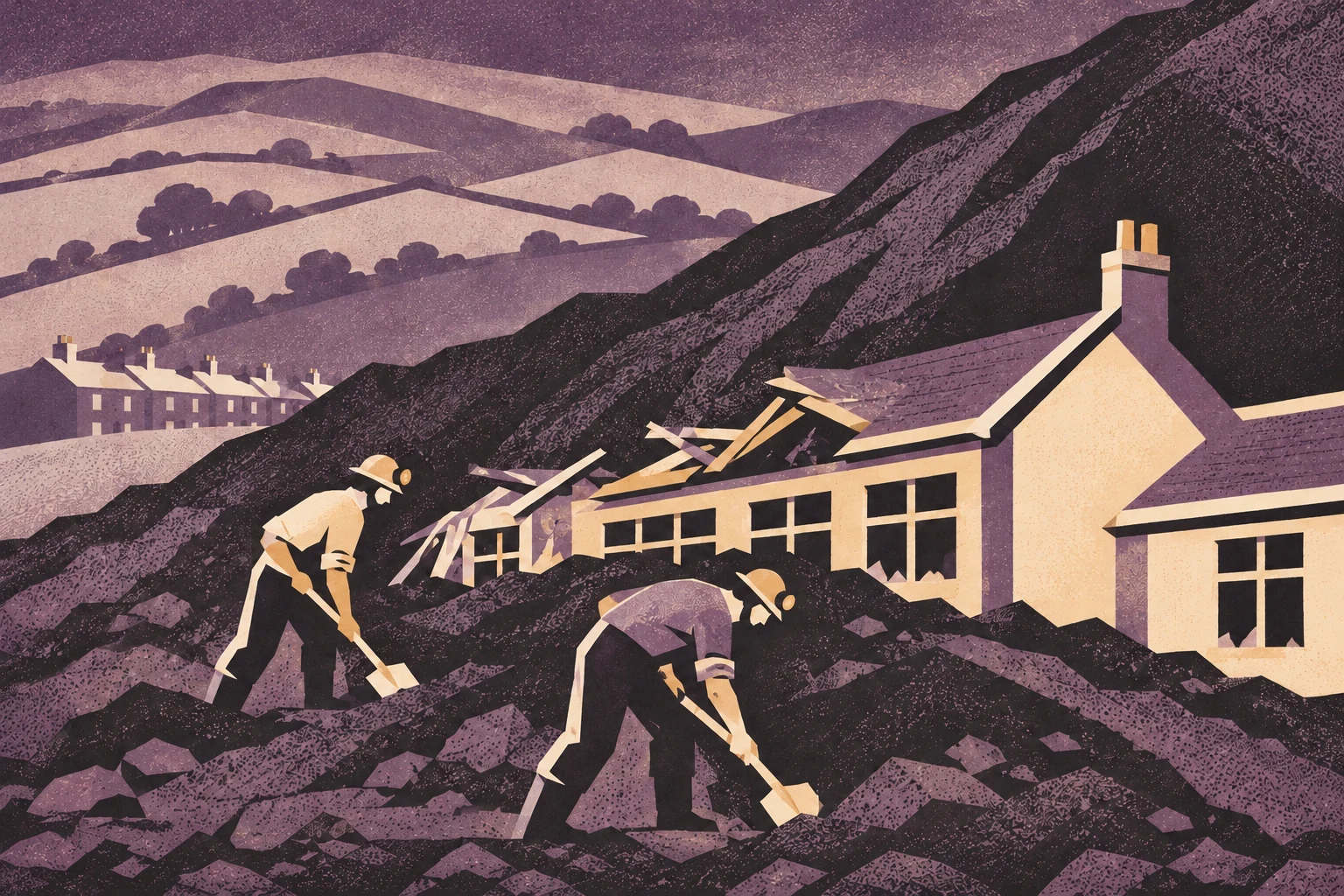
On 21 October 1966, a colliery spoil tip collapsed above the Welsh village of Aberfan and buried part of it, including Pantglas Junior School. It killed 144 people, 116 of them children. Within days, people across Britain were saying they had seen it coming.1
A disaster that seemed foretold
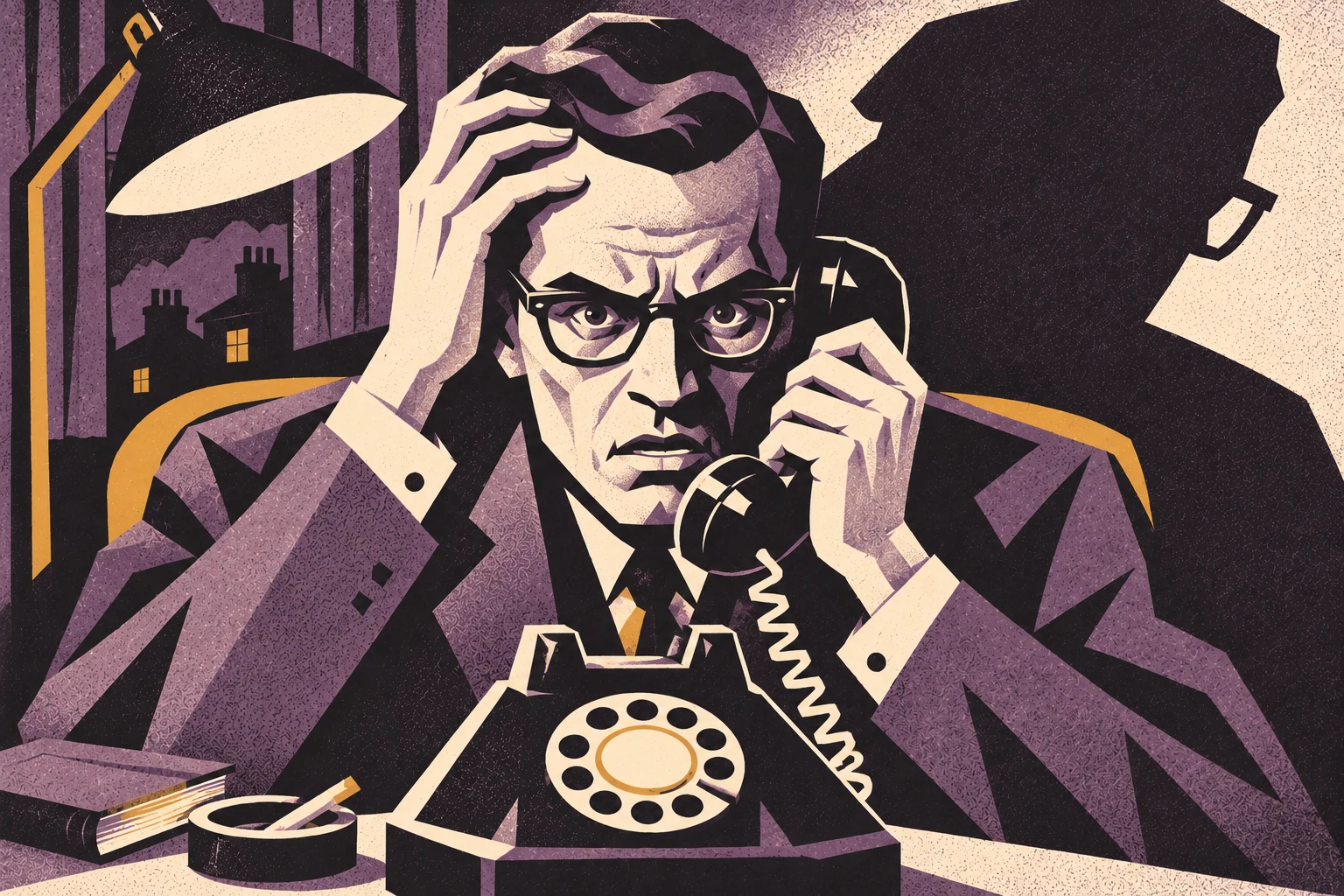
Nothing could console a community facing losses on that scale. But one psychiatrist wanted to investigate something beyond the physical causes of the disaster. People were reporting dreams, impressions and feelings that seemed to have anticipated it. John Barker, who worked at Shelton Hospital near Shrewsbury, wanted to know whether such experiences could be collected and examined, instead of being dismissed out of hand or accepted on the strength of a moving story.
An appeal appeared in the *Evening Standard* on 28 October, a week after the disaster. According to a published history of the project, it drew 76 replies. Their timing was an immediate problem: by the time the accounts arrived, everyone knew what had happened. An accurate description sent in afterwards could not show what someone had experienced beforehand.2
Barker took up the question in a paper published by the Society for Psychical Research in 1967. The society’s catalogue describes 35 accounts selected for analysis, some supported by witnesses who said they had heard about the experience before the disaster. Those witnesses mattered. They offered a way to tell an earlier warning from a memory unconsciously reshaped by the news.3
But a witness remembering a conversation is still not a document written before the event. Two people can remember sincerely and still disagree about the words, the order or the emphasis. A disturbing dream may also contain many images, only one of which later seems significant. An investigator needs the whole account, including the parts that did not fit.
The correspondence went beyond a single appeal. In a 2019 conference abstract, the researcher Alan Murdie described another collection, prompted by an appeal from Oxford, containing letters from 72 people. Copies eventually reached the society’s archive, where they were rediscovered decades later. The letters record how people responded to Aberfan as well as their claims to have foreseen it.4
That matters. Many of these correspondents were trying to make sense of an appalling event, and some were wrestling with guilt at having felt something they could not interpret or act on. Their accounts deserve sympathy, and an investigator can extend it without endorsing every conclusion drawn from them.
Barker’s next step tackled the central weakness head on. If he could collect impressions before the next disaster, he would no longer depend on memory. A dated prediction could simply wait to see whether it came true, and a newspaper could both invite submissions and keep a record of them.
The idea also raised the stakes. A collection of curious experiences might contribute to an argument about the mind. A warning service would have to tell a useful alarm from the countless disturbing thoughts that never come true. Barker was trying to do both, with a national newspaper helping to bring the experiment to the public.
The Bureau opens
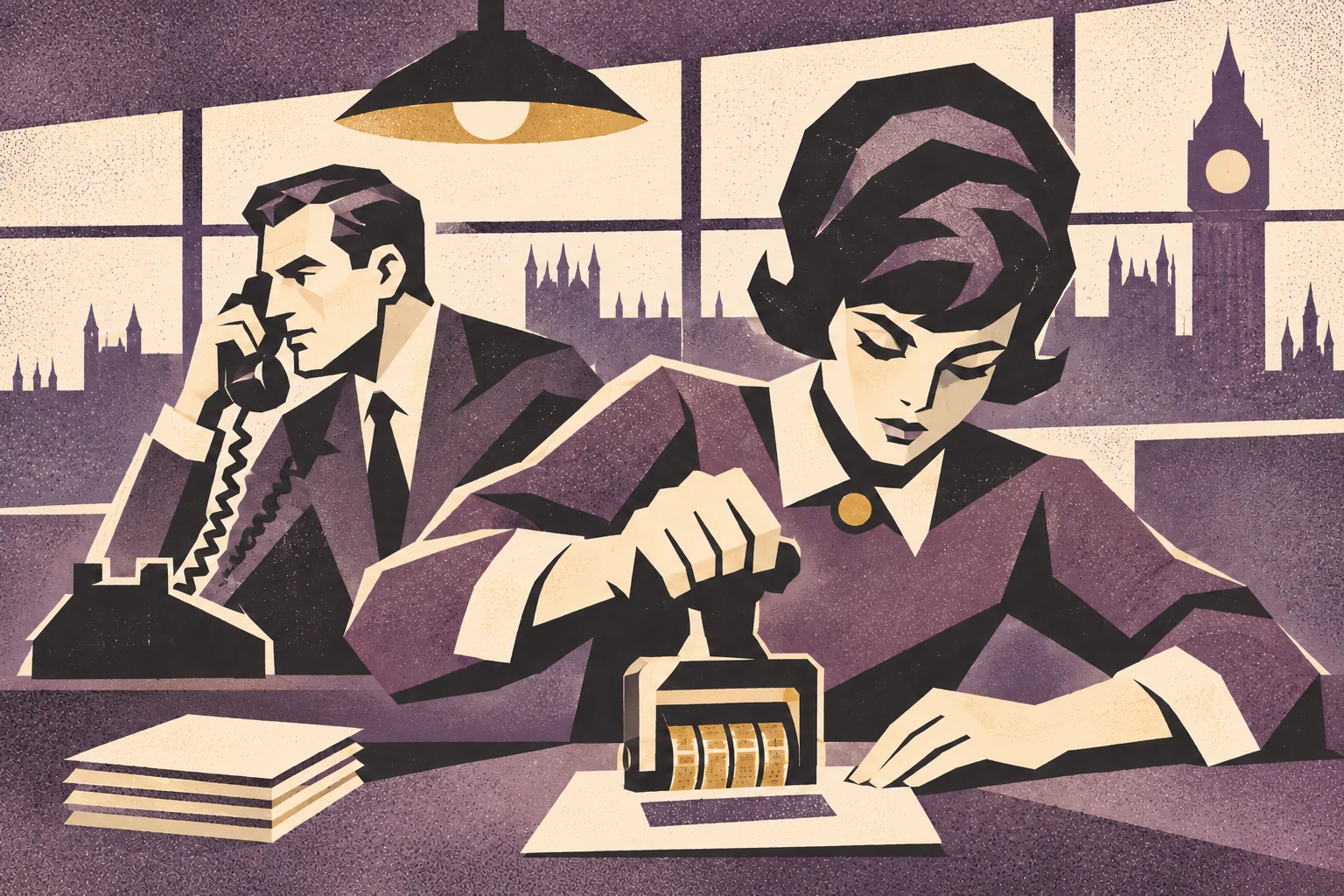
The Premonitions Bureau opened on 4 January 1967, run by Barker with Peter Fairley, the *Evening Standard*’s science correspondent. Readers were invited to send in any experience that might concern a future event. The name gave an elusive subject an official air: a bureau could receive, date and compare material that would otherwise have stayed private.2
Its proposed scoring system was an attempt to go beyond asking whether a story felt impressive. As Sky History later described it, a prediction could earn points for unusualness, accuracy and timing. The scheme recognised that a precise detail recorded in advance should count for more than a common anxiety attached to an event afterwards.2
Recording claims in advance was a genuine improvement. Once the words are fixed, an investigator can go back to them, instead of accepting an ever more polished retelling. A contributor cannot quietly swap a vague description for a place name, and a journalist cannot drop an awkward detail because another part of the prediction looks extraordinary.
A fixed record still leaves the problem of interpretation. Suppose an account mentions a railway, a crowd and a station: does any rail accident count, must it happen at the station, or is a train heading there enough? And is the crowd a real detail, or something almost any public disaster would supply?
Those questions need answers before the news offers a tempting candidate. Otherwise the record stays fixed while the rules shift around it. An experiment can preserve a prediction perfectly and still overstate its success by accepting generous matches, ignoring failures or leaving the prediction open indefinitely until something suitable comes along.
The practical ambition raised another difficulty. An impression that looks specific afterwards may offer no usable instruction beforehand. Closing a station, grounding an aircraft or evacuating a hospital requires a location, and a reason to choose that place over hundreds of others. Anyone running a warning service would also need to know how many false alarms would come with each success.
Barker’s interest in premonitions sat alongside an ordinary medical career. A bibliographic record shows that in May 1968 he wrote to the *British Medical Journal* about overcrowding in psychiatric hospitals. His working life included everyday institutional problems as well as extraordinary claims, and within that year the two would come terribly close together.5
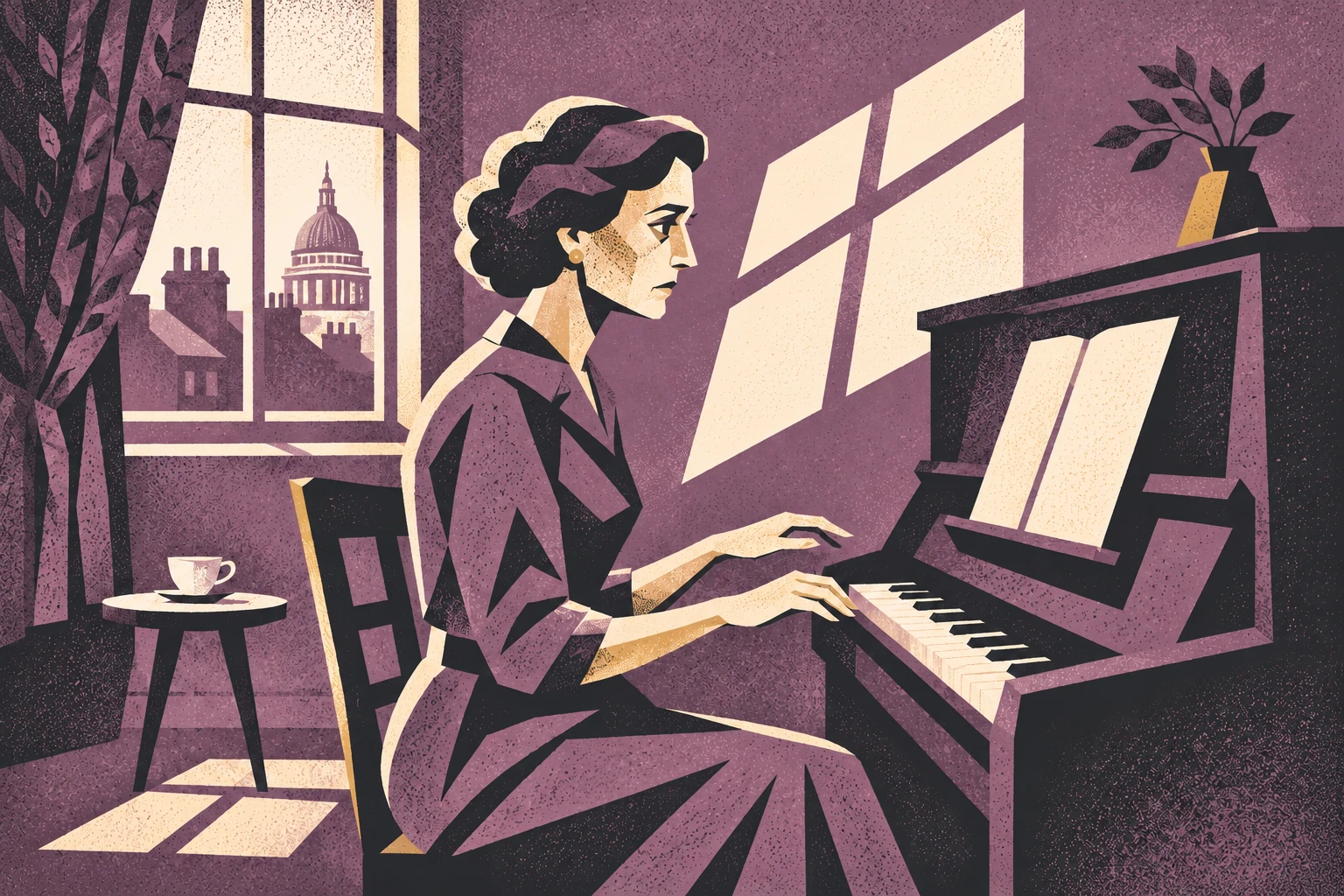
The experiment depended on the people who kept writing in. Two became especially prominent: Alan Hencher, a telephone operator, and Kathleen Middleton, usually known as Lorna, a piano and ballet teacher. They gave the Bureau regular correspondents whose impressions could be followed over time, instead of a stream of unconnected accounts arriving after the event.2
The man on the switchboard
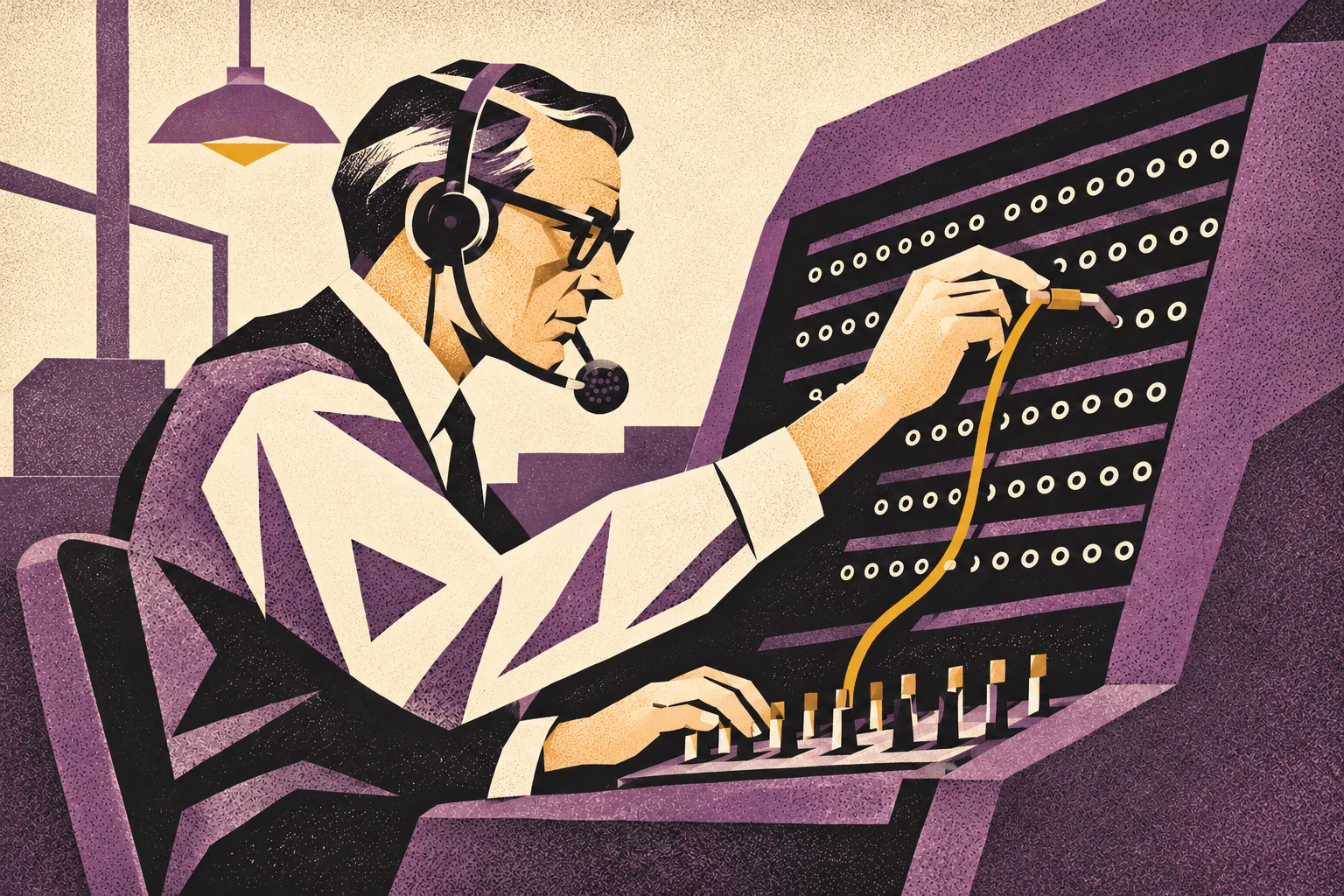
A switchboard operator made an apt contributor to an enterprise built on incoming warnings. Later accounts describe Hencher as a man who reported disturbing impressions of events far beyond his own life. The most famous concerned an aircraft and a strikingly precise number of deaths.26
According to the account reproduced by the paranormal researcher Leo Ruickbie, Hencher predicted on 21 March 1967 an air disaster involving 123 or 124 people. That number is what made the case memorable. A figure looks much harder to fit than a vague feeling that a plane will crash, and a warning recorded weeks in advance seems to answer the charge of hindsight.6
In April, a British passenger aircraft crashed near Nicosia in Cyprus. Early reports gave the death toll as 124, exactly the kind of correspondence that could make the Bureau seem to be working. The official record that followed is more precise, and less kind to the prediction.78
The aircraft was a Bristol Britannia 313, registration HB-ITB, carrying 130 people, of whom 126 died. According to the accident report, it approached Nicosia, overshot and then flew a circuit too low before hitting rising ground. The report times the impact at 23.13 GMT on 19 April, which was already 20 April in Cyprus.7

The final tally
Those details matter, because the version of Hencher’s warning examined by the writer Karl Sabbagh specified a Caravelle jet crashing shortly after take-off. The Britannia was a turboprop, and it crashed during its approach and attempted landing. The striking early death toll also changed once the casualties were established.8
Matching an early news report is not the same as predicting the final death toll. The early figure explains why people were impressed, but the final figure is what any assessment has to use, and keeping both makes the case far more revealing than either a triumphant retelling or a dismissive one.
The mismatches also show how much work a broad category can do. Every air disaster involves passengers, crew, airports and a phase of flight. If an investigator accepts the general event and a near-miss on the number while ignoring the type of aircraft and the phase of flight, the test has quietly become much easier than it first appeared.
None of this means Hencher was dishonest. A person can report an impression faithfully, and an investigator can record it accurately, without the later event being the one the impression described. Sincerity, accurate recording and successful prediction are three separate questions.
A stronger case would need a securely dated, complete account naming the aircraft, the place and the timeframe, followed by an event that matched it under rules agreed in advance. The published retellings do not provide that. Their most memorable detail comes bundled with the details that did not match.
For Barker, though, these were not historical exhibits. They were accounts arriving while the experiment was running, and Hencher was a real person on the end of a telephone line with more impressions to report. The relationship could become far more personal than comparing a prediction card with a newspaper column, especially once the subject of a warning was no longer an anonymous passenger.
Charing Cross in a vision
Middleton’s reports offered a different kind of apparent hit. Among the cases Ruickbie discusses is an impression recorded on 1 November 1967 involving a crowd, a railway setting and Charing Cross. Four days later, a train bound for the London terminus was involved in one of Britain’s worst railway accidents since the war.6
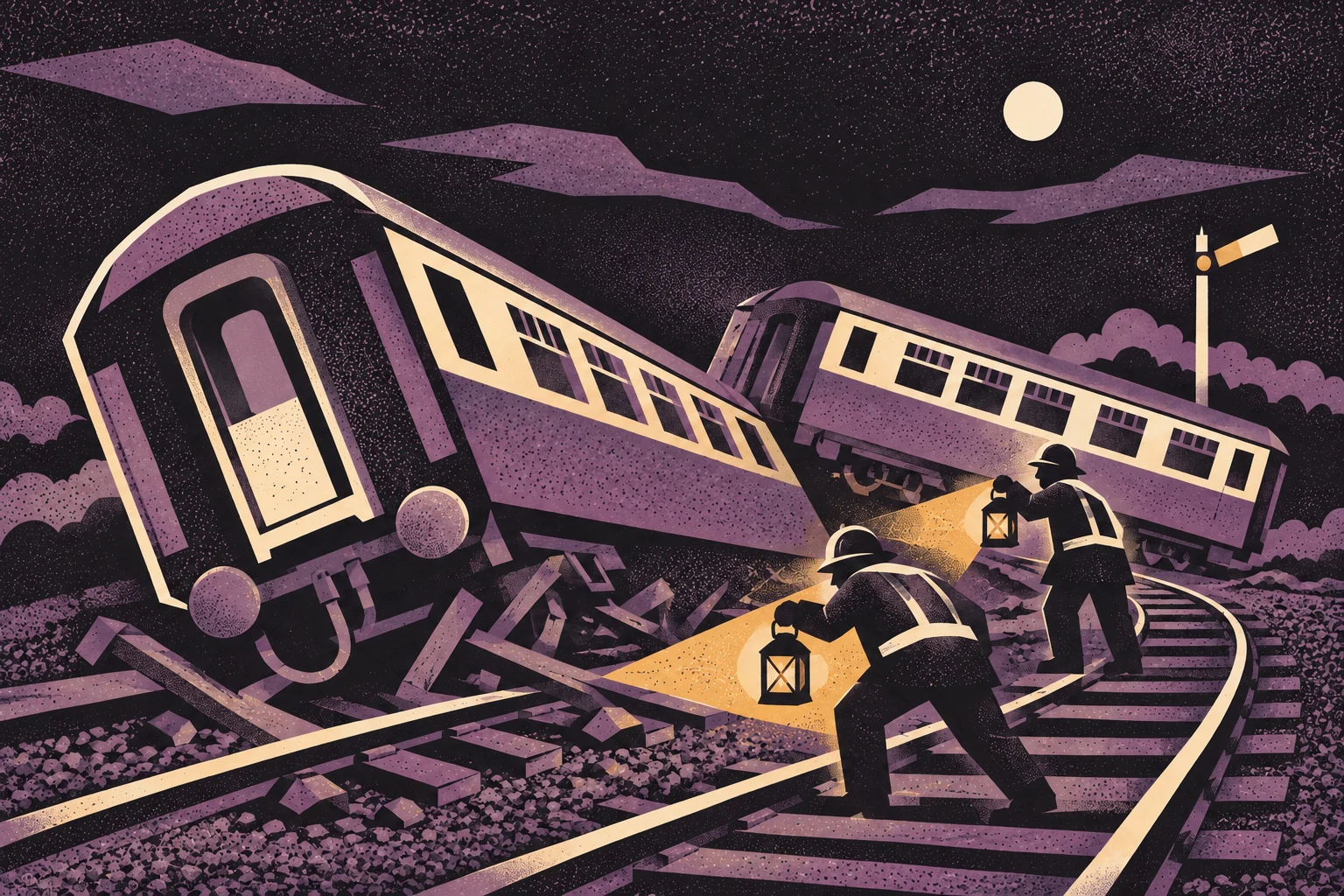
On the evening of 5 November, the 19.43 from Hastings to Charing Cross came off the rails near Hither Green. The Ministry of Transport’s report describes a 12-coach train travelling at about 70 miles an hour. A broken rail derailed the leading wheels of the third coach; about a mile further on, those wheels struck intersecting tracks, causing the far larger derailment. Forty-nine people died and 78 were injured.9
Charing Cross was the train’s destination, which gives Middleton’s impression a real connection to the accident. But it was not where the train crashed. That does not make her report worthless. It changes the question from whether she named the scene of the accident to how much leeway a destination should be given as a match.
Anyone reading her warning beforehand would also have been stuck, because a London terminus handles a great many trains, and without a particular service, time or fault, a reference to Charing Cross could not single out the dangerous stretch of track. The inquiry’s explanation, a broken rail, could be investigated with engineering evidence.
The railway report and the premonition are different kinds of evidence. One reconstructs a physical sequence from an accident investigation, while the other records an experience later linked to that accident. A historian can set them side by side without treating the second as a rival explanation for why the train left the rails.
Middleton’s ordinary occupation is worth remembering in a story so easily dominated by the word “seer”. A teacher’s working life and a contributor’s unsettling experiences could coexist without every part of her life becoming an omen. The surviving accounts describe what she reported. They give no later writer licence to diagnose her or invent her motives.2
Sam Knight, whose research brought the Bureau to a new generation of readers, has stressed the human lives behind the experiment. In an interview about his work, he described going through letters and records while trying to understand the people involved. Their experiences belong to social history as well as to the argument about the paranormal.10
That helps explain why the Bureau still fascinates readers who do not believe in precognition. A psychiatrist and a journalist created a place where unusual experiences would be listened to. People responded with accounts they considered important, and the relationships that grew up around the experiment carried sympathy, expectation and anxiety alongside the original attempt at measurement.
A public experiment can also change what it observes. Contributors who learn which details attract attention may send more specific or more frequent reports. Investigators who come to regard particular people as gifted may read their submissions more closely and more imaginatively. A good testing procedure would control for both, without accusing any individual of anything.
What counts as a warning?
The Bureau’s most lasting question is one of method. How do you tell an exceptional prediction from a match found by searching a large pile of impressions against an even larger pile of events? The answer cannot come from the vividness of a single story, however sincere the people involved or disturbing the subject.
Consider a hypothetical prediction of smoke in a large building. It could fit a factory fire, a hospital fire or a warehouse explosion. That is why a prediction needs fixed criteria before anyone starts looking for a match.
An investigator would have to decide in advance how long the prediction stays open, which buildings count and what would count as failure. A prediction that never expires has endless chances to find a match. One allowed to change its meaning after the event is even harder to tell apart from ordinary association.
A complete register would help: every original submission, with the date it arrived, any changes and every candidate match that failed. Independent judges could compare predictions with several possible events without knowing which pairing the investigator favoured. A scoring rule fixed in advance could then be tested against predictions made by people claiming no special ability at all.
Later research has explored these problems. In a 2015 paper, Caroline Watt and her colleagues compared dreams reported in advance with dreams reported after the fact, using a registry to collect material before any possible fulfilment was known. The authors used “precognitive” to describe the experiences people reported, without assuming that any paranormal ability had been shown.11
They found good reason to take reporting and interpretation seriously. The dreams recorded in advance had no distinctive feature that reliably marked out the ones that seemed to come true, and independent judges could disagree about the matches. Recording dreams beforehand improved the evidence about timing, but it did not solve the problem of deciding what counted as a match.11
That study does not test Barker’s correspondents after the fact, but it identifies difficulties that bear on their story. Remembering a dream differently after a disaster and interpreting an unchanged dream generously are separate processes. A date stamp prevents the first. The second still has to be examined, which makes a date stamp the start of an experiment, not the whole of one.
The sceptical investigator Joe Nickell has argued that selective reporting, memory and fitting stories to events after the fact offer ordinary explanations for apparent foresight. Those possibilities deserve testing in individual cases. They are not a licence to claim that every contributor lied, or that every surviving account has been fully explained.12
Supporters can fairly reply that a record made in advance is better evidence than a story first told afterwards, and Ruickbie’s account places the Bureau within an argument for taking unusual experiences seriously.6 But that starting point is only as strong as the full prediction and the rigour of the comparison. Leaving out the mismatches makes the material harder to judge, whichever side a writer is on.
Warnings about Barker himself
In 1967, the experiment turned personal. According to Knight’s account of the surviving material, Hencher warned Barker in April that his own life was in danger. The details included gas, though Barker’s home had no gas supply. Barker wrote down his concern in a memorandum, which he later shared with Middleton, and Knight found that document in the Cambridge archive. That sequence matters: the two contributors’ later warnings cannot simply be treated as independent.13
A warning like that could no longer be filed away while the investigator waited for the newspapers. It concerned the man recording it, who could change his own behaviour in response. Any later accident, illness or alarming coincidence could be made to fit, and there was no obvious point at which the prediction could be declared a failure.
That is a logical problem as well as an emotional one. If survival shows the warning was heeded and death shows it was accurate, no outcome can count against it. A useful test needs a result that would tell against the prediction, not an explanation ready for every eventuality.
According to Ruickbie’s later account, Middleton reported another disturbing impression in February 1968, showing Barker with his dead parents. The report belongs to the history of worry about his safety. It was not a medical finding, and its imagery did not identify an illness, a date or a way to prevent his death.6
The popular version of the story often compresses all this into two gifted strangers independently foreseeing the psychiatrist’s fate. As later writers have reconstructed it, the real sequence was more tangled. Warnings built up over months among people who were in touch with one another, and Barker himself helped circulate material about the danger he was said to face.
Contact does not prove that one contributor copied the other, but it does remove any reason to assume that they reached the same conclusion without sharing information. Proving independence would require dated accounts and evidence of what each person knew when they wrote, so two reports cannot simply be counted as two confirmations.
There is a human imbalance here too. Researchers can debate how specific a warning was from a comfortable distance. The man receiving it had to decide whether to ignore someone whose earlier reports he had taken seriously. Barker’s experiment had built relationships in which a troubling message carried more weight than it would have coming from a stranger.
Nothing in the surviving evidence shows that fear decided what happened to him. The link between an ominous warning and a later death is exactly what needs explaining. It would be circular to assume the warning was powerful because the death occurred, and then use that power to explain the death.
An appointment he could not cancel
Barker had already been studying whether fear could kill. His 1968 book, *Scared to Death*, investigated exactly that. The historian David Clarke places it within a long tradition of medical and folkloric accounts in which a frightening encounter, a curse or the expectation of death was said to have proved fatal.14
Such stories cross an awkward line. Emotions can be accompanied by physical changes, but a story about someone dying after a fright does not establish what killed them. The medical evidence, the circumstances and the alternative explanations all matter. A memorable sequence can encourage a claim about cause long before there is enough information to support it.
That caution matters most when a writer becomes part of a story that resembles his own subject. Barker’s research into death by fright gives his own ending an eerie symmetry. It does not show that he died of fear, that a prediction made him ill or that his research somehow wrote the script for his death.
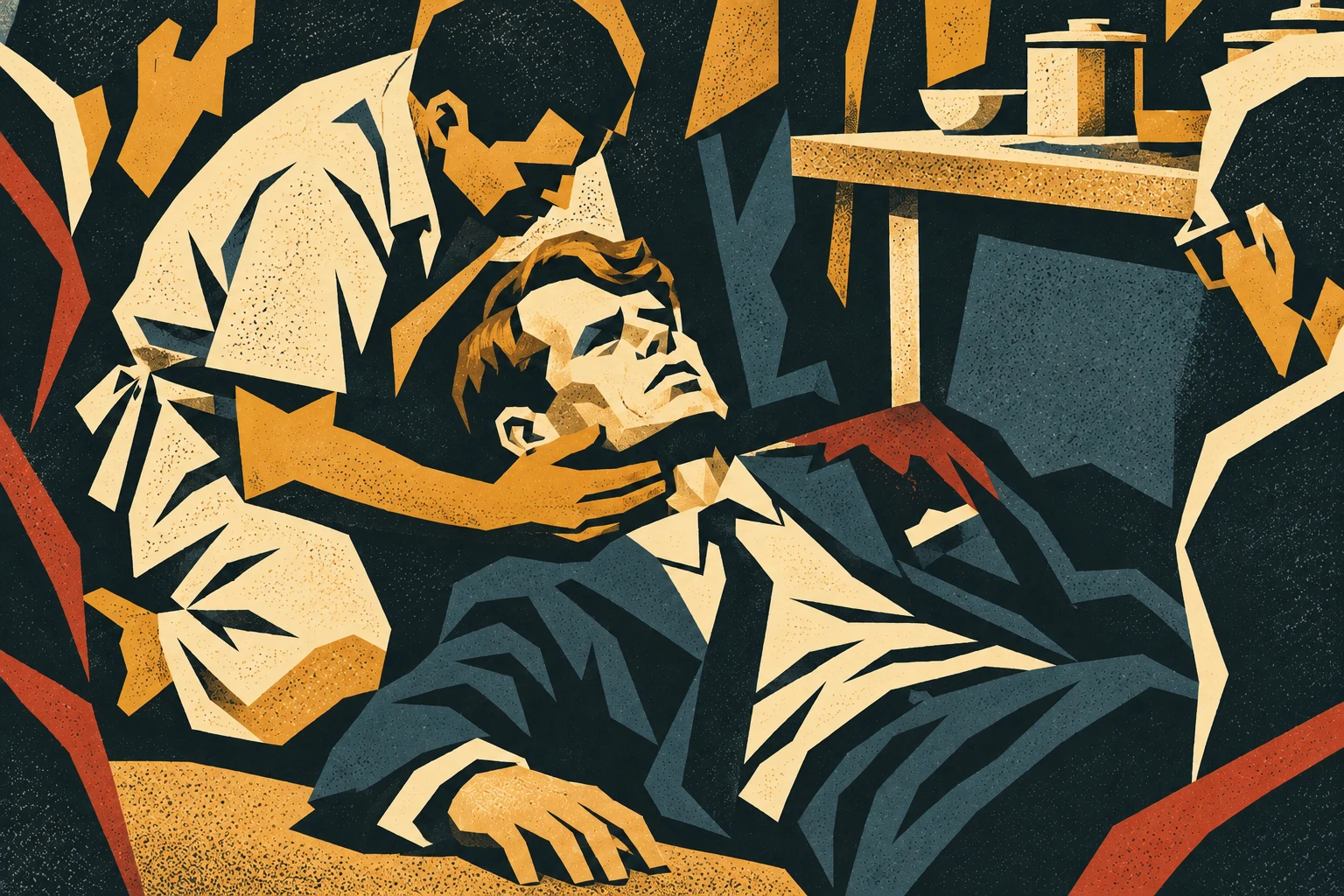
Later accounts describe a brain haemorrhage in August 1968, when he was 44. The contemporary confirmation is brief but valuable, in an editorial note in the *British Medical Journal* recording that he died on 20 August, although some retellings give 18 August, the date associated with his collapse, as the date of his death.1516
In a dramatic summary the difference is trivial. In the history of an experiment about predicting when things happen, it is essential. The start of an illness and its fatal end are not the same event, and a later biographical account is not a death certificate.
Barker’s death was early and tragic, but it was a medical death, not an official finding that precognition had worked. A warning about gas does not become a prediction of a brain haemorrhage simply because the man who received it later died, and a broad sense of danger has to be judged on its original terms.12
The Bureau did not die with him. According to a later account by Ian Beacock, it carried on under Jennifer Preston into the 1970s. The familiar ending, in which the founder’s death closes the experiment, is tidier than the facts, and it makes his fate look like a final verdict when the predictions kept coming in.15
Knight’s 2022 book returned the experiment to public attention, bringing its participants and their letters to a new generation of readers.17 The appeal is easy to see: a scheme meant to make the future manageable became tangled up with the vulnerability of the man who started it. The story is compelling whether or not precognition exists.
The warnings already there
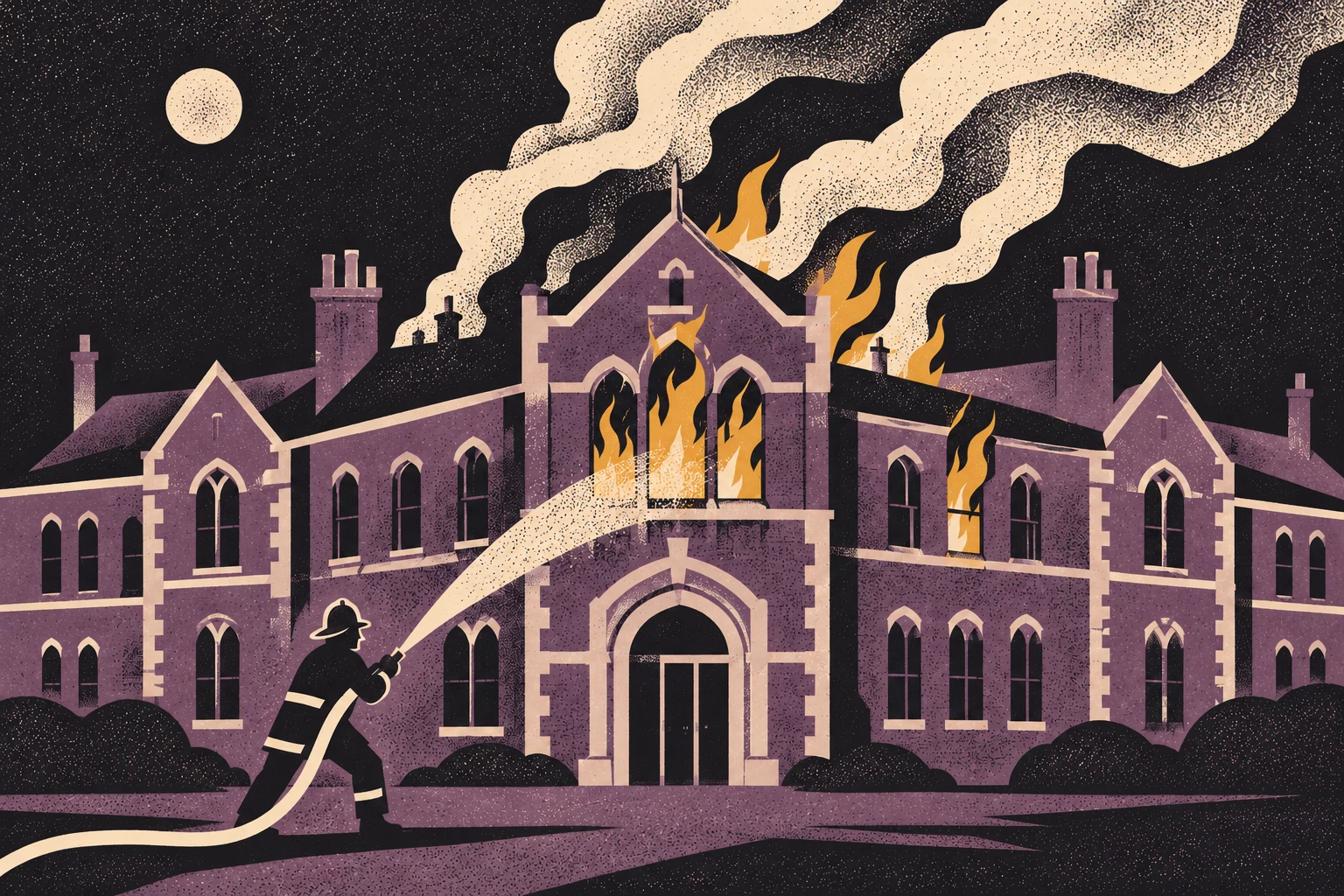
That same year, another catastrophe struck close to Barker’s working life. In 1968, a fire at Shelton Hospital killed 24 women. Shropshire Fire and Rescue Service’s later account records the scale of the response and the overhaul of hospital safety that followed. It is a story about patients, staff and the emergency services, not an omen in a psychiatrist’s biography.18
There is no basis for saying that Barker should have foreseen the fire, or for holding him personally responsible. What the fire exposes is the gap between collecting impressions of possible disasters and maintaining protection against dangers that can be identified. A warning is useful only when someone can understand it and act on it.
That gap leads back to Aberfan, where the official inquiry needed no theory of precognition to explain why the tip collapsed. The tribunal’s conclusions, quoted in Parliament, placed responsibility on the National Coal Board and described failures of policy, communication and response to known conditions, locating the danger in a physical landscape and an institution’s history.19
There had been ordinary reasons to worry about the tipping above the village, including water and the ground beneath the spoil. Those could be investigated with records, engineering knowledge and testimony. They did not depend on matching a dream to the disaster, and they were no less real because people also reported extraordinary experiences.119
Barker’s project can be seen as an attempt to find another source of warning after the established safeguards had failed so completely. That motive gives the experiment a moral urgency. It does not lend the psychic accounts collected afterwards the evidential weight of the official investigation.
It also spares the people who reported troubling dreams an unfair burden. A child’s nightmare or an adult’s sense of dread did not make anyone responsible for identifying a dangerous tip, persuading the authorities or preventing the disaster. Those duties already belonged to the people managing the site, with or without an extraordinary warning.
As of November 2026, the surviving material documents an ambitious experiment, some remarkable reported coincidences and a founder who became the subject of his own correspondents’ fears. It does not show a reliable ability to predict disasters. Stronger claims about individual entries would require further work in the original registers and memoranda.
A fresh investigation could still ask useful questions: how complete the surviving run of submissions is, which matches were proposed at the time and which became important only later, and whether the failed warnings were kept. Could independent readers agree on what the strongest predictions actually said, before being shown the events they supposedly foresaw?
Ordinary records set firm limits on what can be claimed for this extraordinary story. The Nicosia report fixes an aircraft, a sequence and a final death toll, the railway inquiry identifies a broken rail, and the *British Medical Journal* fixes the date of Barker’s death.
The most unsettling document in the case remains a warning addressed to the investigator himself. Barker could file other people’s impressions and wait to see what the news brought. Then, in April 1967, his own name appeared in the file.13
Linked case files
Sources19
- The Aberfan Tribunal Glamorgan Archives · Accessed 2026-11-07
- The Premonitions Bureau Sky History · Accessed 2026-11-07
- Premonitions of the Aberfan Disaster: catalogue record John C. Barker / Society for Psychical Research · 1967 · Accessed 2026-11-07
- Dreams of Aberfan: A Forgotten Collection Alan Murdie · 2019 · Accessed 2026-11-07
- Overcrowding in psychiatric hospitals John C. Barker · 1968-05-04 · Accessed 2026-11-07
- The Ghost in the Time Machine Leo Ruickbie · 2021 · Accessed 2026-11-07
- Bristol Britannia 313 HB-ITB, Nicosia accident report Department of Civil Aviation, Cyprus / ICAO · 1968-06-24 · Accessed 2026-11-07
- Predictions—or Coincidences? Karl Sabbagh · 2022-08 · Accessed 2026-11-07
- Report on the derailment near Hither Green on 5 November 1967 Ministry of Transport · 1968-08-08 · Accessed 2026-11-07
- Can Psychic Visions Save Us? Rebecca Shapiro, interviewing Sam Knight · 2022 · Accessed 2026-11-07
- In the Eye of the Beholder: Uncovering the Characteristics of Prospectively Reported Spontaneous Precognitive Dreams Caroline Watt, Milan Valášek, Sarah Cawthron and Armandina Almanza · 2015-01 · Accessed 2026-11-07
- Premonition! Foreseeing What Cannot Be Seen Joe Nickell · 2019-07 · Accessed 2026-11-07
- The Psychiatrist Who Believed People Could Tell the Future Sam Knight · 2019-02-25 · Accessed 2026-11-07
- Scared to Death: Fatal Encounters with Ghosts David Clarke · 2013 · Accessed 2026-11-07
- The Search for Scientific Proof for Premonitions Ian Beacock · 2022-08-25 · Accessed 2026-11-07
- Editorial note recording the death of Dr Barker British Medical Journal · 1968-08-31 · Accessed 2026-11-07
- The Premonitions Bureau: A True Story Sam Knight / Penguin Random House · 2022 · Accessed 2026-11-07
- Fire crews in hospital training exercise Shropshire Fire and Rescue Service · 2011-12-13 · Accessed 2026-11-07
- Aberfan Disaster: parliamentary debate and tribunal findings House of Commons / Hansard · 1967 · Accessed 2026-11-07