On 12 October 1969, a listener rang WKNR-FM in Detroit and told the broadcaster Russ Gibb to play part of the Beatles’ “Revolution 9” backwards. Gibb did. Two days later, a student newspaper announced that Paul McCartney had been dead for three years.16
A rumour before the headline
The announcement appeared in *The Michigan Daily*, under a headline promising new evidence. Its author, Fred LaBour, was supposed to be reviewing *Abbey Road*. Instead he supplied a car crash, a secret substitution and an explanation for the clues listeners thought they had found in the Beatles’ records. The article’s confidence was part of the joke. Within days, another student paper was reporting that LaBour had admitted making it up.12
It is tempting to treat that article as the start of everything. It was not. On 17 September, Tim Harper had written about McCartney’s supposed death in Drake University’s *Times-Delphic*, describing speculation already circulating on campus, where students were beginning to read messages into the records’ pictures and sounds. Harper put it in print before LaBour’s far more elaborate performance.3
The Drake article had no death certificate and no witness to a fatal accident. It gathered supposed hints from the albums: a turned back, a dark badge, an animal costume and words extracted by playing a record backwards. It also asked why the Beatles would leave such clues, and raised another possibility alongside the death story: that the whole thing was a Beatles joke. From the start, readers were unsure what kind of story they were being told.3
That uncertainty would become central. One person could enjoy finding another clue without believing McCartney was dead, another could believe the Beatles had planted a puzzle while rejecting the fatal crash, and a third might treat the puzzle as the key to a hidden death, so they shared objects and vocabulary while making quite different claims about the world.23
There had been an earlier rumour, too. The February 1967 issue of the official fan magazine, *The Beatles Book*, carried a brief denial of a story that McCartney had been killed in a crash on the M1. The paragraph, reproduced in Brian Moriarty’s later illustrated history, said the press officer had telephoned McCartney’s home and spoken to him. A death rumour existed well before the American autumn of 1969.4
That does not mean a straight line ran from that paragraph to every later campus conversation, and an earlier rumour about a car crash does nothing to verify the elaborate November 1966 death story that emerged later. Rumours change their dates, acquire doubles and absorb material from other stories. The surviving publications show that process better than any attempt to find the first person who said it.34
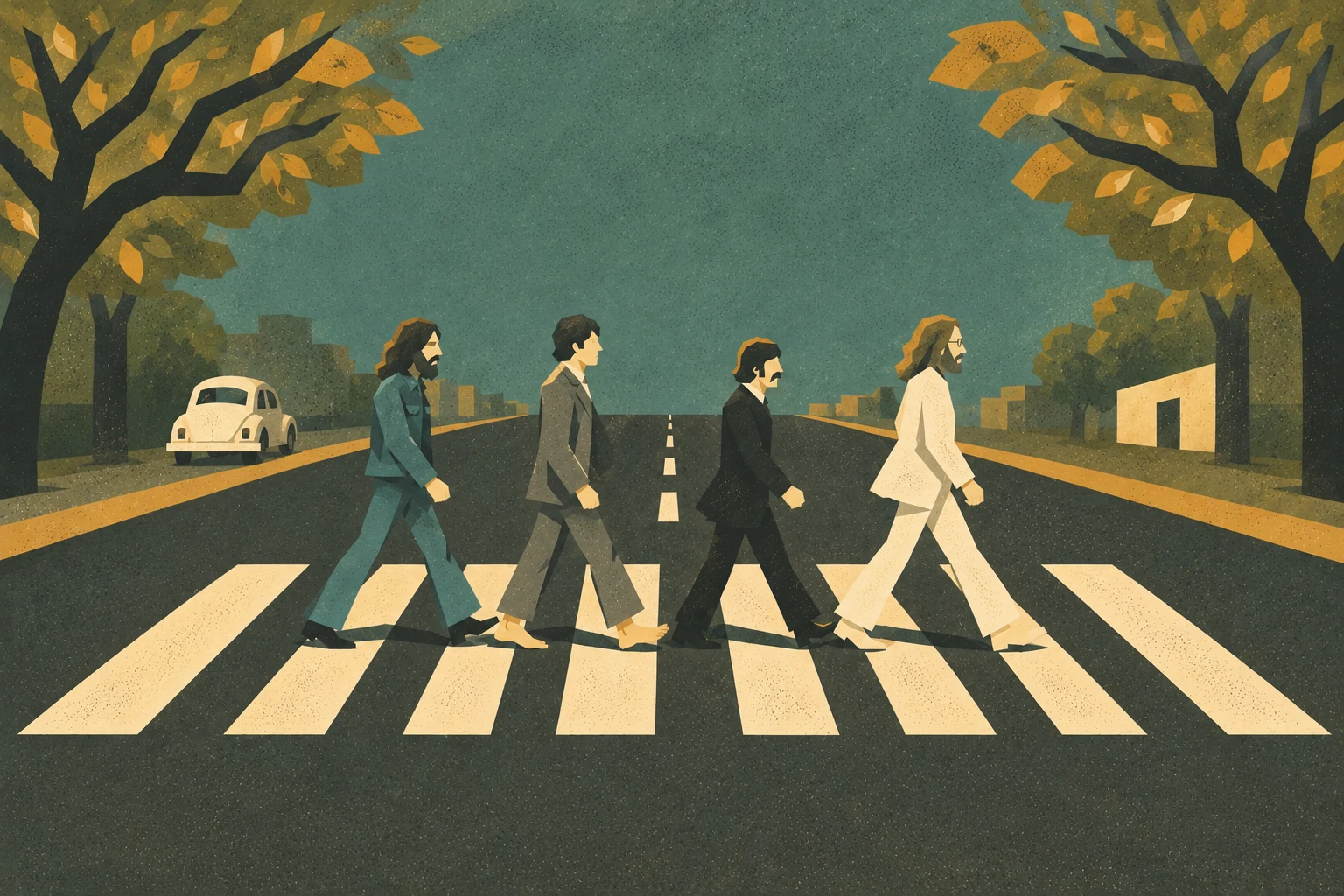
The new album arrived at the perfect moment. *Abbey Road* was first released in Britain on 26 September 1969. The Beatles’ official history identifies it as the last album they recorded, though another would reach the shops after it. Its cover offered a simple image to scrutinise: four men crossing a street, each dressed differently, with parked cars and ordinary London scenery behind them.5
The band did not need to plant a secret message for listeners to start building one. The death story supplied the premise, and the album supplied details that could be arranged around it. Once the two were joined, even a bare foot or a passing resemblance seemed to demand an explanation.23

The caller and the turntable
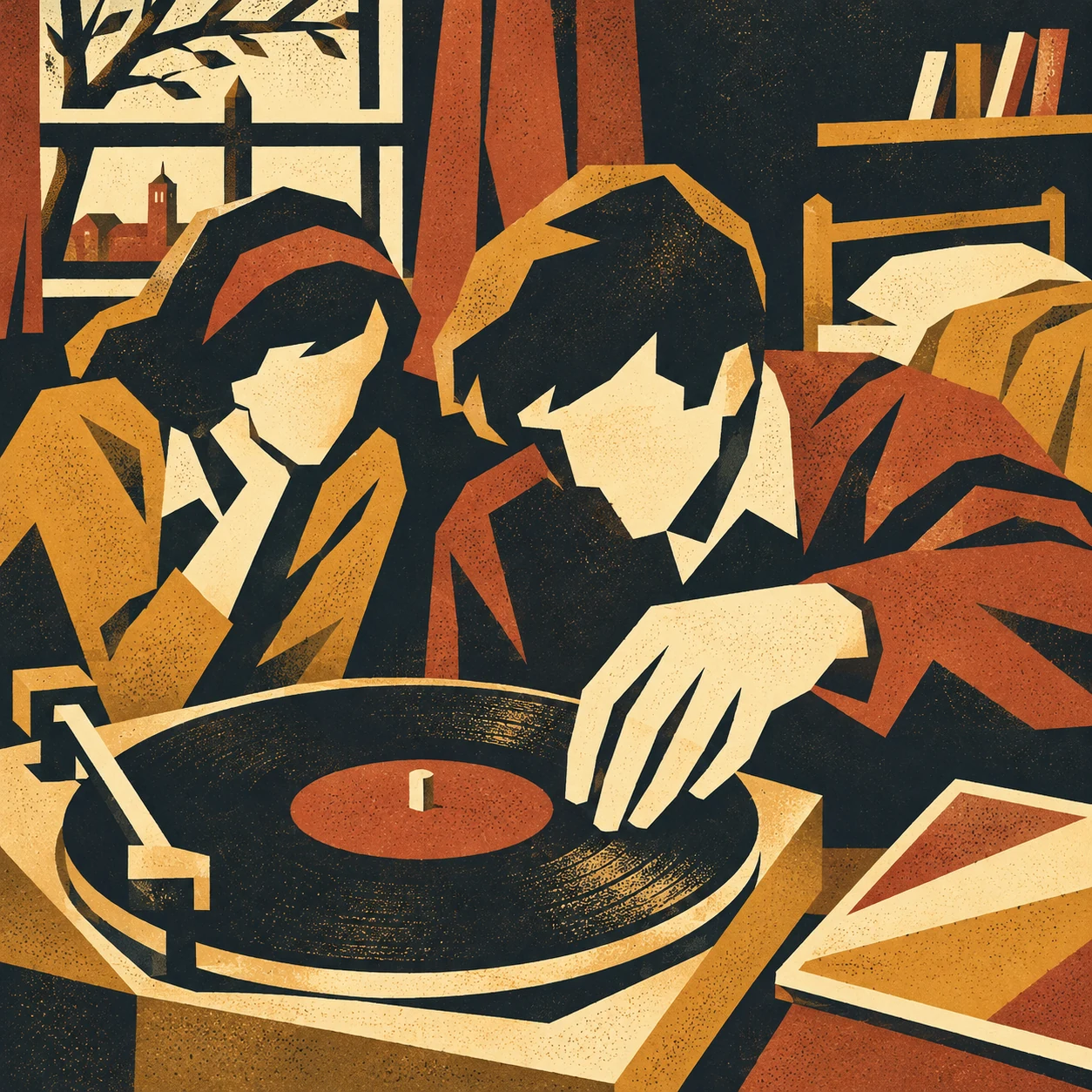
Gibb’s programme on WKNR-FM became a place where listeners could discuss the theory and share what they thought they had found. In the transcript of his later television appearance, Gibb described how that first caller had directed him to play part of “Revolution 9” backwards, and how other callers followed with suggestions of their own.6
The story spread so effectively because anyone could run the test. There was no need for a police file or access to the Beatles’ private lives, since the evidence was already on a record at home, and anyone could play it backwards, listen for the phrase and tell a friend. The experiment came with its own invitation to join in.6
The phrase most associated with it was “turn me on, dead man”, heard in the reversed repetition of a spoken number in “Revolution 9”. Whether or not anyone had put it there, it mattered historically. Gibb’s programme attached an eerie sound to the rumour, and callers could add more examples from the catalogue. A collection of personal discoveries began to look like a body of evidence.36
Radio made the discoveries public without the station having to endorse any of them. A presenter could ask what listeners thought, play a passage and take the next call, and the next caller might remember the phrase better than the presenter’s caveats. The programme also created a shared experience: other people were hearing what you heard, or at least thought it worth investigating.6
The campus press shows the hunt spreading beyond that first broadcast. On 24 October, the University of Cincinnati’s *News Record* described a room in French Residence Hall that had become a centre for investigating the rumour, with residents gathering at all hours to examine records and debate symbols. They had started, the paper said, after a friend at another university advised them to play “Revolution 9” backwards.7
That is far more concrete than the later claim that a whole generation believed McCartney was dead. It names a place, participants and a practice. The students could crowd round a record player and argue about what it meant, and listening, joking, testing and repeating the rumour could all happen in the same room.7
Penn State’s *Daily Collegian* reported the controversy on 22 October, alongside an Associated Press denial from the Beatles’ representatives, and got the name of the Michigan paper wrong. A newspaper could accurately report that people were discussing the rumour while misreporting where it began, so repetition spread the story without preserving its origins.8
The early reports need careful counting, because five articles repeating a story about a replacement are not five witnesses to a replacement, but may be five records of the same story arriving in different places. What these publications document best is the spread of a rumour, not the death it alleged.378

A review with an invented witness
LaBour had heard Gibb’s broadcast before writing his review. In Alan Glenn’s 2009 account for *Michigan Today*, LaBour recalled combining the existing rumour with inventions of his own, including a substitute called William Campbell, supposedly an orphan from Edinburgh, and turning the Beatles’ records into chapters of a hidden history. The result was fiction dressed as investigation.9
The invented details did useful work inside the story. A named double answered the obvious objection that McCartney could still be seen, plastic surgery explained a resemblance that was close but not exact, and differences in the music became signs of the substitution while similarities proved how good the impersonation was. Every adjustment made the story harder to dislodge from within.12
The method had a cost. It required claims about living people’s relationships, private lives and willingness to join a deception, and such claims were not harmless just because they appeared in a comic piece. The contemporary criticism exposes the gap between the article’s pretended certainty and what its author actually knew: nothing that supported a fatal accident or a replacement.2
Jeff Magalif’s article in *The Harvard Crimson* on 23 October reported that LaBour had admitted inventing the story, and quoted the Michigan paper’s editorial-page editor saying the piece was never intended as news. Then Magalif carried on exploring the clues, sometimes with an obvious wink. Disbelief in the crash did not stop him offering readers more material to play with.2
So the joke was exposed while the craze was still running, not decades later. By the end of October 1969, a reader could find both the sensational story and a report that its author had invented it. The explanation ended neither the fun of the game nor the spread of the invented name.2
Another student paper shows how quickly the caveats could fall away. Bard College’s *Observer* of 5 November recounted a death, a substitute and a trail of messages running through the albums, repeatedly treating interpretation as fact. It is evidence of a version in circulation, not corroboration, and its details differ from other versions.10
A television special later gave the controversy the trappings of a trial, as the celebrity lawyer F. Lee Bailey questioned people associated with the rumour, and Moriarty’s transcript preserves Gibb and LaBour discussing their roles. The courtroom format made good television, but it did not turn entertainment into a judicial finding that McCartney had died or that a particular double existed.6
By then, the invented biography could circulate without its author. William Campbell was a name people could repeat, embellish or combine with names from Beatles songs. That the character entered the story through an admitted fiction is a far stronger explanation than any search of McCartney’s later career for signs that the fiction might be true.129

A crossing becomes a funeral
The cover photograph has a documented history. On 8 August 1969, the photographer Iain Macmillan stood on a stepladder outside EMI Studios while a policeman held up the traffic, and took six pictures as the Beatles crossed the road. Abbey Road Studios’ own account reproduces McCartney’s sketch for the cover and entries from Mal Evans’s diary. It was an organised photo session.11
That history makes it possible to test the death reading without pretending the picture involved no choices. The Beatles chose their clothes, the place and the walk, the photographer chose when to press the shutter and someone chose the frame, and while those choices made an album cover, none of them turned it into a funeral procession.11
The clue-hunters cast the four figures in roles: Lennon in white as a preacher, Starr in black as the undertaker, Harrison in denim as the gravedigger and the barefoot McCartney as the corpse. The clothes were real. The roles came from the interpretation. Nothing about denim identifies a gravedigger, and a white suit can mean many things.212
McCartney’s explanation was mundane. He told *LIFE* that they had worn their ordinary clothes, that he had taken his shoes off because it was hot and that the Volkswagen in the background just happened to be parked there. He gave similar answers to *The Sunday People*. Those were statements from a participant about the picture, and they contradicted the idea that each detail needed a hidden death to explain it.1228
The number plate invited another leap. Its characters, usually read as “28IF”, were taken to mean the age McCartney would have reached “if” he had lived, but he was 27 when *Abbey Road* came out, so the clue needed someone to tell you what it meant and then needed its own arithmetic adjusting. Its significance came entirely from the story wrapped around it.21213
The badge on McCartney’s *Sgt. Pepper* uniform taught the same lesson. It was read as “OPD” and expanded into “Officially Pronounced Dead”, when in fact it was the badge of the Ontario Provincial Police, OPP, an explanation the *Harvard Crimson* was already discussing in 1969. McCartney gave *LIFE* a rough account of the police connection, though confusion over the exact letters continued to travel in later retellings.21214
A police badge became a death notice in two steps: first by misreading the letters, then by assigning them a meaning. Correcting only the meaning while keeping the wrong letters can leave a smaller error inside a successful rebuttal. The physical badge, its folds and the quality of the printed photograph mattered more than the ingenuity of the phrase someone could spell out.1214
These examples explain the appeal of the hunt without validating it. A fan could look at the cover, see that McCartney really had no shoes on and feel that the rest of the story had been confirmed too. But confirming the detail confirmed nothing about the story attached to it. The funeral procession was built in the gap between what people saw and what they decided it meant.21112
Words emerging from the noise
The records offered a different kind of access. A photograph stays the same object, but a listener could make a familiar song sound alien by changing its speed or direction. Fragments that had seemed incidental became places where a confession might be hidden, and once the words had been suggested, the next replay could feel like recognition.36
The sound at the end of “Strawberry Fields Forever” heard as “I buried Paul” became one of the most famous clues. In his 1980 interviews with David Sheff, Lennon said he had been saying “cranberry sauce”.15
The song’s real history belongs to late 1966; it was released in February 1967. The Beatles’ official song notes identify it as Lennon’s composition, credited to Lennon–McCartney, and link its title to a place from his childhood. That documented history does not explain every sound on the record, but it removes any need to start from a death and treat the song as an anonymous coded message.16
There is a psychological question here, and it needs careful wording, which is whether hearing words in a reversed passage shows that someone put them there. The psychologist John R. Vokey, reviewing work he carried out with J. Don Read, described how expectation shapes what people hear in ambiguous reversed speech, so that suggesting a phrase helps listeners hear it. Deliberately recorded reversals also exist and can be perfectly clear, so the technique alone settles nothing either way.17
Vokey’s research was not a forensic examination of the Beatles’ master tapes, nor a diagnosis of students in 1969. It offers a tested reason to distinguish the experience of hearing something from proof that a composer intended it. The sense of recognition can be real even when the message depends heavily on what the listener has been told to expect.17
The Paul rumour was also different from claims about subliminal mind control. The students deliberately manipulated the records and consciously listened for words, which is quite unlike being unknowingly programmed by a song played forwards. The historical question is how an apparent phrase became evidence in a story, not whether an unsuspecting audience had received a secret command.617
The catalogue offered endless openings. A listener could move between songs, sleeve photographs, printed lyrics and spoken fragments, changing the rules as needed. If a clue needed reversing, the record could be reversed; if it needed a metaphor, the lyric could be read symbolically. A dead end in one place never stopped the search, because there was always another track or another picture.3610
That made the puzzle almost indestructible. A real code constrains its reader: the same method should produce more than one convenient result. The clue hunt let different methods coexist, held together only by an answer decided in advance. The interpretations could feel as though they reinforced one another while sharing no method beyond the assumption that McCartney was dead.31017
The man on the Scottish farm
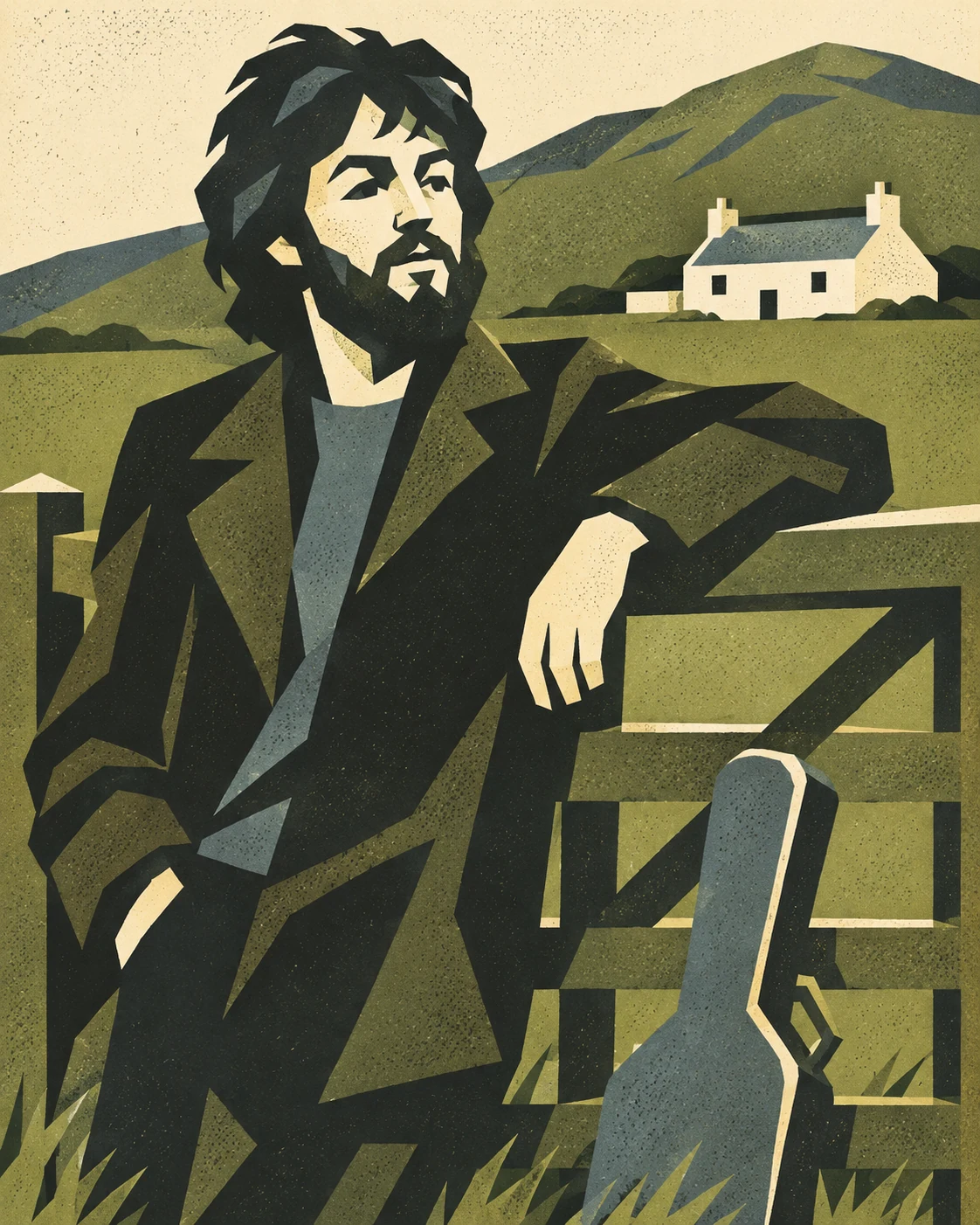
McCartney was not hiding anything more sinister than a wish for privacy. He was spending time with Linda and the children on his farm in Scotland while reporters tried to get him to respond to the rumour. The BBC journalist Chris Drake interviewed him on 24 October, and parts of their conversation were broadcast from 26 October. McCartney said plainly that he was alive and in Scotland.27
*LIFE*’s November issue put him and his family on its cover. Inside, the correspondent Dorothy Bacon recorded his impatience with the whole idea and his explanations of the clothes, the flower, the badge and the parked car that had become part of the story. It was one more public answer to a question he had already answered.12
The interview is striking because its subject was trying to reduce the demand for interviews. He had spent enough time in the press, he said, and wanted to be with his family and make music, not spend his life answering a rumour. The death story had turned his retreat from publicity into a reason for yet another public appearance.12
I would rather be a little less famous these days.
The magazine cover was an effective answer, because a recent portrait, a family and a published conversation dealt with the simple question of where he was. But the replacement story had been built to absorb exactly that kind of appearance, since it never denied that a man calling himself McCartney could be photographed, insisting instead that this man was the impostor.112
That move changed the burden of proof. A report that someone is missing can be answered by finding them, but an allegation about a flawless double treats every successful identification as proof of how good the double is, and dismisses the judgement of colleagues, family and audiences by enlisting them in the deception. A claim like that needs evidence of the substitution, and it cannot demand that everyone else disprove every variation.12
The same interview contained real news about the band, with McCartney stressing that the four now had separate lives and marriages. That needs no hidden funeral to explain it. The Beatles were changing, in ways their familiar public image did not capture, and McCartney’s decision to make himself less available left a space into which an alternative story could slip.12
Not everyone hunting for clues was indifferent to the man himself, and some accounts convey excitement while others convey anxiety, affection or ridicule. A newspaper article cannot reveal every reader’s motive, but it can show that a false story about a death became an activity in its own right, somewhere between entertainment and a claim about a real person’s life.2712
That is why a denial could not end it. A believer could dismiss it as part of the cover-up, someone who suspected a publicity stunt could treat it as the next move and a sceptic could still enjoy the next coincidence. An audience can keep a story alive for completely incompatible reasons.27

Photographs in place of a body
Later versions of the legend moved from album symbols to claims about McCartney’s face, with differences in ears, teeth, jawline or apparent height presented as measurements of two different men. The Unredacted’s original 2018 article gave considerable space to a 2009 investigation in an Italian magazine involving Gabriella Carlesi and Francesco Gavazzeni. Italian reports at the time described it as a challenge to the standard account, and an excerpt describes selecting photographs and scaling them before comparing features.181929
The published reports of that comparison contain no death record, no demonstration of a replacement and no independent replication. They document a technical-sounding version of the legend. They are not an official finding that anyone died and was replaced.1819
Photographic examiners know the problem well. Guidance from the Scientific Working Group on Digital Evidence calls for attention to image quality, lighting, focus and the angle between camera and subject, and for a documented process of comparison, evaluation and verification. Any feature that looks different in two pictures has to be checked: is the difference in the face, or in the way the picture was taken?20
That matters most when the pictures were never meant for comparison. A portrait, a concert photograph and a cropped newspaper reproduction differ in angle, expression and detail, and setting them side by side does not remove those differences. A line drawn between points on two faces can make a comparison look precise while leaving the suitability of the photographs unexamined.20
The same working group’s position on facial recognition and comparison warns against treating results as positive identifications. It distinguishes automated searches for candidates from a trained examiner’s comparison, and places both within a wider investigation. That guidance is general, not an examination of McCartney’s photographs, but it shows how much a reader should expect from any claimed technique.21
Even a well-demonstrated difference between two photographs would not prove the death story. The date, the fatal accident, the substitute and the decades of deception are separate historical claims, each needing its own evidence. A photograph cannot supply a missing car crash.2021
The double also changes from telling to telling. The Scottish orphan of the student review is not the same character as every later candidate. Treating all the versions as one cumulative investigation hides how the invented details have been revised. A replacement who can absorb every contradiction is a gift to a storyteller, and almost impossible to tie to any event that could be checked.1210
No credible evidence supports the alleged death or substitution. That conclusion does not rest on a claim that photographs can never identify anyone. It rests on the absence of any supported historical chain, and on the difference between a reported comparison and an independently demonstrated result. The surviving records explain how the story was built without needing a vanished Beatle to account for it.12182021
A joke with a long afterlife
Was the whole thing a publicity stunt? The idea belongs in the record, but profiting from attention is not the same as starting a rumour. Gibb had a gripping programme, student writers had readers and the Beatles’ catalogue offered objects people could buy and study, incentives that explain how the story was amplified without revealing a single hidden organiser.6922
The folklorist Michael Goss recalled taking part in the clue hunt with amused scepticism, in his 1998 study of rock legends. For him, the game mattered even where literal belief was thin. His book combines a participant’s memories with a comparative study of musical folklore. It is not a survey of what every fan believed.22
Goss also distinguished between exploiting a rumour and inventing one for publicity, which stops a successful promotion from becoming proof of a plan after the event. The same applies to the Beatles themselves. A musician joking about the story, or a publicist happy to let the attention run, would not mean the band had secretly scripted every campus conversation.22
Tereza Walsbergerová’s 2020 study placed the legend within a wider story about celebrity, cultural change and the wish to preserve a familiar public image. She linked the supposed date of death in 1966 to the Beatles’ shift away from their early style towards their later music and look. Hers is an interpretation of the legend’s appeal, not a diagnosis of everyone who enjoyed the puzzle.23
These explanations can coexist, because the story could carry real emotional weight and still be funny, preserving affection for a familiar Beatle while letting fans feel they had outwitted the publicity machine. Nothing in the archive suggests everyone approached it in the same spirit, so they shared the objects and used them in different ways.272223
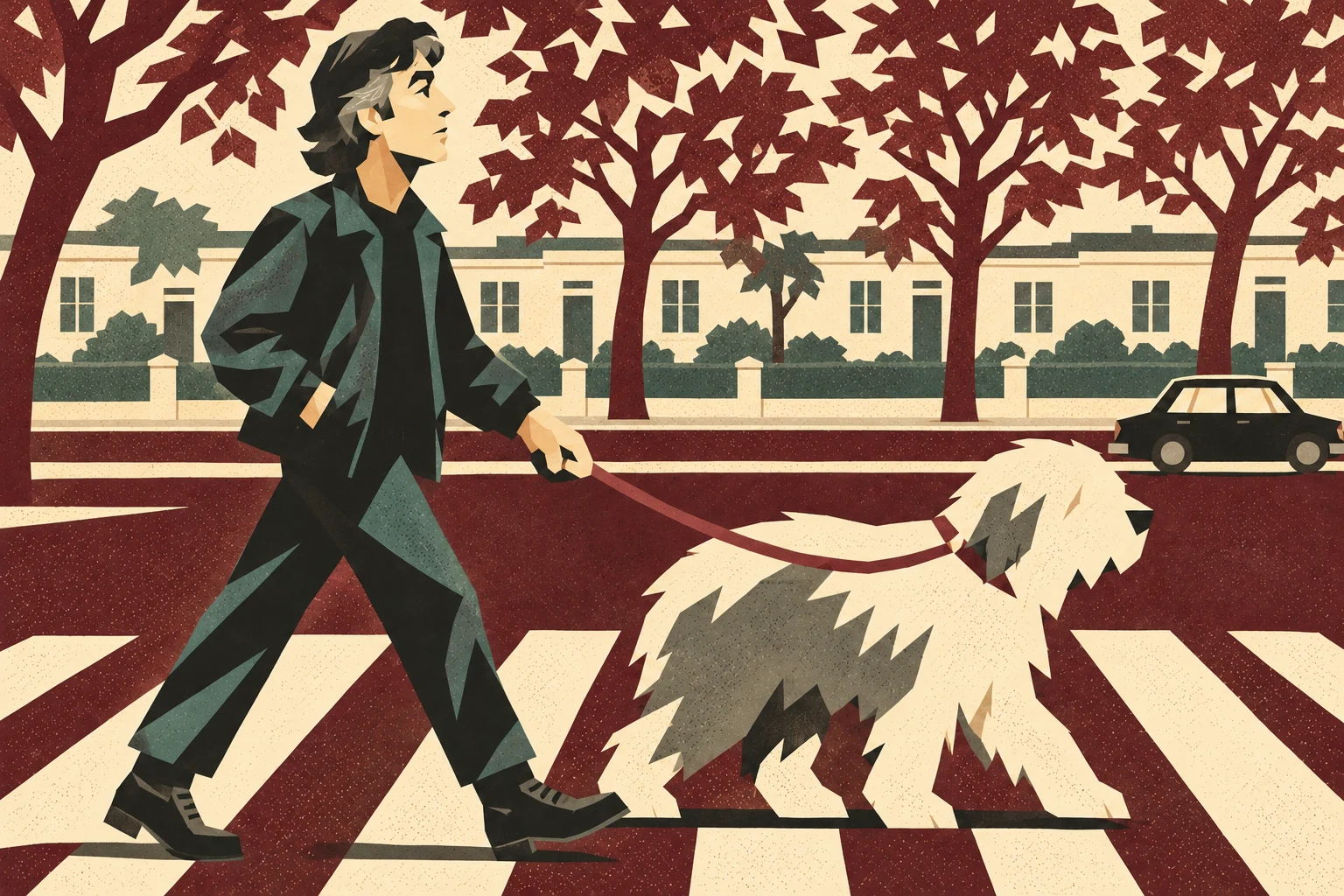
McCartney eventually supplied a joke of his own. His 1993 live album was called *Paul Is Live*, and its cover put him back on the Abbey Road crossing, this time with a dog. In promotional notes reproduced by the McCartney Project, he described the cover as a parody and pointed out his boots and the altered number plate on the Volkswagen. This time the man responsible said exactly what he meant.2425
That is a much firmer case for deliberate symbolism than the old search for a corpse in an ordinary photograph. It has a named author, an obvious target and an explanation published alongside the work. The parody worked because the old clues had become a familiar part of popular culture, whether or not anyone had ever believed them.2425
As of 6 November 2026, “Paul is dead” belongs to the documented history of a false rumour. McCartney’s official website goes on publishing his work and recent interviews, and no credible inquiry into a 1966 death awaits resolution. Questions remain about the earliest paths of the story and the motives of particular people. They are questions about a rumour, not about the identity of the man on stage.2226
The most revealing survivors are the records of people deciding what counted as a clue: a denial beside fresh speculation, an admitted invention beside a confident retelling, sceptics still reaching for the turntable. The dead man was fictional. The listening parties, the printed pages and the demand that a living musician prove he was alive were all real.12712
Linked case files


Sources29
- McCartney dead; new evidence brought to light Fred LaBour / The Michigan Daily · 1969-10-14 · Accessed 2026-11-06
- Clues Do Not a Dead Man Make Jeff Magalif / The Harvard Crimson · 1969-10-23 · Accessed 2026-11-06
- Is Beatle Paul McCartney Dead? Tim Harper / Drake Times-Delphic · 1969-09-17 · Accessed 2026-11-06
- False Rumour The Beatles Book Monthly; reproduced by Brian Moriarty · 1967-02 · Accessed 2026-11-06
- Abbey Road Apple Corps / The Beatles · 1969-09-26 · Accessed 2026-11-06
- Who Buried Paul?: reproduced1969television testimony Brian Moriarty; quoted Russ Gibb and Fred LaBour · 1999-03-17; primary programme 1969 · Accessed 2026-11-06
- Is Paul McCartney really dead? French Hall unveils information Danny Fishbein / University of Cincinnati News Record · 1969-10-24 · Accessed 2026-11-06
- Daily Collegian,22October1969 The Daily Collegian, Pennsylvania State University · 1969-10-22 · Accessed 2026-11-06
- Paul is Dead! (said Fred) Alan Glenn / Michigan Today; mirrored reproduction · 2009-11-11 · Accessed 2026-11-06
- Bard Observer,5November1969 Bard Observer · 1969-11-05 · Accessed 2026-11-06
- Deconstructing: Abbey Road Cover Photography Session Abbey Road Studios · 2019-08-08 · Accessed 2026-11-06
- The case of the missing Beatle: LIFE interview Dorothy Bacon / LIFE; Paul McCartney interview · 1969-11-07 · Accessed 2026-11-06
- Paul McCartney: artist biography Warner Classics · undated · Accessed 2026-11-06
- Ontario Legislative Assembly: OPP centenary Legislative Assembly of Ontario · 2009-03-24 · Accessed 2026-11-06
- 1980 interview with John Lennon and Yoko Ono David Sheff / Playboy; John Lennon interview · interviews 1980; issue 1981-01 · Accessed 2026-11-06
- Strawberry Fields Forever Apple Corps / The Beatles · 1967 · Accessed 2026-11-06
- Subliminal Messages, chapter21 John R. Vokey · undated course-hosted chapter · Accessed 2026-11-06
- Paul is Dead: Turn Me On Dead Man The Unredacted · 2018-02-23 · Accessed 2026-11-06
- Anche gli scienziati dicono che è un sosia Il Giornale editorial staff · 2009-07-22 · Accessed 2026-11-06
- Best Practices for Photographic Comparison for All Disciplines Scientific Working Group on Digital Evidence · 2017-07-18 · Accessed 2026-11-06
- Position on Facial Recognition and Facial Comparison Scientific Working Group on Digital Evidence · 2022-06-09 · Accessed 2026-11-06
- Elvis lives! The secret survival theme in rocklore Michael Goss / Contemporary Legend n.s.1 · 1998 · Accessed 2026-11-06
- Another Clue for You All: the hysterical realism of the Paul-is-dead conspiracy theory Tereza Walsbergerová / Theory and Practice in English Studies9(1–2) · 2020 · Accessed 2026-11-06
- Paul Is Live Paul McCartney / MPL · 1993-11-15 · Accessed 2026-11-06
- Paul Is Live album sampler: liner notes Paul McCartney; promotional sampler text reproduced by McCartney Project · 1993 · Accessed 2026-11-06
- Paul McCartney: current official site MPL Communications · accessed 2026-11-06 · Accessed 2026-11-06
- BBC Radio4 interview recorded24October1969 Chris Drake / BBC Radio4; Paul McCartney · 1969-10-26 · Accessed 2026-11-06
- Tell my fans I am alive and well Hugh Farmer / The Sunday People; Paul McCartney · 1969-10-26 · Accessed 2026-11-06
- Chiedi chi era quel Beatle: contemporary Wired excerpt Fabio Andriola and Alessandra Gigante; excerpt reposted by Storia in Rete · 2009-07-24 · Accessed 2026-11-06